Tools
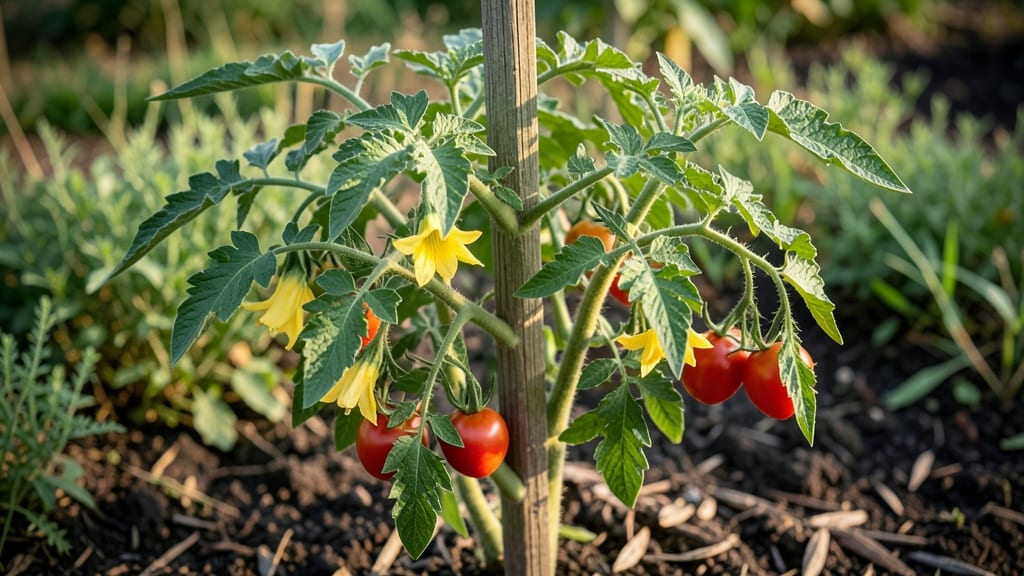
Growing tomatoes in your garden means turning a few plants into a summer-long harvest—if you space them right. 🌱 I learned the hard way that cramming vines together leads to disease and stunted fruit, but the right spacing turns each plant into a productive powerhouse.
The secret isn’t just the distance between plants; it’s how they’ll grow and spread over the season.
You’ll need well-draining soil, full sun for at least six hours daily, and sturdy cages or stakes to support those heavy vines.
Most gardeners overlook the 18-24 inch spacing for determinate varieties or 24-36 inches for indeterminate ones—this gives roots room to breathe and air to circulate, cutting back on blight. A simple 5-gallon bucket of compost mixed into the planting hole works wonders for hungry tomato plants.
The payoff is worth the effort: 20-30 pounds of tomatoes per plant when spaced properly, compared to half that when crowded. Imagine snapping fresh tomatoes straight from the vine all summer—no grocery store needed.
The key is consistent watering at the base (not the leaves) and watching for early signs of blight or pests so you can act fast.
This works for backyard gardens, raised beds, or even container growing—just adjust the spacing slightly for smaller pots. Whether you’re a first-timer or a seasoned gardener, these spacing secrets will transform your tomato game. Let’s get those plants thriving!
📚 In This Guide
- What you need
- Instructions
- Tips and common mistakes
- Wrapping up and next steps
What you need
- ● Tomato seeds or seedlings: Choose heirloom, hybrid, or disease-resistant varieties (e.g., Cherry, Beefsteak, or Roma). Buy 3–6 plants per person for a bountiful harvest.
- ● Garden soil: 1–2 cubic yards of well-draining, nutrient-rich soil (pH 6.0–6.8). Mix in compost or aged manure (5–10 gallons) for extra fertility.
- ● Fertilizer: Balanced fertilizer (10-10-10 or 5-5-5): 1–2 lbs per 100 sq. ft. of garden bed.
- ● Organic options: Bone meal (1 lb) or fish emulsion (1–2 gallons) for phosphorus boost.
- ● Mulch: 2–3 inches of straw, grass clippings, or wood chips to retain moisture and suppress weeds.
- ● Stakes or cages: Stakes: 6–8 ft. tall bamboo or wooden stakes (1 per plant).
- ● Cages: 5–6 ft. tall tomato cages (1–2 per plant, depending on variety).
- ○ Trellis or string: Optional but helpful for indeterminate varieties (e.g., 100 ft. of twine + eye hooks).
- ● Watering supplies: Drip irrigation kit or soaker hoses (or a garden hose with adjustable nozzle).
- ● Water storage (5–10 gallons) for consistent moisture.
- ● Pruning tools: Pruning shears (for shaping plants).
- ● Garden gloves (to protect hands from thorns).
- ● Row covers: Frost blankets to protect seedlings from late frosts.
- ● Plant food: Liquid tomato fertilizer (e.g., Miracle-Gro Tomato Food) for a mid-season boost.
- ● Pest control: Neem oil spray (for aphids/hornworms).
- ● Yellow sticky traps (to catch whiteflies).
- ● Soil tester kit: To monitor pH and nutrient levels.
- ● Garden journal: To track planting dates, watering, and harvest progress!
Instructions for planting tomatoes with high-yield spacing
Here's the proven method I use to maximize tomato yields without overcrowding—perfect for 4 healthy vines.
🌱 Step 1: Prepare the Planting Site
Tomatoes thrive in full sun with at least 6-8 hours of direct light daily. Choose a spot where previous crops weren't nightshades (like peppers or potatoes) to prevent soil-borne diseases. I like to test soil pH first—aim for 6.0-6.8—and add compost if needed.
Loosen the soil to a depth of 12-18 inches to encourage deep root growth. Break up any compacted layers with a broadfork or garden fork. If your soil drains poorly, mix in 2-3 inches of coarse sand or perlite to improve aeration. The goal is loose, crumbly soil that holds moisture but doesn’t stay soggy.
☀️ Step 2: Plant Transplants at the Right Depth
Dig holes twice as wide as the root ball but only deep enough to bury ⅓ of the stem. This encourages strong root systems below the soil line. Gently remove the plant from its container and tease apart any circling roots with your fingers—this prevents girdling as the vine grows.
Place the tomato in the hole and backfill with soil, pressing lightly to eliminate air pockets. I always mound soil around the base to create a slight berm—this helps prevent water from pooling at the stem, which can cause rot. After planting, water deeply to settle the soil and eliminate air gaps.
🪴 Step 3: Space for Maximum Airflow and Sunlight
For indeterminate varieties (the ones that keep growing all season), space plants 2-3 feet apart in rows that are 3-4 feet apart. Determinate (bush) tomatoes need slightly less room—18-24 inches apart—since they stay compact. I always stagger rows to improve airflow and reduce disease spread.
Here’s the thing—crowding stresses plants, leading to more pests and diseases. You’ll see healthier foliage and bigger fruit when vines have room to stretch toward the sun. If you’re short on space, opt for dwarf varieties or use vertical supports like cages or stakes.
💧 Step 4: Water and Mulch for Consistent Growth
Water deeply once a week (or more in extreme heat) to encourage deep root growth. Avoid wetting the leaves to prevent fungal diseases like early blight. I use a soaker hose or drip irrigation to deliver water right at the base—this keeps foliage dry while keeping roots moist.
Spread a 2-3 inch layer of organic mulch (like straw or shredded leaves) around each plant, keeping it 2 inches away from the stem. Mulch retains moisture, suppresses weeds, and keeps soil temperatures steady. You’ll notice fewer watering needs and more consistent fruit production once you start mulching.
✂️ Step 5: Prune and Support for High-Yield Vines
As vines grow, prune suckers (the small shoots that form in the leaf axils) to direct energy into fruit production. I remove suckers larger than ½ inch to keep the plant manageable. For indeterminate varieties, train the main stem along a sturdy stake or cage—this prevents sprawling and makes harvesting easier.
Don’t over-prune, though. Leaving a few lower leaves helps the plant photosynthesize and stay strong. You’ll see thicker stems and more robust growth when you balance pruning with support. If a vine gets too heavy, add a second stake or tie it more securely to prevent breakage.
Tips & tricks for perfect tomato planting with high-yield spacing
These game-changing tips will help you avoid common mistakes and maximize your tomato harvest—because nothing beats homegrown tomatoes that burst with flavor.
Soil Preparation Secret: Don't skip the soil test! I've seen gardeners skip this step and end up with stunted plants. If your soil pH is outside the 6.0-6.8 range, add sulfur to lower it or lime to raise it. The 12-18 inch deep loosening is crucial too—it's like giving your tomato roots a five-star hotel to grow in. I like to add a handful of compost to each hole before planting for that extra nutrient boost.
Planting Depth Technique: Burying just ⅓ of the stem might seem counterintuitive, but trust me on this. The buried stem will develop strong roots while the above-ground portion grows leaves and fruit. When you mound soil around the base, make that berm about 2 inches high—this prevents water from sitting against the stem where it can cause rot. After planting, give it that deep watering to settle everything properly.
Spacing Strategy: The 2-3 feet spacing for indeterminate varieties might seem generous, but it pays off in the long run. Crowded plants compete for sunlight and nutrients, leading to smaller fruit and more disease. I've found that staggering rows creates a natural breeze between plants, which helps prevent fungal diseases. For container growing, use dwarf varieties and space them 12-18 inches apart in large pots.
Watering Wisdom: That "once a week" guideline can be tricky—it depends on your climate and soil type. In extreme heat, you might need to water every 2-3 days. The key is deep watering that encourages roots to grow downward. I set my soaker hose to run for 45 minutes every week, which delivers about 1-1.5 inches of water. And remember, water in the morning so leaves have time to dry before evening.
Pro Tips for Tomatoes In Garden
- These game-changing tips will help you avoid common mistakes and maximize your tomato harvest—because nothing beats h...
- Soil Preparation Secret: Don't skip the soil test! I've seen gardeners skip this step and end up with stunted plants....
- Planting Depth Technique: Burying just ⅓ of the stem might seem counterintuitive, but trust me on this. The buried st...
Frequently asked questions
Got questions about growing tomatoes in your garden? You’re not alone—these juicy, versatile plants can be tricky to master! Below, we’ve rounded up the most common queries from gardeners just like you. Whether you’re a first-timer or a seasoned pro, these answers will help you grow tomatoes like a champion.
How close can I plant my tomato plants together?
Spacing depends on your tomato type! Determinate (bush) varieties need 18–24 inches apart, while indeterminate (vining) tomatoes thrive with 24–36 inches. If space is tight, try container growing or trellising to save room. Overcrowding leads to poor air circulation, inviting disease—so don’t skimp on space!
When is the best time to plant tomatoes in my garden?
Timing is key! Plant after the last frost when soil temps hit 60°F+. For cooler climates, start seeds indoors 6–8 weeks before transplanting. In warm zones, direct-sow in early spring. Pro tip: Use row covers or black plastic mulch to warm soil faster if needed.
What should I do if my tomato plants get pests or diseases?
Act fast! Common culprits include aphids, hornworms, and blight. For pests, handpick bugs or spray with neem oil. Prune infected leaves for disease, and improve airflow. Preventative care: Rotate crops yearly, water at the base (not leaves), and choose disease-resistant varieties like ‘Celebrity’ or ‘Mountain Merit.’
Can I grow tomatoes in containers if I don’t have a big garden?
Use 5-gallon pots or larger for indeterminate tomatoes (they need depth). Dwarf or bush varieties do well in 1-gallon containers. Ensure pots have drainage holes and fill with light, nutrient-rich soil. Move containers to sunny spots and fertilize regularly for big yields.
Why are my tomato flowers falling off before fruiting?
This usually means stress—check for underwatering, extreme heat, or poor pollination. Hand-pollinate by gently shaking plants or using a small brush. Ensure consistent moisture (1–1.5 inches per week) and avoid fertilizer burns. Shade cloth can help in scorching climates.
Wrapping up and next steps
Growing tomatoes in your garden isn’t just rewarding—it’s art and science combined! With the right spacing, sunlight, and care, your vines will burst with flavorful fruit all season long. 🌱✨ Whether you’re a beginner or a seasoned gardener, these high-yield secrets will transform your harvest into something truly special.
Now that you’re armed with the knowledge, roll up your sleeves and get planting! Start small—try a few plants in pots or a dedicated bed—and watch your confidence (and tomato count) grow. Happy gardening!