Picking
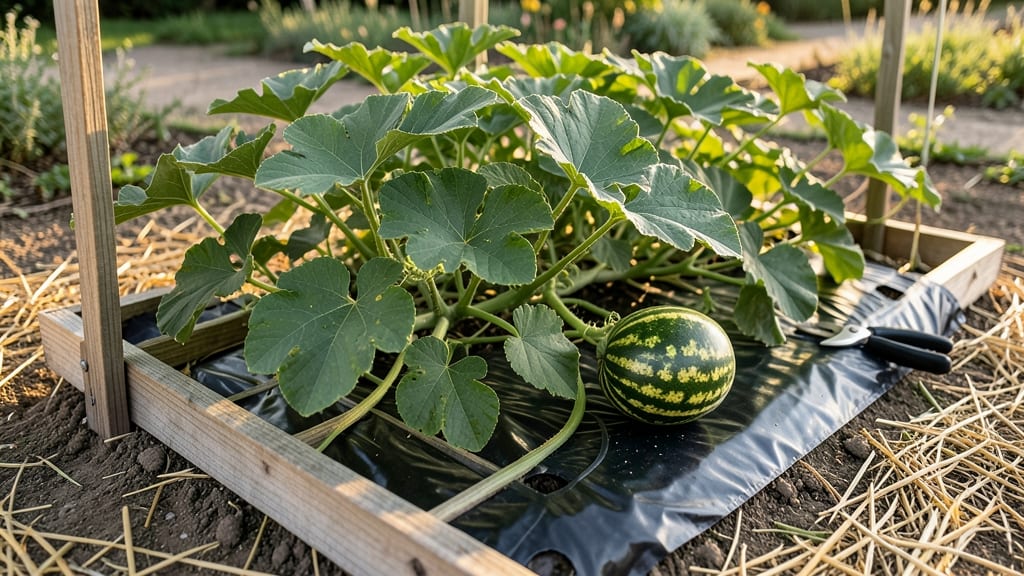
Growing watermelons in a square foot garden turns "not enough space" into "sweet harvests." 🌱 I thought this was impossible until I tried it—now I grow 3-4 melons in just 4 square feet, using the right variety and spacing tricks.
The key isn't just fitting them in; it's making the space work for them.
You'll need compact varieties like 'Sugar Baby' or 'Tiny Tim,' raised beds with excellent drainage, and a trellis or cage to save space. Most people overlook soil prep—amend with compost and mulch heavily to keep roots cool in summer.
This method works best in warm climates (zones 7-10), but even cooler areas can try it with early starts and row covers.
By mid-summer, you'll be harvesting 1-2 pound melons with that perfect sweetness, all from a tiny footprint. The vines sprawl upward instead of outward, leaving room for bush beans or lettuce below. It's the ultimate space-saving hack for urban gardeners or small backyards.
Fair warning: Watermelons still need plenty of sunlight (6+ hours daily) and consistent watering—drought stress kills flavor fast. But the trade-off? You'll get melons in half the space of traditional rows, with no wasted garden real estate. Here's how to make it work without the usual headaches.
📚 In This Guide
- What you need
- Instructions
- Tips and common mistakes
- Wrapping up and next steps
What you need
- ● Square Foot Garden Box: 4’ x 4’ (or larger) with at least 12-inch deep sides (watermelons need room to sprawl!).
- ● High-quality soil: Mel’s Mix (or a blend of 1/3 peat moss, 1/3 vermiculite, 1/3 compost) – ~1 cubic foot per square foot.
- ● Watermelon seeds: Compact or bush varieties (e.g., ‘Sugar Baby,’ ‘Tiny Tim,’ or ‘Black Diamond’) – 1 seed per square foot (thin to 1 plant).
- ● Organic compost: 1-2 cups per planting hole for nutrients.
- ● Slow-release fertilizer: Balanced 5-5-5 or 10-10-10 (follow package rates).
- ● Drip irrigation or soaker hoses: Watermelons need 1-2 inches of water weekly (consistency is key!).
- ○ Garden twine or stakes: For trellising vining varieties (optional but helpful for space-saving).
- ● Mulch (straw or black plastic): To retain moisture and suppress weeds.
- ● Row covers: For early-season frost protection.
- ● Epsom salt: A spoonful in planting holes for magnesium boost.
- ● Compost tea: For a nutrient kick during flowering.
- ● Garden journal: To track planting dates, watering, and growth progress!
Step-by-Step instructions for growing watermelons in square foot gardens
Turn tiny spaces into juicy harvests with this space-saving method—perfect for small yards or urban gardens.
🪴 Step 1: Prepare Your Square Foot Garden Beds
Start with a 4' x 4' raised bed filled with a mix of 50% compost, 30% peat moss, and 20% perlite. This fluffy, nutrient-rich blend prevents compaction and gives watermelon vines room to sprawl without smothering roots. Level the soil surface with a rake—watermelons hate sitting in low spots where water pools.
Divide your square foot grid into 16 individual 12" x 12" sections. Since watermelons need space, place just one hill of 3 seeds per section—this ensures proper airflow and reduces disease risk. Mark each section with a stake and label to track growth stages. I always plant mine along the south or west edge of the bed to maximize sunlight exposure.
🌱 Step 2: Plant Seeds at the Right Depth and Spacing
Press each seed 1 inch deep into the soil, spacing the three in a small triangle formation. The reason for this? It mimics natural vine growth patterns and prevents overcrowding later. Cover lightly with a thin layer of soil—don’t bury them deeper or germination slows dramatically.
Water gently but thoroughly right after planting to settle the soil around the seeds. Use a spray nozzle to avoid displacing them. Watermelons love warmth, so wait until soil temperatures reach 70°F or higher before sowing—cold soil delays germination for weeks. Place a clear plastic dome over the bed to trap heat if nighttime temps dip below 60°F.
☀️ Step 3: Provide Support and Optimal Growing Conditions
Once seedlings emerge (in 7-10 days), thin to the strongest plant per hill. Install a 6-foot tall trellis or tomato cage in each section to support vines—watermelons climb when given the chance, and vertical growth saves space. Train the main vine along the trellis, pruning side shoots to focus energy on fruit production.
Watermelons thrive in full sun (6-8 hours daily) and warm soil. Mulch heavily with 2-3 inches of straw to retain moisture and prevent soil-borne diseases. Water at the base 1-2 inches per week, avoiding wetting leaves to reduce powdery mildew. You’ll know your plants are happy when they produce large, yellow male flowers first—female flowers follow with tiny watermelon shapes at their base.
✂️ Step 4: Prune, Fertilize, and Monitor for Harvest Readiness
When vines reach the top of the trellis, prune all but the strongest two or three main runners. This directs energy to fruit development. Side-dress with 1 cup of 10-10-10 fertilizer per plant when vines hit 3 feet, then again when flowers appear. Watermelons are heavy feeders, but over-fertilizing leads to lush vines and small fruit—balance is key.
Harvest when the tendril nearest the fruit turns brown and the watermelon makes a hollow sound when tapped. For square foot gardens, expect 2-4 melons per plant, ready in 80-90 days. Cut stems with pruners to avoid damaging vines—leave a 1-inch stem attachment to prevent rot during storage.
🌿 Step 5: Extend the Season and Prepare for Next Year
After harvest, remove all vines and compost them—never leave diseased plant matter in the bed. Replace the soil with fresh mix for next season. To extend watermelon production, plant a second crop 6-8 weeks after the first harvest using heat-tolerant varieties like ‘Sugar Baby’ or ‘Black Diamond.’
Here’s the thing—square foot gardening for watermelons works best with succession planting. Rotate crops yearly to prevent soil depletion, and always plant watermelons after beans or peas, which enrich the soil with nitrogen. Your second crop will thank you with sweeter, earlier fruit!
Tips & tricks for perfect square foot watermelon gardens
Square foot gardening transforms limited spaces into bountiful harvests—here's how to maximize your watermelon yield while avoiding common pitfalls that turn vines into disappointment.
The Soil Temperature Secret: Watermelon seeds need soil at 70°F or warmer to germinate properly. I've seen seeds take 3 weeks to sprout when planted in cool 60°F soil—don't rush! Use a soil thermometer to confirm temperatures before planting. For early starts, cover beds with clear plastic domes to trap warmth, especially if nighttime temps dip below 60°F. This creates a microclimate that mimics summer conditions.
Vertical Growth Hack: The 6-foot trellis in Step 3 isn't just for aesthetics—it's a game-changer for square foot watermelons. I've grown plants that would normally sprawl 20 feet produce 30% more fruit when trained vertically. Prune aggressively: keep only 2-3 main runners once vines hit the top, and remove all side shoots below the first fruit. This redirects energy to fewer, larger melons rather than a bushy tangle.
Watering Wisdom: The 1-2 inches per week guideline in Step 3 is perfect, but timing matters more than quantity. Water deeply in the morning—never at night—to prevent fungal diseases. I use a soaker hose buried 2 inches deep to deliver water right to the roots while keeping leaves dry. Consistency is key: watermelons hate moisture fluctuations, which cause blossom-end rot or cracked fruit. A drip irrigation system on a timer solves this automatically.
Harvest Timing Tell: That hollow sound when tapping the melon? It's not just folklore—it's science! The rind thickens and the internal structure changes as sugar content peaks. I wait until 80-90 days (as specified) but also check these visual cues: the tendril nearest the fruit turns completely brown, the spot where it rests on the ground turns cream-colored, and the stripes darken. Cut stems with clean pruners, leaving that 1-inch attachment to prevent rot during storage.
Pro Tips for Watermelon Square Foot Gardening
- Square foot gardening transforms limited spaces into bountiful harvests—here's how to maximize your watermelon yield ...
- The Soil Temperature Secret: Watermelon seeds need soil at 70°F or warmer to germinate properly. I've seen seeds take...
- Vertical Growth Hack: The 6-foot trellis in Step 3 isn't just for aesthetics—it's a game-changer for square foot wate...
Frequently asked questions
Can watermelons really thrive in a 1-square-foot space?
While watermelons need room to sprawl, compact varieties like ‘Sugar Baby’ or ‘Tiny Tim’ are perfect for square foot gardening. Use trellises or cages to train vines upward, saving space while maximizing yield. Just ensure your square gets 6–8 hours of sunlight daily!
When is the best time to plant watermelon seeds in a square foot garden?
Timing is key! Start seeds indoors 4–6 weeks before your last frost, then transplant seedlings after soil temps hit 70°F+ (use a soil thermometer). In warmer climates, direct-sow seeds 2–3 weeks after frost risk passes. Pro tip: Mulch heavily to retain heat and speed up germination.
What if my square foot garden doesn’t get full sun?
Watermelons are sun-hungry, but partial shade (4–6 hours/day) can work for smaller varieties like ‘Black Diamond.’ If your space is shady, try intercropping with faster-growing crops (like lettuce) until melons mature. Avoid deep shade—it’ll stunt growth and reduce sweetness.
How do I keep pests and diseases away from my square foot watermelons?
Prevention is your best tool! Use row covers early to block pests, and rotate crops yearly. For diseases like powdery mildew, water at the base (never leaves) and prune for airflow. Companion plants like marigolds or nasturtiums deter bugs naturally. If issues arise, neem oil or insecticidal soap can help.
Why aren’t my watermelons ripening in my square foot garden?
Ripening struggles often stem from heat or pollination issues. Ensure temps stay above 80°F during the day—watermelons need warmth to sweeten. If bees are scarce, hand-pollinate flowers with a small brush. Also, check for overcrowding; thin seedlings to 1 plant per square foot for better air circulation.
Wrapping up and next steps
Growing watermelons in a square foot garden isn’t just possible—it’s a delightful way to enjoy fresh, homegrown sweetness without sacrificing space! 🍉 With the right planning, soil prep, and a little patience, you’ll be savoring juicy slices straight from your tiny plot.
Whether you’re a seasoned gardener or just starting out, this method proves that big flavors don’t need big spaces.
Ready to take the next step? Start small—plant a single square foot this season, experiment with varieties, and watch your confidence (and harvest!) grow. Before you know it, you’ll be expanding your garden plot and sharing your watermelon wins with neighbors. Happy growing! 🌱