
Tools
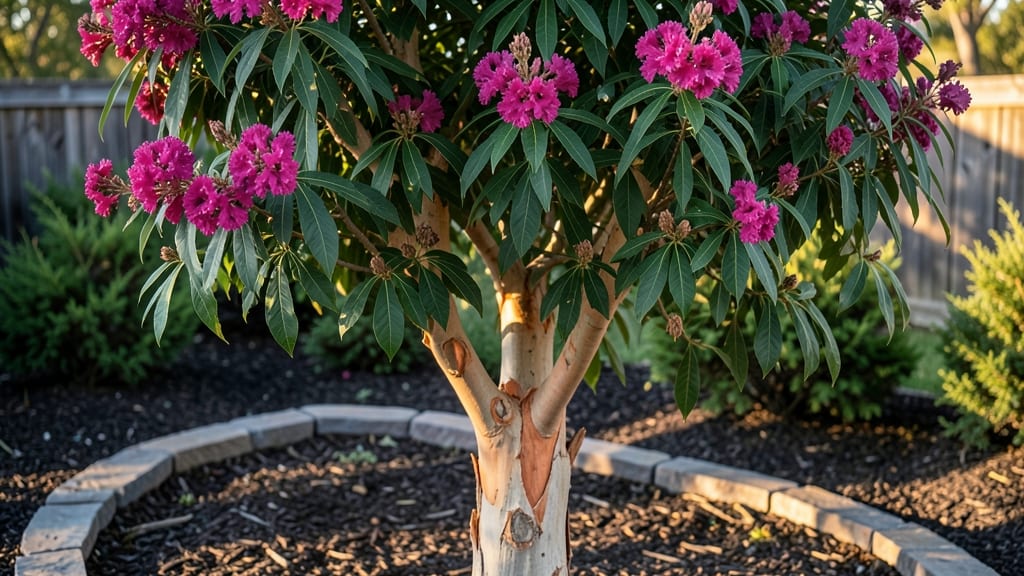
A crepe myrtle garden transforms your yard into a fragrant, ever-changing retreat that thrives through all four seasons. 🌿 I planted mine along a fence line, and within two years, the lush foliage blocked neighbors' views while the summer blooms filled the air with sweet vanilla.
The bark peels dramatically in winter, adding texture even when flowers fade.
These trees work as hedges, focal points, or mixed borders—just pick your spacing. For a pollinator-friendly look, pair them with coneflowers and black-eyed Susans. Cottage gardens love their romantic blooms, while modern designs appreciate their clean lines when pruned back.
The key is choosing the right variety for your climate and sunlight.
By summer, you'll have a privacy screen bursting with color while hummingbirds and bees flock to the flowers. In fall, the foliage turns gold or burgundy, and winter bark adds unexpected drama. Pruning in late winter keeps them shaped just right for your design vision.
Perfect for small yards, large properties, or anything in between—these trees grow fast and handle heat and humidity like champions. Whether you want a classic Southern look or a contemporary statement, crepe myrtles deliver year-round interest with minimal fuss.
📚 In This Guide
- What you need
- Instructions
- Tips and common mistakes
- Wrapping up and next steps
What you need
- ● Crepe myrtle plants: 3–6 plants (depending on desired height and spacing; standard spacing is 6–10 feet apart for mature trees). Choose Lagerstroemia varieties like 'Natchez,' 'Muskogee,' or 'Tonto' for diversity in color and fragrance.
- ● Shovel or spade: 1 medium-sized (for digging holes 2–3 times wider than the root ball).
- ● Garden gloves: 1 pair (to protect hands from thorns and soil).
- ● Pruning shears: 1 pair (for trimming dead branches or shaping young plants).
- ● Mulch: 2–3 bags (3–4 inches of organic mulch like pine straw, wood chips, or shredded bark to retain moisture and suppress weeds).
- ● Slow-release fertilizer: 1 bag (10–20 lb, balanced NPK ratio like 10-10-10 or 12-4-8 for crepe myrtles).
- ● Watering can or hose with nozzle: 1 (for gentle, deep watering post-planting).
- ● Measuring tape: 1 (to ensure proper spacing between plants).
- ○ Soil test kit (optional but recommended): Check local pH and nutrient levels—crepe myrtles prefer slightly acidic to neutral soil (pH 5.5–7.0).
- ● Epsom salt: 1 small bag (for magnesium boost in clay-heavy soils).
- ● Post-hole digger: If planting along a fence or property line, this helps create deeper root zones.
- ● Stake and ties: For young plants in windy areas (to prevent toppling during establishment).
- ● Drip irrigation system: Automates watering for consistent moisture (ideal for large gardens).
- ● Organic compost: Mix into planting holes to improve soil structure (especially in poor or rocky soil).
- ● Plant markers: Labels to track varieties and planting dates.
How to design a lush crepe myrtle privacy screen
Here's my go-to approach for planting crepe myrtles that grow into a fragrant, year-round barrier.
🌱 Step 1: Choose the Right Location and Spacing
Crepe myrtles thrive in full sun—at least 6 hours daily—so pick a spot with no shade from trees or buildings. I always measure first: space plants 8-12 feet apart for a dense screen, or 15 feet apart if you want room to mow underneath. The wider spacing lets air circulate, preventing fungal diseases that plague crowded plantings.
Check the mature height of your variety (some reach 15-20 feet!) and mark planting lines with stakes. Crepe myrtles grow fast, so give them room to fill out without competing for nutrients. If your yard has clay soil, amend with 2-3 inches of compost in a 2-foot-wide circle around each planting spot.
🪴 Step 2: Plant Bare-Root or Container-Grown Trees
Dig holes twice as wide as the root ball but only as deep—crepe myrtles hate being buried too deep, which causes rot. I loosen the roots slightly if they're circling in the pot, then place the tree so the top of the root ball sits 1-2 inches above ground level. This prevents water from pooling around the trunk.
Backfill with the native soil (no need for extra amendments unless your soil is extremely poor). Press gently around the edges to remove air pockets, then water deeply to settle everything. Mulch with 2-3 inches of wood chips, keeping it 6 inches away from the trunk to prevent rot. Water again until the soil 6 inches down feels moist.
☀️ Step 3: Water Deeply and Monitor First-Growth Season
Crepe myrtles establish roots slowly at first, so water once a week for the first year, delivering 1-2 gallons per tree each time. You'll know you're doing it right when the soil 12 inches down stays consistently moist but not soggy. Shallow watering encourages weak roots that can't support the tree's eventual height.
Watch for new growth in 4-6 weeks—that's your signal the tree is rooting well. If leaves yellow or wilt, you're either overwatering or underwatering. Crepe myrtles are drought-tolerant once established, but young trees need steady moisture to thrive. After the first year, you can taper to monthly deep waterings unless your area has prolonged dry spells.
✂️ Step 4: Prune for Shape and Health Yearly
Prune in late winter or early spring before new growth begins. Remove any dead, crossing, or weak branches first—crepe myrtles grow best with an open center. I never cut into old wood (the dark, woody stems) because they rarely regrow. Instead, focus on shaping the canopy by trimming back 20-30% of the previous year's growth.
For a privacy screen, aim for a rounded top. You'll see buds forming along the branches in early spring—that's your cue to stop pruning. Avoid heavy pruning in summer, as it stresses the tree and reduces flowering. Mulch again after pruning to protect roots and retain moisture.
🌿 Step 5: Maintain Through Seasons for Long-Term Beauty
In summer, water only if your area has no rain for 2-3 weeks. Crepe myrtles are tough once established, but prolonged drought causes leaf drop. Fertilize lightly in early spring with a balanced 10-10-10 formula—too much nitrogen makes them grow leaves instead of flowers. I skip fall fertilization entirely to let the tree harden off for winter.
Watch for powdery mildew on leaves, especially in humid areas. If you see white fuzzy spots, prune affected branches and apply neem oil spray in the evening to avoid burning leaves. Crepe myrtles bloom on new wood, so don't worry about missing a pruning window—they'll still produce stunning flowers even if you prune a little late.
Tips & tricks for perfect crepe myrtle privacy screens
Here's what I've learned after planting dozens of crepe myrtles—these small details make all the difference in creating a lush, fragrant privacy screen.
Location is Everything: That 6 hours of daily sun is non-negotiable for crepe myrtles. I've planted them in partial shade before, and while they survive, they grow leggy and produce fewer flowers. Check your yard's sunlight patterns throughout the day—morning sun is ideal, but afternoon sun works too. If you're unsure, observe how sunlight moves across your yard before committing to a spot.
Root Ball Placement Matters: When planting, make sure the top of the root ball sits 1-2 inches above ground level—this prevents rot from water pooling around the trunk. I've seen too many gardeners bury the root ball too deep, which causes the tree to suffocate. After planting, press the soil gently around the edges to eliminate air pockets, then water deeply to help the roots settle into place.
Watering Wisdom: The once-a-week watering for the first year is crucial, but how you water matters just as much. Use a soaker hose or drip irrigation to deliver water slowly and deeply, keeping the soil 12 inches down consistently moist. Shallow watering leads to weak roots that can't support the tree's eventual height. After the first year, you can reduce to monthly deep waterings unless your area experiences prolonged dry spells.
Pruning Pro Tips: When pruning in late winter or early spring, focus on removing dead, crossing, or weak branches first. I always aim to trim back 20-30% of the previous year's growth to maintain the tree's shape. Avoid cutting into old wood—those dark, woody stems rarely regrow. For a privacy screen, aim for a rounded top, and stop pruning once you see buds forming in early spring.
Pro Tips for Crepe Myrtle Garden
- Here's what I've learned after planting dozens of crepe myrtles—these small details make all the difference in creating a lush, fragrant privacy screen.
- Location is Everything: That 6 hours of daily sun is non-negotiable for crepe myrtles.
- Root Ball Placement Matters: When planting, make sure the top of the root ball sits 1-2 inches above ground level—this prevents rot from water pooling around the trunk.
Frequently asked questions
Got questions about creating a stunning crepe myrtle garden? You’re not alone! Here are some of the most common queries—and their answers—to help you grow a lush, fragrant privacy screen with ease.
How fast do crepe myrtles grow, and when can I expect privacy?
Crepe myrtles grow at a moderate pace, typically adding 12–24 inches per year. Dwarf varieties (like ‘Arapaho’ or ‘Tonto’) reach 6–10 feet in 3–5 years, while standard types (such as ‘Natchez’ or ‘Muskogee’) can hit 15–20 feet in 5–7 years. Plant in early spring for the fastest results—just be patient! They’re worth the wait for their vibrant blooms and low-maintenance charm.
What’s the best time of year to plant crepe myrtles for a privacy screen?
The ideal window is early spring (March–April) or fall (September–October), when temperatures are mild. Avoid extreme heat or frost—crepe myrtles hate soggy roots or freezing soil. Pro tip: Soak roots in water for 1–2 hours before planting to reduce transplant shock!
Why are my crepe myrtle leaves turning yellow or falling off?
Yellowing leaves often signal overwatering, nutrient deficiency, or pests. Check for:
- Root rot: Too much water or poor drainage? Let soil dry slightly between waterings.
- Iron/chlorosis: Yellow veins? Amend soil with iron sulfate or compost.
- Lace bugs: Tiny white pests on undersides? Blast off with water or use neem oil.
If branches are dying back, it might be crepe myrtle bark scale—prune infected areas and treat with horticultural oil.
Can I use crepe myrtles as a hedge in small spaces, or do they need lots of room?
Dwarf varieties like ‘Catawba’ (3–5 feet) or ‘Zuni’ (6–8 feet) are perfect for tight spaces, containers, or foundation plantings. For a hedge effect, plant 3–5 feet apart and prune lightly after blooming to encourage bushiness. Avoid heavy shearing—their bark (called “lace”) is a cool feature!
How do I keep crepe myrtles blooming all summer long?
Crepe myrtles bloom on new wood, so prune only after flowering (late summer/fall). Fertilize lightly in spring with a balanced 10-10-10 or phosphorus-heavy formula (like 5-10-5) to encourage blooms. Mulch with 2–3 inches of organic material to retain moisture and reduce stress—hydrated plants = happier flowers!
What’s a good alternative if I want a fragrant privacy screen but crepe myrtles don’t thrive in my climate?
Try these fragrant, fast-growing options:
- Oakleaf hydrangea (semi-evergreen, mildew-resistant, blooms summer–fall)
- Wisteria (climbing, intensely fragrant, but needs a trellis)
- Abelia (evergreen in warm zones, blooms spring–fall, drought-tolerant)
- Gardenia (tropical, glossy leaves, white blooms—great for humid areas)
Check your USDA hardiness zone to match plants to your climate!
Wrapping up and next steps
Creating a crepe myrtle garden is a fantastic way to enjoy year-round privacy, stunning blooms, and low-maintenance beauty! These versatile trees thrive in various climates, offering fragrance, texture, and seasonal interest—whether you’re a beginner or a seasoned gardener.
Now that you’re armed with the right materials, tips, and answers, it’s time to roll up your sleeves and transform your space.
🌿 Next steps:
- Sketch a simple layout for your crepe myrtles—consider spacing, sunlight, and companion plants!
- Start small with 1-2 trees to test your soil and microclimate before expanding.
- Share your progress (or questions!) in gardening communities for extra inspiration.