Planting
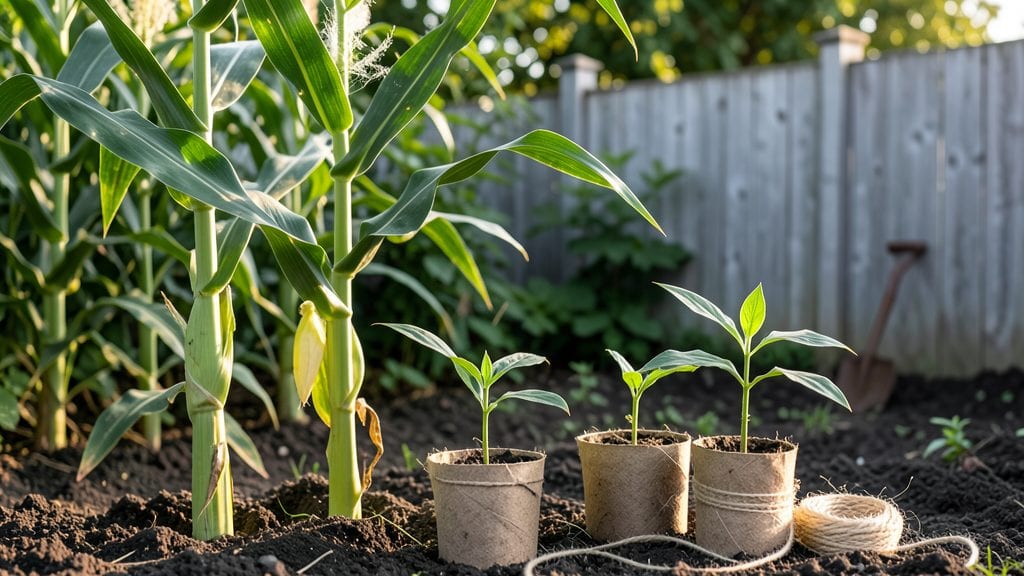
Proper garden corn spacing means the difference between scraggly stalks and ears so big they snap the husks. 🌽 I learned this the hard way when my first attempt left me with a jungle of tangled plants and half-sized ears—until I adjusted the spacing and saw the harvest triple.
The right spacing depends on your corn variety and soil fertility, but most gardeners get great results with 12-18 inches between plants in rows 30-36 inches apart. Sweet corn and popcorn need slightly more room than dent corn, and rich soil lets you plant a bit closer.
A simple 3x3 foot grid works for most home gardens.
When done right, you’ll end up with thick, sturdy stalks that support heavy ears without leaning. The leaves stay lush and green, not yellowed from competition, and you’ll avoid the dreaded "corn smut" that thrives in crowded, damp conditions.
This is the spacing that turns a decent garden into a cornucopia.
Works for backyard plots, community gardens, or even small urban setups with raised beds. Once you master this, you’ll never go back to guessing—just measure, mark, and plant with confidence. Let’s get those rows straight!
📚 In This Guide
- What you need
- Instructions
- Tips and common mistakes
- Wrapping up and next steps
What you need
- ● Corn seeds: Choose a variety suited to your climate (e.g., sweet corn like ‘Silver Queen’ or ‘Peaches & Cream’). Aim for 1–2 seeds per hill (or direct-sow 1 seed every 4–6 inches in rows).
- ● Garden soil: Well-draining, fertile loam (pH 6.0–6.8). Amend with compost if needed.
- ● Trowel or planting stick: For digging small holes (2–3 inches deep).
- ● Measuring tape or string: To mark rows and spacing (critical for garden corn spacing!).
- ● Watering can or hose: With a gentle spray nozzle for post-planting hydration.
- ○ Stakes or trellis (optional for pole corn): If growing varieties like ‘Country Gentleman,’ use 6–8 ft stakes for support.
- ● Seedling trays: For starting seeds indoors 2–3 weeks before the last frost.
- ● Mulch (straw or grass clippings): To retain moisture and suppress weeds.
- ● Fertilizer (balanced 10-10-10 or compost tea): Apply at planting and when tassels emerge.
- ● Row cover or shade cloth: For early-season protection from pests or heat.
Step-by-step guide for planting corn with perfect spacing
Here’s the proven method for planting corn that guarantees tall, sturdy stalks and heavy ears.
🌱 Step 1: Choose Your Planting Layout
Corn thrives in blocks, not single rows, because the wind pollinates the tassels. For 4 plants, arrange them in a 2x2 square—this creates a natural pollination zone. Space each plant 12 inches apart within the square, leaving 3 feet between squares if planting multiple blocks.
I always sketch the layout first to avoid mistakes. A 2x2 block ensures strong cross-pollination, while wider spacing prevents overcrowding. If your soil is rich, you can squeeze plants 8 inches apart, but expect slightly smaller ears.
💧 Step 2: Prepare the Soil and Plant Seeds
Work the soil to a depth of 6-8 inches, breaking up clumps so roots penetrate easily. Corn loves warm, loose soil—aim for a temperature of at least 60°F before planting. Drop 2-3 seeds per hole, 1 inch deep, and cover lightly with soil.
Thin to the strongest seedling after germination—this prevents competition. I use my finger to gently remove weaker sprouts, leaving just one per spot. Water immediately after planting to settle the soil around the seeds.
☀️ Step 3: Maintain Spacing as Plants Grow
Watch for first true leaves (the second set after the initial seed leaves) as your signal to check spacing. If plants start crowding before 6 inches tall, thin again to maintain 12-inch gaps. Corn needs room to develop strong stalks—overcrowding leads to weak, spindly plants with fewer ears.
I often see gardeners let corn get too close, then struggle with tangled stalks. Step back every few weeks and adjust—you’ll notice when leaves brush against neighbors. This is the moment to thin or space out remaining plants.
✂️ Step 4: Monitor and Adjust for Wind Pollination
When tassels (the pollen-producing stalks) emerge, ensure your 2x2 block is intact. If you planted single rows, add an extra row nearby to improve pollination. Corn relies on wind, so plants must be close enough for pollen to transfer but spaced enough to avoid disease.
Watch for silk appearance (the fuzzy strands at the top of each stalk). If silks don’t turn brown within 3-5 days of tasseling, your spacing may be off—either too far apart or too close. A well-spaced block ensures consistent pollination across all plants.
🌿 Step 5: Harvest at Peak Ripeness
Corn is ready when kernels are plump and milky when pierced with a fingernail. Check ears daily during peak season—overripe corn turns sweet and starchy fast. Cut stalks at the base with a sharp knife, leaving 1 inch of stem attached to preserve freshness.
I always harvest in the morning when sugars are highest. Store ears in the fridge for 3-5 days or blanch and freeze for long-term use. Proper spacing ensures you’ll have plenty of ears to enjoy!
Tips & tricks for perfect garden corn spacing
A few simple tricks will help you avoid common pitfalls and maximize your corn harvest.
Visualize Your Layout: Before digging, sketch your planting plan on paper. Mark each plant's position in your 2x2 square with 12-inch spacing—this prevents overcrowding and ensures proper wind pollination. I like to use colored pencils to differentiate between blocks and rows, especially if I'm planting multiple squares. This visual guide helps me avoid the common mistake of planting in straight lines, which can lead to poor pollination.
Soil Temperature Matters: Corn seeds need soil that's at least 60°F to germinate properly. I use a soil thermometer to check before planting—cold soil can delay germination by weeks. If your soil is too cool, consider using black plastic mulch to warm it up faster. Remember, those 2-3 seeds per hole won't sprout well if the soil isn't warm enough.
Thinning Technique: When your seedlings reach about 2 inches tall, it's time to thin. I find using a small trowel helps me gently remove weaker plants without disturbing the roots of the stronger ones. Leave just one plant per spot, and make sure to water immediately after thinning to help the remaining plants recover. This step is crucial for preventing competition that leads to weak stalks.
Pollination Check: When tassels appear, check for silks emerging from the top of each ear. If silks don't turn brown within 3-5 days of tasseling, your spacing might be off. I've found that stepping back and looking at the entire block helps me spot any gaps or overcrowding that might affect pollination. A well-spaced block ensures all plants get equal access to pollen.
Pro Tips for Garden Corn Spacing
- A few simple tricks will help you avoid common pitfalls and maximize your corn harvest.
- Visualize Your Layout: Before digging, sketch your planting plan on paper.
- Soil Temperature Matters: Corn seeds need soil that's at least 60°F to germinate properly.
Frequently asked questions
Got questions about getting the perfect garden corn spacing? You’re not alone! Here are some of the most common concerns—and their answers—to help you grow a thriving corn patch with minimal stress.
How close can I plant corn without crowding?
For most sweet corn varieties, space plants 8–12 inches apart in rows that are 24–36 inches apart. If you’re growing popcorn or field corn, you can push it slightly closer (6–8 inches apart) since they’re more drought-tolerant. Pro tip: Overcrowding leads to weak stalks, poor ear development, and increased disease risk.
When is the best time to plant corn for proper spacing?
Corn thrives in warm soil (60°F+), so wait until 2–3 weeks after your last frost date when nighttime temps stay above 50°F. Early planting in cold soil can stunt roots, while late planting may result in shorter stalks. Bonus: Use a soil thermometer to check—corn won’t germinate well below 55°F!
Can I plant corn in hills instead of rows for better spacing?
Hill planting (3–4 seeds per mound, spaced 3 feet apart in all directions) mimics natural growth patterns and improves airflow. This method works well in smaller gardens or for heirloom varieties. Just ensure hills are 12–18 inches tall to prevent soil-borne diseases from splashing onto ears.
My corn stalks are leaning or falling over—what went wrong?
Leaning or "gooseneck" corn usually means overcrowding or poor soil support. Check your spacing first—if plants are too close, thin them immediately. Also, ensure soil is well-drained and rich in organic matter (compost or aged manure helps). For extra support, stake tall varieties or plant near a fence.
Do I need to adjust spacing for dwarf or super-tall corn varieties?
Yes! Dwarf varieties (like ‘Tom Thumb’) can be spaced 6–8 inches apart in tight rows (18–24 inches apart), while super-tall hybrids (8+ feet) need 12+ inches between plants and wider rows (36+ inches). Always check the seed packet for variety-specific guidelines—it’s your best friend!
Wrapping up and next steps
Perfecting your garden corn spacing is the secret to lush, thriving stalks and a bountiful harvest! 🌽 By following the right row and plant distances—whether you’re growing sweet corn, popcorn, or field corn—you’ll ensure strong stalks, better pollination, and fewer pests.
With the right prep, patience, and a little know-how, you’re well on your way to a garden that’s the talk of the neighborhood.
Ready to take the next step? Mark your calendar for planting season, gather your supplies, and get those rows ready. Happy gardening—your future harvest is waiting! 🌱