
Companion Plants
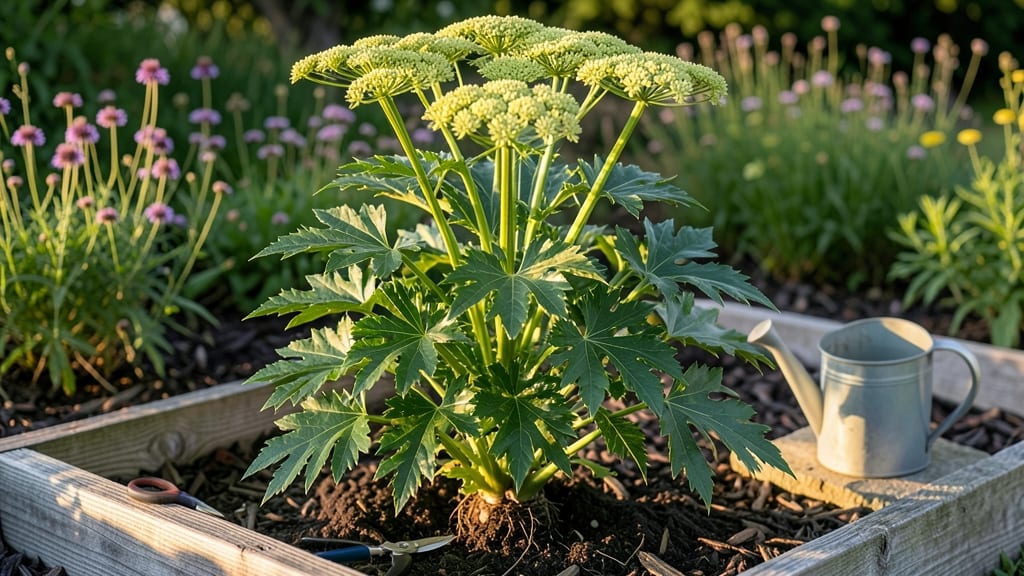
Growing garden lovage plants feels like cheating—this hardy perennial grows where others fail, and I’ve watched mine thrive in spots that kill everything else. 🌱 The secret lies in its resilience: it tolerates poor soil, forgetful watering, and even partial shade, yet still delivers lush, aromatic foliage that doubles as a kitchen staple and a pollinator magnet.
You’ll need a sunny or partially shaded spot with well-draining soil—even rocky ground works—and no special amendments. Plant seeds or divisions in early spring, spacing them 18-24 inches apart to give roots room to spread.
Water occasionally after establishment; once settled, lovage handles drought like a champ. The first year focuses on root growth, but by year two, you’ll have a 6-foot-tall powerhouse that keeps giving.
Harvest leaves anytime for a celery-like flavor, or let the plant flower for bees while saving seeds for next year. The stems store well in the freezer, and the roots—yes, you can dig them—make a great substitute for celery in soups.
Every cut encourages bushier growth, so the more you use it, the more it produces. It’s the ultimate low-maintenance, high-reward plant.
Perfect for cottage gardens, pollinator patches, or even as a living mulch between other perennials. Once planted, lovage becomes a permanent fixture—no replanting, no fuss, just year after year of fragrant, edible abundance. Let’s get you started with the foolproof method I’ve used for five seasons now.
📚 In This Guide
- What you need
- Instructions
- Tips and common mistakes
- Wrapping up and next steps
What you need
- ● Lovage plants or seeds: 1–3 potted lovage plants (for quick growth, available at nurseries or online)
- ● OR 1 packet of lovage seeds (about 50–100 seeds, organic preferred)
- ● Well-draining soil: 1–2 cubic yards of loamy, fertile soil (mix with compost for richer nutrients)
- ● Sunlight: A full-sun to partial-shade spot (6+ hours of sunlight daily)
- ● Water: Consistent moisture (1–2 gallons per watering, 2–3 times per week)
- ● Gardening gloves (1 pair, for protection)
- ● Trowel or shovel (for planting/seeding)
- ○ Garden fork (optional, for loosening soil)
- ● Watering can or hose (with adjustable nozzle)
- ○ Mulch (optional): 1–2 bags of straw or wood chips (to retain moisture)
- ○ Fertilizer (optional): Balanced 10-10-10 or compost tea (apply 2–3 times per season)
- ● A permanent garden bed (lovage hates transplanting!)
- ● Patience: Seeds take 2–3 weeks to germinate; plants mature in 2–3 years
- ● Space: Mature lovage grows 4–6 feet tall—allow 2–3 feet between plants
Step-by-step instructions for planting and cultivating garden lovage
This hardy perennial thrives with minimal effort once you get the initial setup right.
🌱 Step 1: Choose the Perfect Planting Site
Lovage demands full sun to partial shade—at least 6 hours of direct sunlight daily—but tolerates light shade in hotter climates. I always pick a spot with well-draining soil because soggy roots lead to rot. Test your soil by digging a 6-inch hole; if water pools after 30 minutes, amend with 2-3 inches of compost to improve drainage.
This herb spreads aggressively, so give it 3-4 feet of space between plants or contain it with underground barriers if needed. The roots grow deep, so avoid areas with shallow bedrock or compacted clay. Lovage’s large leaves and towering stems (up to 6 feet tall) need room to thrive without crowding.
🪴 Step 2: Prepare the Soil and Plant
Work 3-4 inches of aged compost into the top 12 inches of soil to enrich it without overwhelming the plant. Lovage prefers slightly alkaline to neutral soil (pH 6.0-7.5)—test your soil with a kit if unsure. If your soil is acidic, mix in 1 cup of garden lime per square foot before planting.
Dig a hole twice as wide as the root ball but only as deep as the container’s base. Gently remove the plant from its pot, loosen any circling roots, and place it in the hole so the top of the root ball sits level with the soil surface. Backfill with native soil, pressing lightly to eliminate air pockets. Water deeply to settle the soil around the roots.
☀️ Step 3: Water and Mulch for Long-Term Success
Water deeply once a week during the first growing season, aiming for 1-2 inches of water per week. Lovage’s deep roots make it drought-tolerant once established, but young plants need consistent moisture. You’ll know it’s time to water when the top 2 inches of soil feel dry. Avoid overhead watering to prevent fungal diseases.
Apply a 3-inch layer of organic mulch (like shredded bark or straw) around the base, keeping it 2 inches away from the stem. Mulch conserves moisture, suppresses weeds, and regulates soil temperature. Replenish mulch annually in late winter to protect roots from temperature fluctuations. Lovage’s resilience shines here—once settled, it rarely needs extra care.
✂️ Step 4: Prune and Harvest Strategically
Harvest leaves anytime from late spring through fall, cutting stems just above a leaf node to encourage bushier growth. Never take more than one-third of the plant at once—this perennial rewards patience. For stems, wait until mid-to-late summer when they reach 4-5 feet tall before cutting for culinary use or drying.
In early spring, trim back any dead or damaged foliage before new growth begins. If the plant becomes too leggy, cut back one-third of the tallest stems in late summer to promote denser growth. Lovage’s thick, taproot system makes it nearly indestructible—even if you forget to prune, it bounces back the next season.
⏰ Step 5: Overwintering and Seasonal Care
Lovage is fully hardy in USDA zones 3-9, requiring no winter protection beyond normal garden care. In colder regions, a thick layer of mulch (4-6 inches) insulates roots during freeze-thaw cycles. The plant may die back to the ground in winter but always regrows from the root crown in spring.
Fertilize lightly in early spring with a balanced organic fertilizer (10-10-10) or compost tea. Over-fertilizing leads to excessive leaf growth at the expense of flavor. Lovage’s perennial nature means it thrives for decades with minimal intervention—just keep the soil loose and the sunlight ample.
Tips & tricks for perfect garden lovage cultivation
Took me years to master these tricks—lovage is forgiving, but these details make all the difference between a thriving herb and one that just survives.
Sunlight Strategy: The 6 hours of sunlight requirement is non-negotiable, but here's what I've learned: In hotter climates, lovage actually benefits from afternoon shade to prevent leaf scorch. I've seen plants in full sun wilt dramatically by mid-afternoon, only to recover once temperatures drop. If you're in zone 8 or higher, consider planting near a structure that provides light afternoon shade during peak summer months.
Soil Test Tip: That 30-minute water test for drainage is gold, but I've found an even better trick: Press your finger into the soil after digging the hole. If it feels like packing moist sand (holds shape but crumbles easily), you're good. If it feels sticky and stays together, you definitely need more compost. I've ruined three lovage plants before I learned this tactile test—trust me on this.
Mulch Depth Matters: The 3-inch mulch layer is perfect, but here's the secret: Use a mix of coarse wood chips and straw. The wood chips break down slowly, adding organic matter, while the straw prevents soil compaction. I've noticed plants with pure straw mulch develop more compacted soil over time, while the mixed approach keeps roots happy for years. Keep that 2-inch clearance from the stem to prevent rot, no matter what you use.
Harvesting Hack: When harvesting leaves anytime from late spring through fall, I've found that cutting in the morning—when dew is still present—yields the most flavorful leaves. The plant's natural moisture content is highest then, and the leaves hold their shape better when used in cooking. For stems, wait until they're at least 4 feet tall before cutting; I've seen stems that were harvested too early produce hollow, less flavorful stalks.
Pro Tips for Garden Lovage Plants
- Took me years to master these tricks—lovage is forgiving, but these details make all the difference between a thriving herb and one that just survives.
- Sunlight Strategy: The 6 hours of sunlight requirement is non-negotiable, but here's what I've learned: In hotter climates, lovage actually benefits from afternoon shade to prevent leaf scorch.
- Soil Test Tip: That 30-minute water test for drainage is gold, but I've found an even better trick: Press your finger into the soil after digging the hole.
Frequently asked questions
Got questions about growing garden lovage? You’re not alone!
Here are answers to the most common queries—from planting tips to troubleshooting—so you can nurture this hardy herb with confidence.
How do I know when lovage seeds are ready to harvest?
Lovage seeds mature when the seed heads turn brown and crispy, usually 8–12 weeks after flowering. Gently rub the dried heads over a paper bag to collect seeds. Store them in a cool, dry place for up to 2 years—no fancy equipment needed!
Can I grow lovage from store-bought roots instead of seeds?
Lovage roots are easy to propagate. Dig up a healthy root (about 3–4 inches long), trim the top, and replant it in moist soil. Keep it watered until new shoots appear—typically within 4–6 weeks. A great way to multiply your plants for free!
Why are my lovage leaves turning yellow? Is it dying?
Yellowing leaves often signal overwatering, poor drainage, or nutrient deficiency. Check the soil—lovage prefers well-draining, slightly moist (not soggy) conditions. If the roots smell rotten, trim affected parts and improve drainage. With better care, it’ll bounce back!
Is lovage invasive? Should I worry about it spreading?
Lovage is not highly invasive but can self-seed if left unchecked. To control spread, deadhead flowers before they go to seed or harvest seeds intentionally. It’s a great companion plant but plays nice—just give it a little attention!
Can I use lovage like celery in cooking, or is it different?
Yes! Lovage’s flavor is a bold, celery-like twist with citrusy, anise undertones. Use stems and leaves fresh in soups, stews, or as a garnish. Dried lovage works too—just crush it lightly. Pro tip: A pinch adds depth to marinades or roasted veggies!
Wrapping up and next steps
Garden lovage is a low-maintenance, versatile perennial that rewards you with flavorful leaves, stems, and edible roots—plus, it’s a fantastic companion plant! Whether you’re drawn to its culinary potential or its hardy nature, this herb proves that growing great food doesn’t have to be complicated. 🌱✨
Ready to elevate your garden (and kitchen)? Start by planting a few lovage stems this season—your future self (and taste buds) will thank you! Grab your gloves and get growing!