
Vegetables
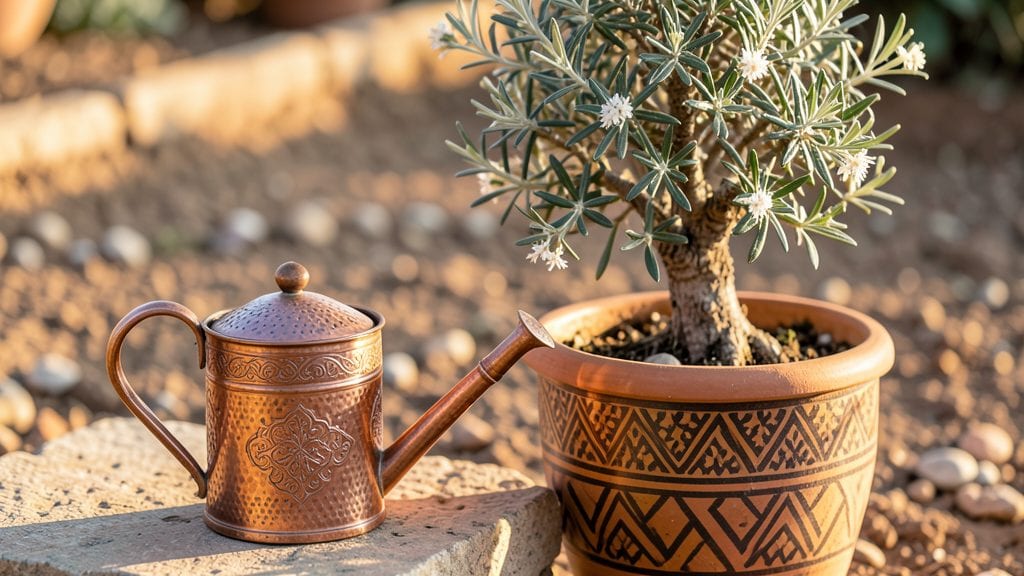
The Gardens of Marrakech blend lush Moroccan flora with geometric Islamic designs, featuring fragrant orange groves, cascading fountains, and shaded courtyards that reflect Berber and Andalusian influences while creating serene escapes from the city’s bustle.
The Gardens of Marrakech aren't just green spaces—they're living artworks where Islamic geometry meets nature. 🌿 These meticulously designed landscapes use symmetrical patterns and water features like fountains to evoke paradise, a tradition rooted in both Persian and Andalusian influences.
The combination of fragrant citrus groves, vibrant flowers, and tranquil water elements creates an atmosphere that feels both sacred and inviting.
What makes these gardens truly special is how they balance cultural heritage with practical beauty. The shaded courtyards provide respite from Marrakech's heat, while the cascading water features serve both aesthetic and cooling purposes.
Many visitors overlook the lesser-known gardens like Majorelle's hidden sections or Menara's desert oasis, which offer unique plant collections and seasonal blooms that change with Morocco's climate.
💡 In This Article
- Islamic Geometry and Water Features in Marrakech Gardens
- Best Hidden Gardens in Marrakech for Plant Lovers
Islamic geometry and water features in Marrakech gardens
Here's what's actually happening in these gardens: the Islamic geometric patterns you see aren't just decoration—they're spiritual symbols. The designs, often featuring repeating star shapes and arabesques, reflect the infinite nature of Allah while creating visual harmony.
These patterns are built using precise mathematical ratios, typically based on the golden ratio (1:1.618), which creates a sense of balance and perfection. The symmetry isn't arbitrary; it's meant to mirror the order of the universe according to Islamic cosmology.
The water features play an equally crucial role.
In Marrakech's gardens, you'll find fountains and pools that serve multiple purposes: they create cooling mist through evaporation (reducing temperatures by up to 5°F in the surrounding air), provide a soothing auditory experience, and symbolize the four rivers of paradise described in the Quran.
The most famous example is the 12th-century Agdal fountain in the Menara garden, which uses a sophisticated qanat system to distribute water evenly across the landscape. This engineering marvel ensures water flows continuously while minimizing waste—a practical solution that also enhances the garden's spiritual symbolism.
The combination of geometry and water creates what designers call "microclimates" within the gardens. The reflective surfaces of pools amplify the visual impact of the geometric patterns, while the water's movement adds dynamic contrast to the static designs.
What most people don't realize is that these elements work together to manipulate light and shadow throughout the day.
At 10 AM, when the sun is strongest, the water features create dappled shade patterns that cool the ground, while by 4 PM, the geometry casts intricate shadows that transform the garden's appearance completely. This interplay between design and natural elements is why these gardens feel so alive.
This design philosophy has its roots in the 10th-century Persian gardens, which were later adapted by Moorish rulers in Andalusia before reaching Morocco. The most influential example is the Alhambra gardens in Granada, where similar principles were used to create courtyard gardens that mirrored earthly paradise.
When the Almohad dynasty conquered Marrakech in 1147, they brought these concepts with them, adapting them to Morocco's climate and available materials. The result is a fusion where the geometric precision of Islamic art meets the lush, sensory experience of North African flora.
Consider how these elements work together in the Bahia Palace gardens: the central fountain isn't just decorative—it's positioned to create four equal quadrants in the courtyard, each containing different plant species arranged in perfect symmetry.
The water's sound masks the city's noise, while the geometric patterns on the tiles guide visitors' eyes toward the center.
This careful arrangement creates a meditative space where every element has purpose, from the 6-foot-tall cypress trees framing the views to the 1-inch-deep water channels that prevent erosion while adding to the visual complexity.
The science behind why this works so well involves both physics and psychology. The repetitive geometric patterns create a "restorative environment" by engaging the brain's pattern-recognition systems without overstimulation—a principle now studied in modern biophilic design.
Meanwhile, the water's constant movement triggers our innate attraction to flowing water, which evolutionary psychologists suggest may be tied to our ancestors' need to find safe water sources. In Marrakech's gardens, these elements combine to create spaces that feel both timeless and deeply human. ✨