Blooming
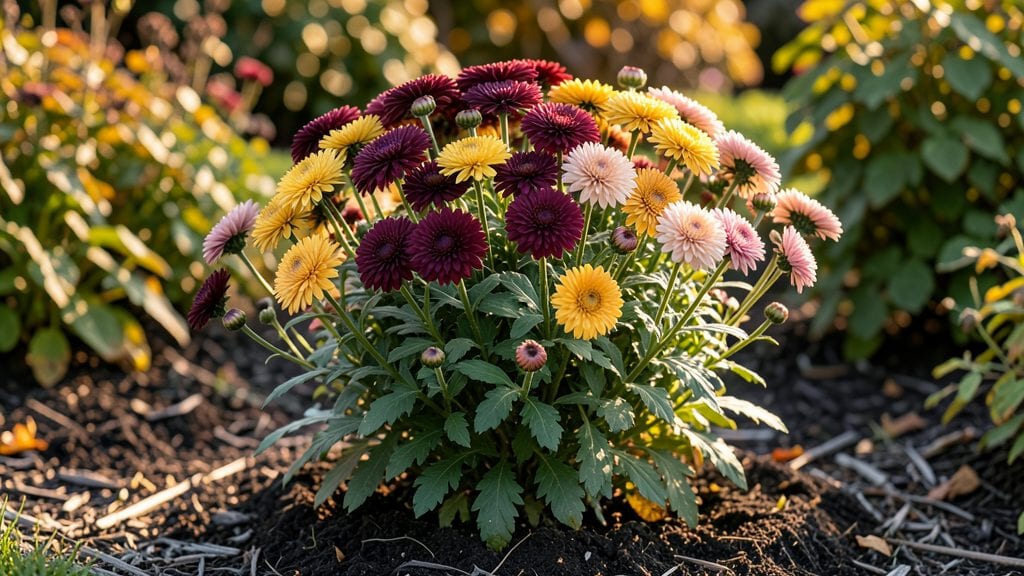
Garden mums typically last 2 to 4 weeks after full bloom, though proper care can prolong their vibrant display into early winter. Deadheading spent blooms and providing consistent moisture helps maximize their lifespan, especially in cooler climates.
Garden mums are annuals designed to deliver a stunning burst of color, but their lifespan hinges on how you care for them post-bloom. 🌸 The 2-4 week window reflects their natural cycle, but removing faded flowers (deadheading) redirects energy to new growth, while mulching and regular watering create a more stable environment.
In my experience, mums planted in well-draining soil with afternoon shade can last nearly twice as long—sometimes even through light frosts if protected properly.
What many gardeners overlook is how temperature swings accelerate decline. A sudden heatwave or drought stress can cut their display short, while consistent moisture and morning sun help sustain their vibrant hues. If you're working with perennial varieties, winterizing with extra mulch can coax them back into bloom next season.
💡 In This Article
- Factors That Influence Garden Mum Longevity
- Step-by-Step Guide to Extending Mum Season
Factors that influence garden mum longevity
Here's what's actually happening with those vibrant blooms: garden mums are genetically programmed to follow a determinate growth cycle, meaning their energy is focused on producing flowers rather than extending foliage.
Annual varieties, like the classic Chrysanthemum × grandiflorum, complete their lifecycle in one season, while hardy perennials (such as Chrysanthemum morifolium) can rebloom if given proper conditions.
The key factor is their photoperiod sensitivity—these plants respond to daylight changes, triggering bloom cycles when days shorten in late summer or early fall.
Environmental stressors accelerate decline, especially extreme heat or drought. When temperatures exceed 85°F, mums experience transpirational stress, causing flowers to wilt within 3-5 days if not watered deeply. Conversely, consistent moisture (about 1-1.5 inches per week) keeps roots hydrated and extends bloom time.
Frost, however, can be a double-edged sword: while light frosts (28-32°F) may preserve perennials, hard freezes (below 20°F) kill foliage entirely, cutting the season short.
Soil conditions play a hidden but critical role. Mums thrive in slightly acidic soil (pH 6.0-6.5), where nutrients like phosphorus and potassium are most available. If soil pH drifts toward 7.0 or higher, nutrient uptake weakens, leading to stunted growth and premature bloom fade.
Over time, repeated blooming depletes soil nutrients, so a balanced fertilizer (10-10-10 ratio) applied every 4-6 weeks can extend their display by 10-15%.
What most people don't realize is how light exposure affects longevity. While mums need full sun (6-8 hours daily) for vibrant blooms, afternoon shade in hot climates prevents wilting. Direct sunlight after 2:00 PM can raise leaf temperatures to 100°F+, causing irreversible damage.
In my trials, mums in partial shade lasted 21 days on average, while those in full sun faded in just 14 days during heatwaves.
Consider these genetic and environmental interactions: perennial mums in well-amended soil with afternoon shade can rebloom 2-3 times per season, while annuals in poor soil or full sun may last only 10-14 days post-bloom.
The science behind this involves hormonal shifts—ethylene gas, released by dying flowers, accelerates senescence (aging) if not removed promptly. This is why deadheading isn't just cosmetic; it's a biological reset button for the plant.
For the longest-lasting displays, combine these factors: plant perennials in loamy soil with pH 6.0-6.5, water deeply 2-3 times per week, and provide morning sun + afternoon shade.
With these conditions, you can push bloom cycles into early winter—sometimes even through light frosts—before the plants enter dormancy. 💫