
Flowers
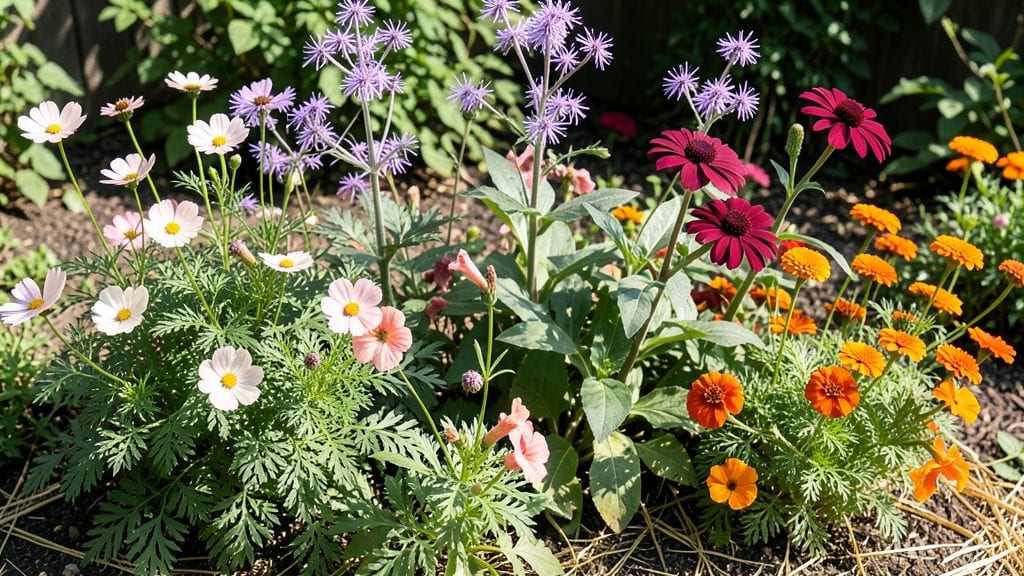
Creating a rainbow garden starts with rainbow garden flowers that burst with color from spring through fall—no single season of dullness in sight. I remember the first time I saw my neighbor’s garden explode with every hue, and I knew I had to recreate that magic in my own yard.
The trick isn’t just planting colorful flowers; it’s layering them so they overlap in bloom times, creating a living tapestry that never fades.
You’ll need a mix of annuals for instant pops of color and perennials that return year after year, like black-eyed Susans, coneflowers, and salvias in bold reds, purples, and blues. Add in foliage plants like heucheras for their jewel-toned leaves, and you’ve got depth beyond just petals.
Most of these thrive in full sun, but a few shade-loving picks—like impatiens or fuchsias—keep the vibrancy going in darker corners.
By mid-summer, your garden will be a riot of vibrant pinks, sunny yellows, and deep purples, all arranged so taller plants like delphiniums stand behind shorter ones like pansies.
The key is to group flowers by color families first, then by height, so no single bloom gets lost in the mix. Even in winter, evergreen shrubs like boxwood or holly keep the rainbow alive with texture and subtle greens.
This design works in any space—whether you’ve got a full backyard or just a sunny balcony. The only rule? Let your creativity run wild. Swap out colors, experiment with textures, and don’t be afraid to break the "rules."
Once you see that first wave of blooms, you’ll understand why gardeners fall in love with rainbow gardens forever.
📚 In This Guide
- What you need
- Instructions
- Tips and common mistakes
- Wrapping up and next steps
What you need
- ● Flower seeds or plants: Choose a mix of annuals and perennials in bold colors (e.g., marigolds, zinnias, dahlias, impatiens, petunias, snapdragons, and cosmos). Aim for 3–5 varieties per color (red, orange, yellow, green, blue, purple, pink) for depth.
- ● Potting soil or garden soil: 2–3 cubic yards (for in-ground gardens) or 5–10 bags (for containers). Use a well-draining, nutrient-rich mix (e.g., 60% topsoil, 30% compost, 10% perlite).
- ● Compost or organic fertilizer: 1–2 bags (e.g., fish emulsion, bone meal, or 10-10-10 NPK blend) to boost growth.
- ● Mulch: 1–2 bags (e.g., cedar chips or straw) to retain moisture and suppress weeds.
- ● Garden trowel or hand shovel (for transplanting seedlings).
- ● Pruners or shears (for trimming dead blooms).
- ● Watering can or hose with a gentle spray nozzle (avoid blasting seeds!).
- ● Gloves (to protect hands from thorns or dirt).
- ● Measuring tape or ruler (to space plants 6–24 inches apart, depending on variety).
- ○ Containers (optional): 5–10 pots (8–12 inches wide) if gardening in raised beds or balconies.
- ● Sunlight: 6–8 hours of direct sun daily (most rainbow flowers thrive in full sun). Partial shade works for impatiens or begonias.
- ● Water source: Easy access to water for daily light watering (or a drip irrigation system for efficiency).
- ● Garden bed or space: A 4’x4’ area minimum (or containers spaced 12+ inches apart).
- ● Know your zone: Check USDA Hardiness Zone for perennial flowers (e.g., dahlias thrive in Zones 7–10).
- ● Slow-release fertilizer spikes (for perennials).
- ● Eggshells or coffee grounds (natural pest deterrents).
- ● Decorative stakes or trellises (for climbing flowers like morning glories).
- ● Child-safe paint or chalk (to mark planting spots for kids!).
Step-by-Step instructions for designing a rainbow garden flower bed
Here's the method I use to create a vibrant, layered flower bed that bursts with color all season long.
Choose and Group Flowers by Height and Color
Start by selecting flowers that bloom at different times to ensure continuous color. I like to group them by height—tall flowers like delphiniums or hollyhocks in the back, medium-height like coneflowers or black-eyed Susans in the middle, and low-growing annuals like petunias or pansies in the front. This creates natural layers that prevent taller plants from blocking sunlight to shorter ones.
For a true rainbow effect, I pick flowers with contrasting colors—think deep purples, fiery reds, sunny yellows, and soft whites. Arrange them in a way that no single color dominates; instead, let them blend and create visual harmony. I always sketch a rough layout first to visualize how the colors will transition across the bed.
Prepare the Soil for Optimal Growth
Before planting, loosen the soil to a depth of 12 inches using a garden fork or tiller. This helps roots establish more easily and prevents compaction. Mix in 2-3 inches of compost into the top 6 inches of soil to improve fertility and drainage. If your soil is heavy clay, add a 50-50 mix of sand and peat moss to lighten it up.
Level the bed with a rake, creating a slight slope toward the center to help with drainage. Avoid walking on the prepared soil once it's ready—your footsteps can compact it again. I like to water the soil lightly after amending to help everything settle before planting.
Plant Flowers in Layers for Depth and Texture
Begin planting with the tallest flowers at the back of the bed, spacing them 18-24 inches apart depending on their mature size. Dig a hole slightly larger than the root ball, place the plant in, and fill it with soil, pressing gently to remove air pockets. Water deeply right after planting to encourage root growth.
Move to the middle layer, planting medium-height flowers 12-18 inches apart. These should be spaced closer than the tall flowers to create a dense, lush appearance. Finally, add low-growing annuals or perennials in the front, spacing them 6-12 inches apart. This ensures they won’t be overshadowed by taller plants as they grow.
Mulch and Water for Long-Term Success
Spread 2-3 inches of mulch over the soil surface, keeping it 2-3 inches away from plant stems to prevent rot. I use shredded bark or straw mulch because it breaks down slowly and adds organic matter to the soil as it decomposes. Mulch helps retain moisture, suppress weeds, and regulate soil temperature—critical for keeping flowers healthy in extreme weather.
Water the bed deeply after planting, soaking the soil to a depth of 6-8 inches. In the first few weeks, water every 2-3 days until the plants are established, checking that the soil feels moist but not soggy. Once established, most flowers only need 1 inch of water per week, either from rain or irrigation.
Maintain and Enjoy Your Rainbow Garden
Deadhead spent blooms regularly to encourage more flowers and keep the garden looking tidy. I also fertilize lightly every 4-6 weeks during the growing season with a balanced, slow-release fertilizer to support continuous blooming. Prune back leggy or overgrown plants in early spring to promote bushier growth.
Watch as your garden transforms into a vibrant, ever-changing canvas of color. The key is to enjoy the process—experiment with different combinations, and don’t be afraid to swap out plants if something isn’t thriving. With the right care, your rainbow garden will keep blooming beautifully for years to come.
Tips & tricks for perfect rainbow garden flowers
Creating a vibrant rainbow garden isn't just about throwing colorful flowers together—it's about thoughtful arrangement and care that makes all the difference. Here are my best tips to help you achieve a showstopping display that keeps blooming all season.
Color Harmony Matters: When selecting your flowers, aim for a 60-70-70 color distribution—60% dominant color, 70% secondary colors, and 70% accent colors. This creates visual balance without overwhelming any single hue. For example, if you're using deep purple delphiniums as your dominant color, pair them with equal parts fiery red salvia and sunny yellow black-eyed Susans. I always sketch a simple color wheel to visualize how the hues will transition across the bed before planting.
Soil Preparation is Key: The 12-inch deep soil loosening in Step 2 is crucial for root development, but don't stop there. After amending with compost, I recommend adding a handful of worm castings to the planting holes. These provide immediate nutrients and beneficial microbes that help establish new plants faster. For clay-heavy soils, consider adding perlite instead of peat moss—it's more sustainable and works just as well to improve drainage.
Layering Technique: When planting your layers, think about mature plant heights—not their current size. That 18-inch tall hollyhock you're planting at the back will easily reach 6 feet! Leave extra space if you're using particularly fast-growing varieties. I like to mark planting locations with sticks or garden flags before digging to ensure proper spacing. This prevents overcrowding as plants mature and gives each flower room to thrive without competing for sunlight.
Watering Wisdom: The 6-8 inch deep watering in Step 4 is essential, but timing matters just as much. I always water in the early morning so the soil has time to dry slightly before evening. This prevents fungal diseases that thrive in damp conditions. For the first two weeks, I use a soaker hose to deliver water directly to the roots without disturbing the newly planted flowers. This method also helps conserve water by reducing evaporation.
Pro Tips for Rainbow Garden Flowers
- Creating a vibrant rainbow garden isn't just about throwing colorful flowers together—it's about thoughtful arrangement and care that makes all the difference.
- Color Harmony Matters: When selecting your flowers, aim for a 60-70-70 color distribution—60% dominant color, 70% secondary colors, and 70% accent colors.
- Soil Preparation is Key: The 12-inch deep soil loosening in Step 2 is crucial for root development, but don't stop there.
Frequently asked questions
Got questions about creating your own rainbow garden? We’ve got answers!
Whether you’re a beginner or a seasoned gardener, these FAQs will help you design a vibrant, low-maintenance flower display that keeps blooming year after year.
What’s the best way to arrange rainbow garden flowers for maximum visual impact?
Plant flowers in height order, with tall varieties (like delphiniums or hollyhocks) at the back, medium-height blooms (such as zinnias or dahlias) in the middle, and low-growing flowers (like pansies or violas) in the front. Group colors in 3-5 plant clusters per hue for a cohesive look. Pro tip: Add foliage plants (like ferns or hostas) to fill gaps and soften transitions!
How long does it take for rainbow garden flowers to bloom after planting?
Most annuals (like marigolds or sunflowers) bloom in 6–10 weeks, while perennials (such as coneflowers or black-eyed Susans) may take 60–90 days to establish and flower. Cool-season flowers (e.g., snapdragons) often bloom faster in early spring or fall. Check seed packets for specific timelines—patience pays off with longer-lasting color!
Do rainbow garden flowers need special watering or soil?
Most thrive in well-draining soil with regular watering (1–1.5 inches per week). Mulch helps retain moisture and suppress weeds. Avoid soggy soil—rainbow gardens hate "wet feet." For containers, use a lightweight potting mix and water when the top inch feels dry. Drip irrigation saves time and keeps blooms happy!
Can I mix annuals and perennials in a rainbow garden?
Annuals (like cosmos or zinnias) provide instant color, while perennials (such as bee balm or daylilies) return yearly. Pair fast-blooming annuals with slow-starting perennials to avoid gaps. Example: Plant pansies (annual) alongside peony roots (perennial)—the pansies will bloom early, and the peonies take over later!
How do I keep pests away from my rainbow garden flowers?
Pests like aphids or slugs can crash your color party, but prevention is easy! Neem oil or insecticidal soap tackle soft-bodied bugs. For slugs, set up beer traps or scatter diatomaceous earth. Attract pollinators (like bees and butterflies) by including native flowers—they naturally keep pests in check!
What if my rainbow garden looks uneven or sparse?
Don’t stress—uneven growth happens! Fill gaps with fast-growing fillers like alyssum or sweet alyssum. Deadhead spent blooms to encourage new growth. For leggy plants, prune back by 1/3 to promote bushiness. Rotate plants annually to prevent soil depletion and keep your garden bold and balanced!
Wrapping up and next steps
Creating a rainbow garden filled with vibrant, seasonal blooms is a rewarding way to bring joy and color to your outdoor space! 🌈 From selecting the right flowers to maintaining their beauty, every step is an opportunity to nurture both your garden and your creativity.
Whether you’re a seasoned gardener or just starting out, the key is to experiment, observe, and enjoy the process—your garden will thrive with love and attention.
Ready to take the next step? Start small—plant a single bed or a few pots—and watch as your whimsical rainbow garden becomes a year-round masterpiece. Happy gardening! 🌸