Planting
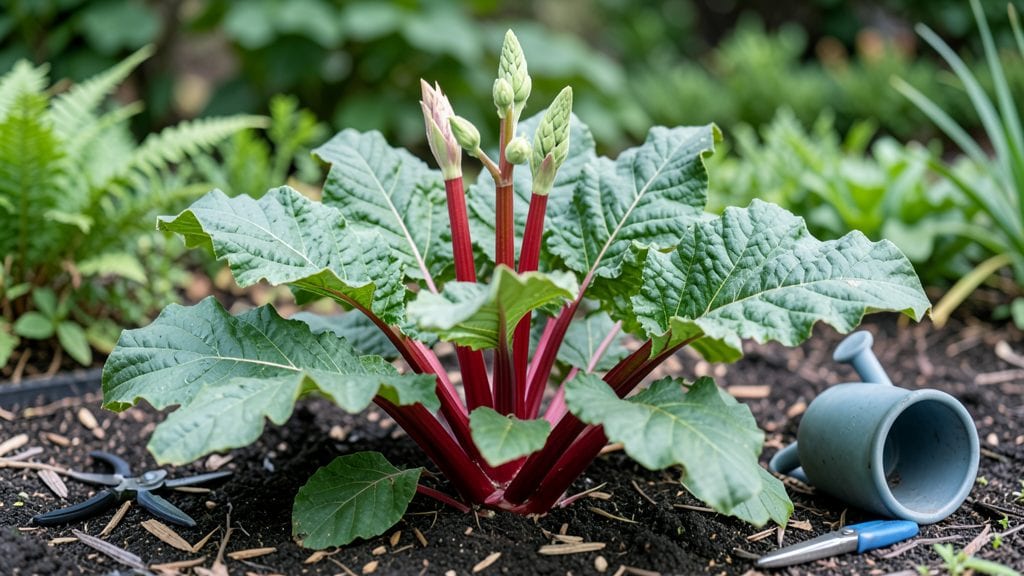
Here are some rhubarb gardening tips that make this cold-hardy perennial feel like a gardening shortcut—plant a crown in fall, and by spring, you’ll be harvesting bright green stalks with almost no effort. 🌱 Last October, I tucked mine into the soil, and by early spring, the stalks were already poking through the soil, ready to harvest just as the first snow melted.
The secret isn’t fancy soil or rare varieties—it’s patience and the right conditions. Rhubarb thrives in well-draining soil with plenty of organic matter, and it doesn’t mind cold winters. In fact, the chill helps it store energy for next year’s harvest.
Space plants 3-4 feet apart to give them room to spread, and mulch heavily in winter to protect the crowns from freeze-thaw cycles.
📚 In This Guide
- What you need
- Instructions
- Tips and common mistakes
- Wrapping up and next steps
What you need
- ● Rhubarb Crowns: Purchase 1–3 healthy, disease-free crowns (varities like ‘Victoria’ or ‘Strawberry’ work well).
- ● Well-Draining Soil: Amend clay-heavy soil with compost or aged manure (5–10 gallons per planting hole) for optimal growth.
- ● Fertilizer: A balanced 10-10-10 or organic compost (1–2 cups per plant) at planting time.
- ● Mulch: Straw or wood chips (2–3 inches thick) to retain moisture and suppress weeds.
- ● Watering Can or Hose: For consistent moisture (rhubarb loves 1–2 inches of water weekly).
- ● Garden Gloves & Trowel: For planting and soil prep.
- ● Pruners or Sharp Knife: To harvest stalks cleanly (sterilize with rubbing alcohol between cuts!).
- ● Soil pH Tester: Aim for 6.0–6.8 (rhubarb thrives in slightly acidic soil).
- ● Row Cover or Frost Blanket: Protects young plants from late frosts.
- ● Drip Irrigation System: For large gardens to automate watering.
- ● Plant Support Stakes: Useful if stalks get top-heavy (though rhubarb is generally sturdy!).
Step-by-Step guide to planting and caring for rhubarb
Rhubarb thrives in cool climates and comes back stronger each year—here’s how to plant and nurture it for harvests that last.
🌱 Step 1: Choose the Right Location and Prepare the Soil
Rhubarb loves full sun but tolerates partial shade in hotter regions. Pick a spot with at least 6 hours of sunlight daily, sheltered from strong winds. The soil should be well-draining, rich in organic matter, and slightly acidic to neutral (pH 6.0-7.0). Before planting, loosen the soil to a depth of 12 inches and mix in 2-3 inches of compost.
Here’s the thing—rhubarb hates soggy roots. If your soil drains poorly, amend it with sand or perlite to improve aeration. Test your soil’s drainage by digging a hole, filling it with water, and checking if it drains within an hour. If not, you’ll need to adjust the mix further.
🪴 Step 2: Plant Crowns at the Correct Depth and Spacing
Rhubarb grows from crowns (root systems), not seeds. Plant them in early spring or fall, spacing each crown 3-4 feet apart in all directions. Dig a hole just deep enough to cover the crown with 1 inch of soil—burying it deeper will rot the roots, while planting too shallowly exposes them to frost.
Place the crown with the buds facing upward (they’ll look like small, tight clusters). Spread the roots gently outward and cover them with soil. Press lightly to remove air pockets but don’t compact the soil. Water deeply right after planting to settle the soil and encourage root growth.
☀️ Step 3: Water and Mulch for Healthy Growth
Rhubarb needs consistent moisture, especially during its first growing season. Water deeply once a week (or more often in extreme heat) to keep the soil evenly moist but not waterlogged. You’ll know it’s right when the top 2 inches of soil feel damp but not soggy.
Apply a 3-inch layer of organic mulch (like straw or shredded leaves) around the base of the plant to retain moisture and suppress weeds. Mulch also protects the crown from temperature swings, which rhubarb hates. Replenish the mulch as it breaks down over the season.
✂️ Step 4: Prune and Harvest for Long-Term Productivity
Wait 2-3 years before harvesting rhubarb to give the plant time to establish strong roots. Once established, harvest stalks in early spring by cutting them at the base with a clean knife or shears. Leave at least 1 inch of the stalk attached to avoid damaging the crown.
Never harvest more than one-third of the stalks at a time. Over-harvesting weakens the plant and reduces next year’s yield. If you see yellow or mushy stalks, remove them immediately—they’re a sign of disease or rot.
🌿 Step 5: Protect and Maintain Through Seasons
Rhubarb is cold-hardy and can survive winter in most climates, but protect young plants with a 4-6 inch layer of mulch in freezing temperatures. In late winter, remove old leaves and trim back any dead foliage to encourage new growth.
Fertilize lightly in early spring with a balanced, low-nitrogen fertilizer (like 5-10-10) to support steady growth. Avoid high-nitrogen fertilizers—they promote leafy growth at the expense of stalks. Watch for pests like aphids or slugs, and address them promptly with organic sprays or barriers.
Tips & tricks for perfect rhubarb planting and care
Here's what I've learned after years of growing rhubarb—these little details make all the difference between a struggling patch and a thriving perennial that keeps giving for decades.
Location and Soil Secret: In Step 1, don't just check for 6 hours of sun—observe your garden throughout the day. Morning sun with afternoon shade works best in hot climates. I've seen rhubarb bolt (send up flower stalks) when exposed to intense afternoon heat. Also, test your soil's pH before planting. While rhubarb tolerates 6.0-7.0, it thrives best around 6.5-7.0. You can adjust pH with lime to raise it or sulfur to lower it if needed.
Planting Depth and Spacing: When planting crowns in Step 2, I can't stress enough how critical that 1-inch soil coverage is. The buds need to stay just below the surface—any deeper and they rot, any shallower and they freeze. Pro tip: Plant in early spring when soil temps are around 50°F. Cooler soil helps prevent crown rot. And for spacing, think of it like parking spaces—you want enough room for a car (or in this case, a shovel) to move between plants without disturbing them.
Watering Wisdom: The once-a-week watering in Step 3 is a guideline, not a rule. In my experience, the top 2 inches of soil should feel like a wrung-out sponge—not dripping wet, not bone dry. I check moisture by squeezing a handful of soil—if it crumbles easily, it needs water. For container-grown rhubarb, you'll need to water more frequently since pots dry out faster. And here's a trick: water in the morning so the leaves have time to dry, reducing disease risk.
Harvesting Hack: In Step 4, when harvesting stalks, always cut at a 45-degree angle just above a leaf junction. This helps water run off and prevents rot. I also recommend marking your plants with stakes or flags after harvest so you don't accidentally cut the same stalks again. And remember—those first-year stalks are tough and stringy. Don't harvest them! Let the plant focus on building roots for future harvests.
Pro Tips for Rhubarb Gardening Tips
- Here's what I've learned after years of growing rhubarb—these little details make all the difference between a struggling patch and a thriving perennial that keeps giving for decades.
- Location and Soil Secret: In Step 1, don't just check for 6 hours of sun—observe your garden throughout the day.
- Planting Depth and Spacing: When planting crowns in Step 2, I can't stress enough how critical that 1-inch soil coverage is.
Frequently asked questions
Got questions about growing rhubarb?
Here are answers to the most common ones—from planting to harvest—so you can grow this cold-hardy perennial with confidence!
When is the best time to plant rhubarb?
Plant rhubarb crowns in early spring (as soon as the soil is workable) or in fall (4–6 weeks before the first frost). Avoid transplanting in summer heat, as it stresses the plant. Choose a spot with full sun to partial shade—rhubarb thrives in cooler climates and can even handle light frost!
How long does it take for rhubarb to produce edible stalks?
Be patient! Rhubarb plants typically take 2–3 years to mature before yielding harvestable stalks. In the first year, focus on establishing strong roots. By year two, you’ll see sparse growth, and by year three, you’ll have a bountiful crop. Pro tip: Avoid harvesting in the first year to encourage robust growth.
Why is my rhubarb turning pink or red?
Pink or red-tinged stalks are usually harmless—it’s often due to sun exposure or genetics (some varieties naturally develop color). However, if the leaves turn yellow or wilt, check for overwatering or nutrient deficiencies. Ensure well-draining soil and mulch to keep roots healthy. Fun fact: The pinker the stalk, the sweeter the flavor!
Can I eat rhubarb leaves?
No!
Rhubarb leaves contain oxalic acid, which is toxic if ingested. Only harvest the tender, crisp stalks (avoid the leafy base). For a safe harvest, pull stalks gently at the base—don’t cut them, as this can damage the plant. Pro tip: Use a sharp knife to trim stalks cleanly for a polished look.
Does rhubarb survive winter?
Rhubarb is extremely cold-hardy (USDA zones 3–9) and thrives in winter. In cold climates, mulch heavily with straw or leaves to protect roots. In mild winters, no extra care is needed—just let the plant rest. Bonus: Rhubarb’s dormancy makes it a low-maintenance perennial!
What can I do if my rhubarb isn’t growing?
Check these common issues:
- Poor soil: Rhubarb loves rich, well-draining soil. Amend with compost if needed.
- Overcrowding: Divide clumps every 4–5 years to prevent decline.
- Pests: Watch for Japanese beetles or slugs. Use row covers or organic sprays.
- Too much sun: In hot climates, provide afternoon shade to prevent bolting (flowering).
If all else fails, patience is key—rhubarb is a slow but steady grower!
Wrapping up and next steps
Growing rhubarb is a rewarding journey that yields delicious, cold-hardy crops with minimal fuss! Remember to choose the right variety, prepare your soil, and give your plants plenty of space and patience.
With these rhubarb gardening tips, you’ll be harvesting vibrant stalks in no time—perfect for pies, compotes, or fresh snacks. 🌱
Ready to dive in? Start by selecting your rhubarb plants or seeds today—your future harvests (and taste buds!) will thank you. Happy gardening! 🌟