Tools
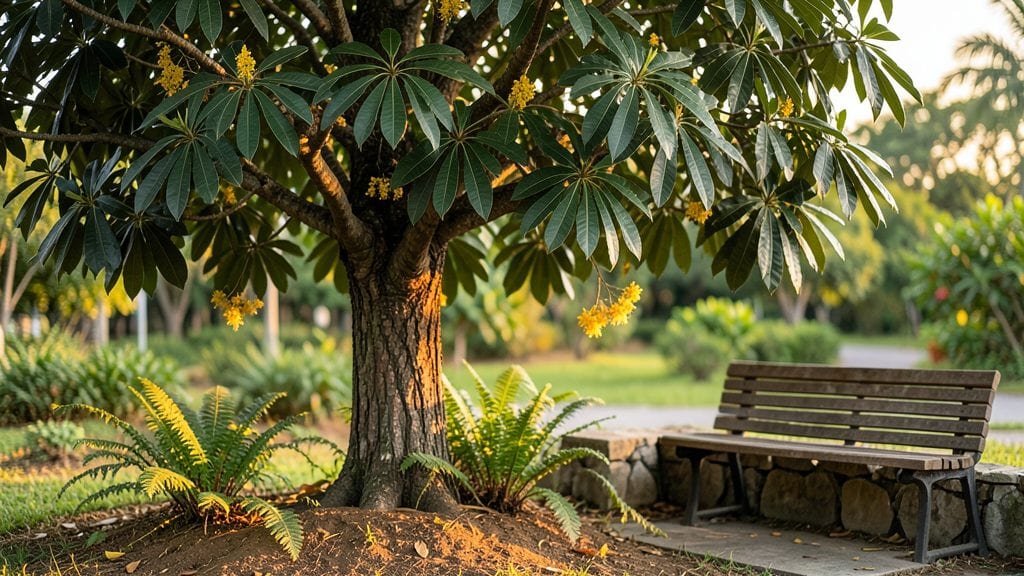
Creating a Singapore tree garden in your urban space transforms concrete jungles into lush, breathing canopies that cool the air and feed the soul. I’ve designed these compact ecosystems in tiny balconies and rooftops where native figs and tropical almonds thrive—layered like a forest, even in 200-square-foot plots.
The key isn’t space; it’s stacking plants vertically so every inch works harder.
Start with three layers: towering shade trees like the durian or keruing, mid-height fruit trees such as the mangosteen, and understory plants like ginger or turmeric that love humidity.
Singapore’s climate demands fast-draining soil mixes with coconut coir and perlite to prevent root rot, while drip irrigation keeps roots happy without wasting water. Even in HDB flats, these gardens produce edible canopies within 12–18 months.
What you’ll end up with is a self-sustaining micro-forest that outshines manicured lawns—vibrant green year-round, buzzing with pollinators, and filtering the city’s heat. The mangosteen’s fragrant blossoms arrive in May, while the durian’s massive leaves provide 30°F cooler shade than pavement. Plus, you’ll harvest fruit while reducing your carbon footprint.
This works for any urban Singapore space, from high-rise terraces to community gardens. The only rule? Start small, plant native, and let the canopy grow organically. Here’s how to begin without killing your first tree.
📚 In This Guide
- What you need
- Instructions
- Tips and common mistakes
- Wrapping up and next steps
What you need
- ● Container or Planter: 1–3 large pots (12–18 inches deep) or a raised bed (minimum 12" depth)
- ○ Fabric grow bags (optional, for better drainage)
- ● Soil Mix: 5–10 gallons of high-quality potting mix (look for "tropical blend" or "organic compost")
- ● 1–2 cups of perlite or orchid bark (for aeration)
- ● Tropical Plants: 1–2 canopy layer plants (e.g., Ficus microcarpa, Schefflera, or Dracaena)
- ● 2–3 understory plants (e.g., Calathea, Peperomia, or Fittonia)
- ● 1–2 ground cover or trailing plants (e.g., Pilea, String of Hearts, or Peperomia prostrata)
- ● Drainage: 1–2 inches of gravel or expanded clay pebbles (for pots)
- ● Drainage holes in containers (if not pre-drilled)
- ● Basic Tools: 1 trowel or small shovel
- ● 1 pair of gardening gloves
- ● 1 watering can or hose with a gentle spray nozzle
- ○ Optional Upgrades: Self-watering system (e.g., Olla pots or wicking beds)
- ● LED grow lights (for low-light spaces)
- ● Vertical garden kit (for maximizing space)
- ● Mulch (e.g., coconut coir or orchid bark) to retain moisture
- ● Access to bright, indirect light (6+ hours daily) or a grow light setup.
- ● Space for 1–3 layers of foliage (adjust based on container size).
- ● Commitment to regular watering (tropical plants love humidity!).
- ● Local climate check: Ensure plants thrive in your USDA hardiness zone (or use heat-tolerant varieties).
Instructions for designing a Singapore-inspired tree garden in urban spaces
This layered approach mimics Singapore's iconic vertical forests, adapting their principles to compact patios and balconies.
Select a Diverse Range of Tree Species for Canopy Layers
For a four-layer canopy, choose species that thrive in 6-8 hours of sunlight and tolerate urban conditions. Start with a 6-foot-tall emergent layer—like the Schefflera actinophylla (Umbrella Tree)—to anchor the design. This species handles pruning well and develops a broad canopy. Below it, add a 4-foot-tall canopy layer with Ficus microcarpa (Ginseng Fig), known for its air-purifying qualities and adaptability to containers.
For the understory layer, select 3-foot-tall plants like Dracaena marginata (Dragon Tree), which thrives in partial shade and adds architectural interest. Finally, incorporate ground cover with Fittonia albivenis (Nerve Plant) or Peperomia prostrata to fill gaps and retain moisture. Each layer should be spaced 12-18 inches apart to allow airflow and prevent overcrowding.
Prepare Containers and Soil for Urban Adaptability
Use 18-inch-diameter containers for emergent and canopy layers, filled with a well-draining potting mix that combines 60% peat moss, 30% perlite, and 10% compost. This blend ensures roots stay aerated while retaining enough moisture for tropical species. For understory plants, 12-inch pots suffice, but ensure they have multiple drainage holes to prevent root rot—a common issue in urban microclimates.
Add a slow-release fertilizer (10-10-10 ratio) to the soil mix at planting time. This provides a steady nutrient supply without risking salt buildup from frequent liquid fertilizers. Water the mix thoroughly before planting to settle it and remove air pockets. If working with balconies, use lightweight containers to avoid structural strain.
Plant and Stake for Structural Stability
Dig a hole in each container twice as wide as the root ball but no deeper than the pot’s current soil line. Place the plant at the same depth it was growing in its nursery pot—burying the stem too deeply can suffocate roots. Gently firm the soil around the base to eliminate air gaps, then water deeply to encourage root contact with the mix.
Stake taller species like the Schefflera and Ficus with 3-foot bamboo stakes tied loosely to the trunk with soft plant ties. This prevents toppling in windy urban environments. Prune any damaged branches immediately, and trim leggy growth to encourage bushier habits. Mulch the soil surface with 1 inch of orchid bark to retain moisture and suppress weeds.
Implement Watering and Light Strategies for Urban Conditions
Water deeply every 3-4 days during the first 4 weeks to establish roots, then adjust based on soil moisture—stick your finger 1 inch deep into the mix. Tropical plants in containers dry out faster than in-ground plants, so check daily in hot, dry weather. Use a self-watering system or drip irrigation if you’re away frequently, as urban heat islands can stress plants quickly.
Position containers where they receive morning sun and afternoon shade, especially in hotter climates. If natural light is limited, supplement with a LED grow light (12,000-15,000K color spectrum) for 4-6 hours daily. Rotate containers quarter-turn weekly to ensure even growth—you’ll notice leaning stems if light is uneven.
Maintain Pruning and Fertilizing for Long-Term Health
Prune emergent and canopy layers in early spring to remove dead wood and shape the canopy. Use clean, sharp pruners to make cuts just above a leaf node, and sterilize tools with 70% isopropyl alcohol between plants to prevent disease spread. Thin out overcrowded branches to improve airflow, which reduces fungal risks in humid urban microclimates.
Fertilize every 6 weeks during the growing season (spring through fall) with a balanced liquid fertilizer (20-20-20 ratio), diluted to half-strength. Flush the soil with water once a month to prevent salt buildup. Monitor for pests like spider mites or scale insects, which thrive in dry urban air—treat infestations immediately with neem oil spray to avoid systemic damage.
Tips & tricks for perfect Singapore tree garden design
Creating a thriving Singapore-inspired tree garden in limited urban spaces requires strategic planning and attention to detail. These insights will help you optimize your design for both aesthetics and plant health.
Species Selection Strategy: When choosing your four-layer canopy in Step 1, prioritize plants with similar moisture and sunlight requirements to simplify care. The Schefflera actinophylla and Ficus microcarpa both thrive in 6-8 hours of sunlight and tolerate urban conditions, making them ideal anchor plants. For understory options, consider pairing Dracaena marginata with Fittonia albivenis—their complementary growth habits create natural vertical layers without competing for resources.
Container Preparation Insight: In Step 2, the 60-30-10 soil blend is crucial, but don't overlook container weight distribution. Place heavier 18-inch containers on lower shelves or the ground level to prevent structural stress on balconies. For lightweight alternatives, consider fiberglass planters that weigh 20% less than traditional clay pots while maintaining durability. This adjustment becomes especially important when working with multiple large containers.
Planting Technique Refinement: The "twice as wide" hole recommendation in Step 3 deserves special attention—this creates optimal root spread without disturbing surrounding soil structure. When planting, gently tease out any circling roots from nursery pots to encourage outward growth. For the Schefflera and Ficus, consider adding a handful of mycorrhizal fungi to the planting hole to boost root development in urban soil conditions.
Maintenance Optimization: The 6-week fertilization schedule in Step 5 works well, but adjust timing based on seasonal growth patterns. In early spring, when new growth begins, fertilize every 4 weeks instead of 6 to support vigorous canopy development. For containers, use a water-soluble fertilizer with micronutrients to prevent deficiencies that often occur in compacted urban soils. The monthly flushing recommendation is particularly important—this prevents salt buildup that can occur with frequent liquid fertilizers in container gardens.
Pro Tips for Singapore Tree Garden
- Creating a thriving Singapore-inspired tree garden in limited urban spaces requires strategic planning and attention to detail.
- Species Selection Strategy: When choosing your four-layer canopy in Step 1, prioritize plants with similar moisture and sunlight requirements to simplify care.
- Container Preparation Insight: In Step 2, the 60-30-10 soil blend is crucial, but don't overlook container weight distribution.
Frequently asked questions
Got questions about Singapore Tree Garden and how to bring its magic into your compact urban space? Here are some answers to help you navigate this lush, layered approach to greenery—whether you're a beginner or a seasoned plant parent.
What are the key layers of the Singapore Tree Garden system?
The system mimics a tropical forest with five essential layers: canopy (tall trees), understory (medium trees), shrub layer (bushes), ground cover (creeping plants), and epiphytes (air plants). Each layer serves a purpose—shade, habitat, and soil health—while keeping the design compact and functional.
How long does it take to establish a full Singapore Tree Garden?
Patience is key! A basic framework can take 1–2 years with fast-growing species, while mature, multi-layered gardens may require 5–10 years. Start with hardy, low-maintenance plants like Ficus or Schefflera to speed up the process. Pro tip: Layer slower-growing plants (e.g., orchids) as you go.
Can I adapt this for small balconies or apartments?
Use vertical gardens, hanging planters, and dwarf varieties of tropical plants. For example, swap tall trees for Dracaena or Monstera in macramé hangers, and opt for ground covers like Fittonia (nerve plant) in shallow trays. Just ensure proper drainage—root rot is the #1 enemy of compact gardens!
What’s the best watering schedule for a Singapore Tree Garden?
Most tropical plants thrive with consistent moisture but hate soggy soil. Water 2–3 times weekly in hot weather, reducing to once a week in cooler months. Use self-watering planters or mulch to retain humidity. Troubleshooting: Yellow leaves? Overwatering. Crispy edges? Underwatering or dry air.
Are there low-maintenance alternatives to traditional tropical plants?
Yes! Swap high-maintenance picks for resilient, drought-tolerant varieties like:
- Zamioculcas zamiifolia (ZZ plant) – Thrives on neglect
- Sansevieria (snake plant) – Purifies air and survives dry spells
- Pothos (epipremnum) – Fast-growing, forgiving, and great for hanging
Wrapping up and next steps
Transforming compact urban spaces into lush, layered gardens is not just possible—it’s a rewarding journey! 🌿 The Singapore Tree Garden proves that even small areas can thrive with the right plants, techniques, and a touch of creativity.
Whether you’re a seasoned gardener or a beginner, this approach offers a sustainable way to bring nature into your home or workspace.
Ready to green up your space? Start small—pick one layer (like shrubs or ground covers) and experiment! Observe what works, adjust, and watch your urban oasis grow. Happy gardening! 🌱