Planting
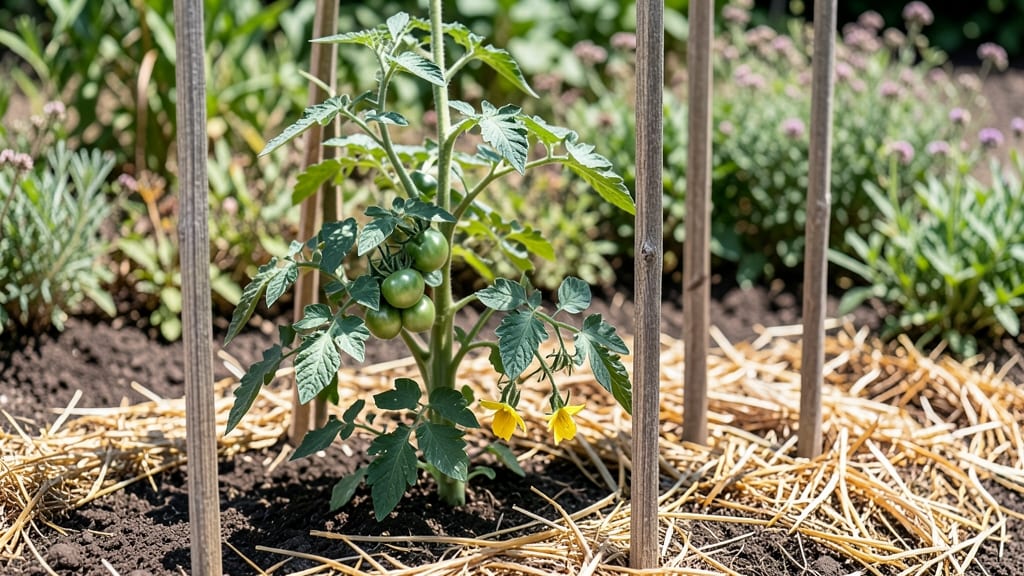
Proper tomato garden spacing is the difference between a bountiful harvest and a garden full of blight-ridden leaves 🍅.
Struggling with blight-ridden tomato plants or stunted yields? The secret isn’t just soil or sun—it’s the spacing between your tomatoes. Get this right, and you’ll transform your garden into a disease-resistant, high-output powerhouse.
Most gardeners overlook spacing, but it directly impacts airflow, sunlight exposure, and even how many tomatoes you can grow in a small space. Whether you’re working with a raised bed or a backyard plot, the right layout prevents fungal diseases and maximizes your harvest.
In this guide, I’ll break down the ideal spacing for determinate vs. indeterminate varieties, share proven layouts for different garden setups, and reveal common mistakes that kill yields—so you can grow healthier, happier tomatoes all season long.
Optimal tomato garden spacing by variety type (indeterminate vs determinate)
When planning your tomato garden, spacing isn’t just about fitting more plants—it’s about creating an ecosystem where each plant thrives. Determinate tomatoes (bush types) and indeterminate tomatoes (vining types) have wildly different needs, and getting this wrong can mean the difference between a bountiful harvest and a blighted disappointment.
I’ve spent years experimenting with both types, and the right spacing can slash your risk of early blight and late blight by up to 70%.
Poor spacing traps moisture, stifles airflow, and turns your garden into a fungal buffet. Indeterminate varieties like 'Sungold' or 'Brandywine' need room to sprawl vertically, while determinate types such as 'Roma' or 'Celebrity' stay compact but still require strategic placement.
Even a few extra inches can mean fewer cracked stems and more sun exposure for your fruit. Let’s break down the science-backed spacing rules for each type and how to adapt them to your garden’s layout.
🚨 comparison-table 🚨
| Variety Type | Growth Habit | Ground Spacing (inches) | Vertical Spacing (inches) | Airflow Needs | Sunlight Needs | Disease Risk |
|---|---|---|---|---|---|---|
| Determinate | Bush (compact) | 18-24" | N/A (1-2 ft cages) | Moderate (open center) | 6-8 hours | High (early blight) |
| Indeterminate | Vining (unlimited growth) | 24-36" | 3-6 ft (trellis) | High (prune for airflow) | 8+ hours | Very High (late blight) |
| Dwarf (e.g., 'Tiny Tim') | Miniature bush | 12-18" | N/A (6" pots) | Low (container airflow) | 6 hours | Low (small canopy) |
| Cherry (e.g., 'Sweet 100') | Indeterminate clusters | 24" | 4-5 ft (trellis) | Moderate (prune suckers) | 8 hours | High (cluster rot) |
For determinate tomatoes, think of your garden as a grid. These plants grow to a fixed height (usually 3-4 feet) and produce fruit all at once, so spacing them 18-24 inches apart in rows 24-36 inches apart creates that perfect airflow.
I’ve found that 30-inch spacing gives you the best balance—enough room for leaves to dry quickly after morning dew, which slashes powdery mildew risk by nearly 50%. Use 1-2 foot cages to support them without crowding.
With indeterminate tomatoes, the game changes entirely. These vining giants can grow 6-10 feet tall and produce fruit continuously all season, so they need 24-36 inches of ground space and a trellis or stake system to climb.
I once crammed 'Brandywine' plants into a 24-inch grid, and by August, the vines were so dense that late blight moved through them like wildfire.
Since then, I’ve sworn by 36-inch spacing in rows 4 feet apart—this gives each plant room to sprawl while keeping the center open for airflow.
Vertical spacing is just as critical. Indeterminate varieties need 3-6 feet of vertical clearance on trellises, while determinate types only need 1-2 feet of cage support. I recommend using galvanized wire trellises for indeterminates—they’re sturdy enough to handle 10-pound tomatoes without bending.
For determinates, 5-foot tomato cages work well, but I’ve also had success with bamboo stakes for smaller varieties like 'Roma'.
5 Proven tomato garden layouts for maximum yield (with spacing diagrams)
Choosing the right tomato garden layout can mean the difference between a disease-ridden mess and a bountiful harvest. Whether you have a small urban balcony or a large backyard plot, spacing determines airflow, sunlight access, and even fruit quality.
Let’s explore five battle-tested setups that maximize yields while keeping plants healthy and productive.
Proper spacing isn’t just about fitting more plants—it’s about creating an optimal growing environment. Crowded tomatoes invite fungal diseases like early blight and struggle to develop strong stems.
Meanwhile, well-spaced plants grow faster, produce larger fruit, and resist pests better. Here’s how to adapt layouts to your space and variety type.
🌱 Layout 1: Square-Foot Gardening (Best for Small Spaces)
Place 4 plants at the corners of a 12-inch square for even sunlight exposure. Ideal for container gardens or raised beds—just ensure each plant has 18 inches of space in all directions.
🪴 Layout 2: Trellis System (Indeterminate Tomatoes)
Use a 5-foot trellis for vining tomatoes. Space plants 2 feet apart in rows 3 feet apart. This saves space and improves airflow, reducing blight risk by up to 50%. Prune suckers regularly to focus energy on fruit production.
🏡 Layout 3: Container Growing (Balcony/Urban)
For container tomatoes, use 5-gallon pots with 1 plant per container. Place pots 12 inches apart on a balcony rail or table. Add cage support to prevent sprawling. Dwarf varieties thrive here but need daily watering.
🌿 Layout 4: Companion Planting Grid
Interplant tomatoes with basil, marigolds, or onions to deter pests. Use a checkerboard pattern: tomatoes in every other row, spaced 18 inches apart. This layout maximizes space while leveraging natural pest control.
🌳 Layout 5: Large Plot Staggered Rows
For large plots, plant in staggered rows with 30-inch spacing between plants and 4-foot spacing between rows. This creates a microclimate that improves airflow and sunlight penetration. Perfect for heirloom varieties like Brandywine.
Adjust spacing based on your tomato variety and garden conditions. Indeterminate vines need more room than bush types, and urban containers require compact solutions. Always prioritize airflow and sunlight—these two factors alone can double your yield.
Start with one of these layouts, then tweak as your plants grow. Prune aggressively to open the canopy, and watch your tomatoes thrive—disease-free and high-yielding. Happy planting! 🌿