
Vegetables
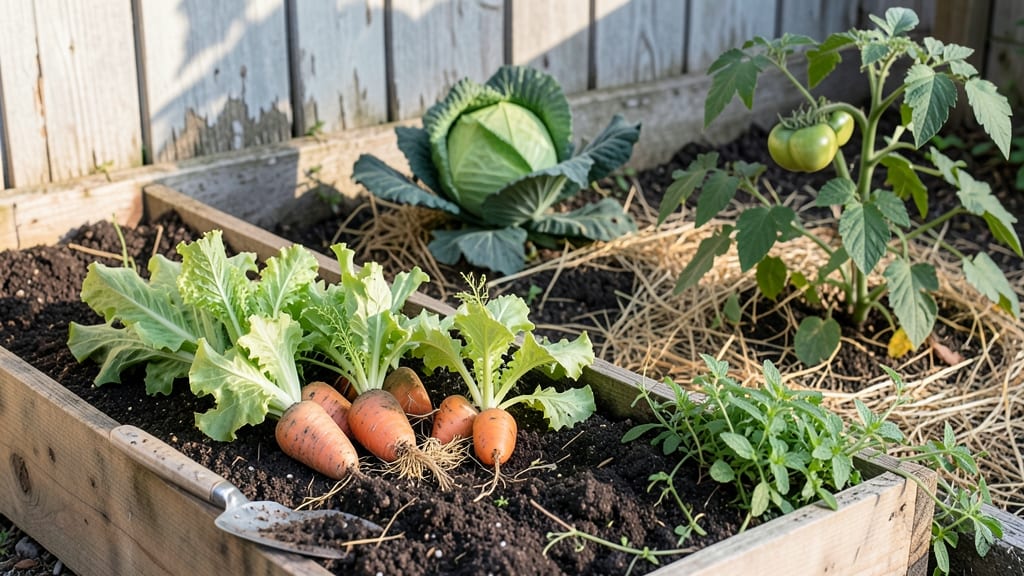
Victory gardens during WW2 were homegrown plots that produced 40% of the nation’s vegetables, freeing up commercial supplies for troops. Families grew tomatoes, potatoes, carrots, and leafy greens using simple tools and composting to maximize yields.
These wartime gardens weren't just a fad—they were a lifeline for food security when commercial farms struggled with labor shortages and rationing. 🌱 The U.S. government even launched campaigns like "Food Will Win the War," encouraging families to dedicate even small backyards to growing essential crops.
What made them so effective was their focus on high-calorie, nutrient-dense produce like potatoes and leafy greens, which could be stored long-term and required minimal resources to cultivate.
The movement also pioneered modern gardening techniques we still use today, from composting to crop rotation. Many families turned to heirloom varieties that thrived in less-than-ideal conditions, proving that sustainable growing was possible with basic tools and ingenuity.
This DIY approach didn't just feed families—it created a sense of shared purpose during a time of national crisis.
💡 In This Article
- How WW2 Victory Gardens Boosted Food Security
- Easy WW2-Inspired Crops to Grow Today
How WW2 victory gardens boosted food security
The U.S. government launched the Victory Garden campaign in 1942, urging Americans to grow their own food to alleviate pressure on commercial agriculture.
With 16 million gardens created by 1945, these plots produced about 40% of the nation's fresh vegetables—equivalent to the output of 41 million acres of farmland.
The initiative directly responded to wartime rationing (introduced in 1942) and the 2.5 million agricultural workers drafted into military service, leaving farms understaffed.
Crop selection focused on high-yield, nutrient-dense vegetables that required minimal space and resources. Potatoes topped the list, providing 40% of the nation's vitamin C during rationing. Leafy greens like collards and kale offered essential vitamins, while carrots and beets stored well for winter.
The government distributed 10 million seed packets annually through programs like "Food Will Win the War," which featured radio broadcasts and posters showing families tending gardens.
Soil conservation techniques were critical during WW2 when commercial fertilizers were rationed. Gardeners used composting household scraps and crop rotation to maintain soil fertility. Many turned to heirloom varieties that thrived in poor conditions, like the Irish Cobbler potato or Burpee's Golden Sweet corn.
These varieties often yielded 20-30% more than modern hybrids while requiring fewer chemical inputs.
Victory gardens also introduced innovative tools to maximize efficiency. The Victory Garden seed packets included detailed planting charts, while hand-powered tools like the Victory Garden hoe made weeding easier.
Many families repurposed household items—old tires became planters, and window boxes grew herbs in urban areas. The movement proved that small-scale farming could feed entire nations when coordinated strategically.
Beyond food production, these gardens fostered community resilience. Neighbors shared seeds, tools, and harvests, creating a 40% increase in local food networks. Schools participated too, with 1.5 million student-planted gardens by 1944.
The psychological impact was equally significant—gardening provided a tangible way for civilians to contribute to the war effort while maintaining normalcy during uncertain times.
The success of WW2 Victory Gardens laid the foundation for modern urban farming. Techniques like vertical gardening (using trellises for beans and peas) and square-foot planting (maximizing space) originated in these wartime plots.
Today, their legacy lives on in community gardens and backyard plots that prioritize sustainability over commercial efficiency. 🌱