
Watering
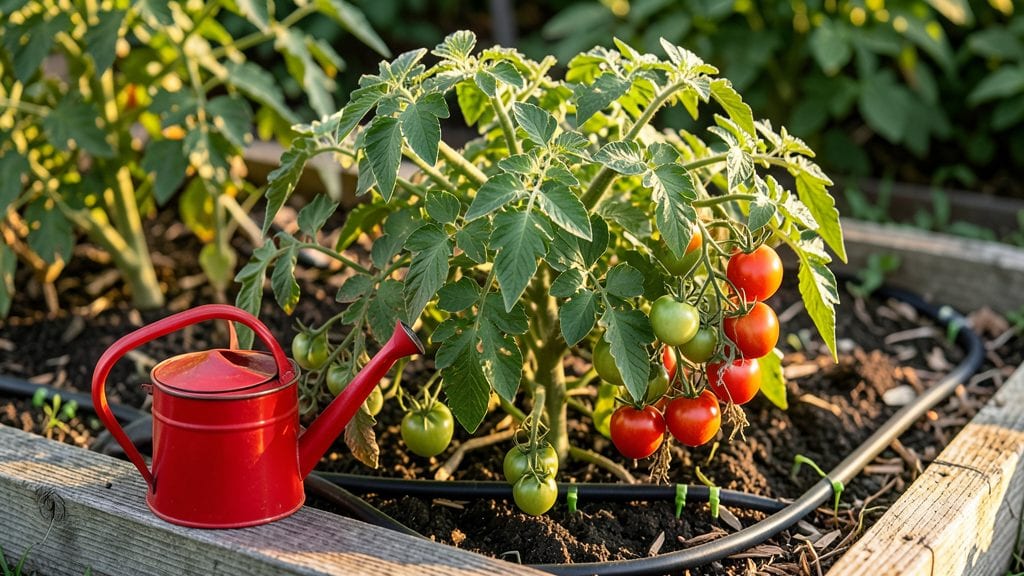
Watering your vegetable garden isn't just about keeping soil damp—it's about sending water deep enough to encourage strong roots that reach for nutrients. I learned this the hard way when my tomatoes kept toppling over from shallow roots, no matter how often I watered.
The key is consistent moisture that mimics natural rainfall, not sporadic sprinkles that only wet the surface.
Start with 1-2 inches of water per week, delivered either all at once or split into two deep sessions. Drip irrigation or soaker hoses are my go-to because they target roots directly, reducing waste and fungal risks from wet foliage.
Hand-watering works too, but only if you're methodical—aim for the base of plants, not the leaves, to prevent disease. Early morning is the best time to water, giving plants a full day to dry out.
You'll know you're doing it right when the soil stays evenly moist but not soggy, and your plants develop sturdy stems that can support themselves. Overwatering shows up as yellowing leaves or mold, while underwatering causes wilting even when the soil feels damp.
The secret is paying attention to your plants' specific needs—leafy greens like spinach need more frequent watering than drought-tolerant peppers.
For maximum efficiency, mulch around plants to slow evaporation and keep roots cool. This cuts watering needs by nearly 30% while improving soil health over time. The payoff? Healthier plants, bigger harvests, and less time fussing with the hose. Let's get those roots growing deep.
📚 In This Guide
- What you need
- Instructions
- Tips and common mistakes
- Wrapping up and next steps
What you need
- ● Watering Can (5-gallon or larger) – For precision watering (especially for seedlings).
- ● Hose with Adjustable Nozzle – A gentle spray or soaker setting works best to avoid erosion.
- ○ Drip Irrigation System (Optional but Recommended) – Saves water and delivers moisture directly to roots. Look for 1/4-inch tubing and emitters (1-2 per plant).
- ● Watering Timer (Smart or Mechanical) – Automates watering schedules (e.g., 30-minute cycles 1-2x daily).
- ● Rain Gauge or Moisture Meter – Tracks soil moisture (aim for 1-1.5 inches per week, including rain).
- ● Mulch (Straw, Wood Chips, or Grass Clippings) – 2-3 inches thick to retain moisture and suppress weeds.
- ● Well-Draining Soil – Test your soil’s pH (6.0-7.0 ideal) and amend with compost if needed.
- ● Sunlight Access – Most veggies need 6-8 hours of sunlight daily for optimal growth.
- ● Weather Awareness – Check forecasts to adjust watering (e.g., reduce in rain, increase in heatwaves).
- ● Container or In-Ground Garden Space – Ensure pots have drainage holes and in-ground beds are raised or flat.
Instructions for watering your vegetable garden like a pro
Here's how to keep your vegetables thriving with the right moisture balance—no guesswork.
Determine Your Garden's Unique Water Needs
Start by identifying which vegetables in your garden are heavy drinkers and which are more drought-tolerant. Leafy greens like lettuce and spinach need consistent moisture, while root crops like carrots and potatoes prefer slightly drier conditions. I group my plants by their needs and water accordingly. Check the soil type—sandy soil drains quickly and may need watering twice daily, while clay holds moisture longer and needs less frequent watering.
Use your finger as a guide: Stick it about 1 inch deep into the soil. If it feels dry, it's time to water. If it's still damp, wait another day. This simple test prevents both underwatering and overwatering, both of which stress plants. Early morning is the best time to check—soil is cooler and more accurately reflects overnight moisture loss.
Water Deeply and Infrequently for Strong Roots
Instead of light daily sprinkles, water deeply once or twice a week to encourage roots to grow deep into the soil. Aim for about 1 inch of water per week, delivered in one session rather than multiple shallow ones. I use a rain gauge or a simple tuna can to measure water depth—fill it with water and place it in the garden; when it drains, you've delivered the right amount.
For container-grown vegetables, check soil moisture daily since pots dry out faster. Water until it runs out the drainage holes, then let excess drain away completely. Overwatering in containers leads to root rot, which can kill plants in as little as 3-5 days. Always water at the base of the plant to avoid wetting leaves, which can promote fungal diseases.
Adjust Watering Based on Weather and Plant Stage
During hot, dry spells, increase watering frequency but keep sessions deep. Young seedlings and newly transplanted plants need more frequent watering—every 2-3 days—until they establish roots. Mature plants can handle slightly longer dry spells, especially if they're drought-tolerant varieties like zucchini or Swiss chard. Pay attention to wilting: If leaves droop in the afternoon but perk up in the evening, the plant is thirsty.
Rainfall counts toward your watering total, so adjust accordingly. After a heavy rain, skip watering for 2-3 days to avoid over-saturating the soil. Use a drip irrigation system or soaker hoses for the most efficient watering—these deliver water directly to the roots without wetting foliage. If you water by hand, do it early in the morning so leaves have time to dry before evening, reducing disease risk.
Monitor for Signs of Overwatering or Underwatering
Yellowing leaves often signal overwatering, while crispy, brown edges indicate underwatering. Both problems can be fixed by adjusting your watering routine. If you notice mushrooms growing in your garden, that's a sure sign of overwatering—fungi thrive in soggy conditions. Pull them out immediately and reduce watering frequency. For underwatered plants, increase watering gradually to avoid shocking the roots.
Mulch your garden beds with 2-3 inches of organic mulch to retain moisture and regulate soil temperature. This reduces evaporation and keeps roots cool, especially in hot climates. Replenish mulch as it breaks down—usually every 4-6 weeks—to maintain its effectiveness. Avoid piling mulch directly against plant stems, as this can trap moisture and cause rot.
Fine-Tune Your Approach as the Season Progresses
Vegetables have different water needs at each growth stage. Seedlings require consistent moisture to germinate and establish, while flowering plants need slightly less to prevent blossom end rot in tomatoes. Harvesting also affects water needs: Heavy fruiting plants like cucumbers and peppers may need 10-20% more water during peak production. Adjust your schedule as plants mature and enter different growth phases.
Keep a simple garden journal to track watering patterns, weather conditions, and plant responses. Note which days you water, how much, and any observations about plant health. Over time, you'll spot patterns—like how your garden handles heatwaves or how certain vegetables respond to drought. This personalized approach ensures your garden stays healthy and productive all season long.
Tips & tricks for perfect vegetable garden watering
These practical insights will help you avoid common mistakes and get the most out of your vegetable garden's watering routine.
The Finger Test Technique: When checking soil moisture in Step 1, press your finger about 1 inch deep—this is the critical zone where most roots absorb water. I've found that sandy soil often needs checking twice daily, while clay soil can go 2-3 days between waterings. The key is consistency: always check at the same time each morning for accurate comparisons. If the soil feels cool and moist at 1 inch, your plants are getting just the right amount.
Deep Watering Secrets: In Step 2, the goal is to saturate the soil to a depth of 6-8 inches for most vegetables. You can test this by digging a small hole after watering—if the soil is moist at that depth, you've succeeded. For container plants, let water run through completely before placing back in saucers; any standing water after 30 minutes should be poured off to prevent root rot. This deep watering approach trains roots to grow downward rather than staying shallow.
Weather Adaptation: The guidelines in Step 3 about adjusting for heat or rain are essential, but here's what nobody tells you: wind dramatically increases evaporation. On windy days, increase your watering by 20-30% to compensate. I've seen gardens lose 40% of their water to wind in just a few hours, especially with shallow watering methods. Consider watering in the evening during windy periods to reduce evaporation loss.
Mulch Maintenance: That 2-3 inches of mulch in Step 4 isn't just for looks—it's a moisture regulator. I've noticed that mulch breaks down faster in hot, dry climates, so I check it every 2-3 weeks instead of the usual 4-6 weeks. When replenishing, avoid covering the stems completely; leave a 1-inch gap to prevent moisture buildup that can cause fungal issues. Straw mulch works particularly well for heat retention in cooler climates.
Pro Tips for Watering Vegetable Garden
- These practical insights will help you avoid common mistakes and get the most out of your vegetable garden's watering routine.
- The Finger Test Technique: When checking soil moisture in Step 1, press your finger about 1 inch deep—this is the critical zone where most roots absorb water.
- Deep Watering Secrets: In Step 2, the goal is to saturate the soil to a depth of 6-8 inches for most vegetables.
Frequently asked questions
How often should I water my vegetable garden?
Most veggies need 1–1.5 inches of water per week, including rain. Water deeply 2–3 times per week (early morning is best) to encourage strong roots. Adjust for heat—drought-tolerant crops like tomatoes or peppers may need daily checks in summer. Check soil moisture 1–2 inches down; if it’s dry, it’s time to water!
What’s the best time of day to water my garden?
Water between 6 AM and 10 AM to reduce evaporation and fungal risks. Avoid evening watering—wet foliage overnight can lead to diseases like powdery mildew. If you must water later, aim for 4–5 PM and ensure plants dry quickly.
Can I use rainwater or collected water for my vegetable garden?
Rainwater is chemical-free and ideal for veggies. Collect it in barrels (with a fine mesh to block debris) and use it for all watering needs. Just avoid contaminated sources (like roof runoff from treated wood) or water sitting for weeks (which can grow bacteria). Bonus: It’s eco-friendly and often cooler for plants!
Why are my vegetable leaves yellowing or wilting after watering?
Yellowing leaves often signal overwatering or poor drainage. Check for soggy soil or roots sitting in water—adjust to a consistent schedule and improve drainage with compost or raised beds. Wilting? It could be underwatering or root stress. Dig gently to inspect roots; mushy roots = too wet; dry, shriveled roots = too dry. Fix it fast!
What’s a quick fix for uneven water distribution in my garden?
Use drip irrigation or soaker hoses for precision—deliver water directly to the soil and avoid wetting leaves. For small gardens, mulch heavily (2–3 inches) with straw or wood chips to retain moisture and slow evaporation. Group plants with similar needs together to streamline watering!
Still stumped? Drop your plant’s name and symptoms in the comments—we’re happy to help troubleshoot!
Wrapping up and next steps
Mastering the art of watering your vegetable garden isn’t just about keeping plants alive—it’s about nurturing thriving, flavorful harvests that reward your effort with every bite. By understanding your soil, plants, and climate, you’ve taken the first steps toward precision watering that builds strong roots and vibrant growth.
Now, grab your hose or watering can with confidence—your garden is ready for the love (and water!) it deserves.
Next up: Start a watering journal to track what works best for your garden. Note soil moisture, weather changes, and plant responses—soon, you’ll be a pro at tailoring your watering routine like a seasoned gardener! 🌱💧