Planting
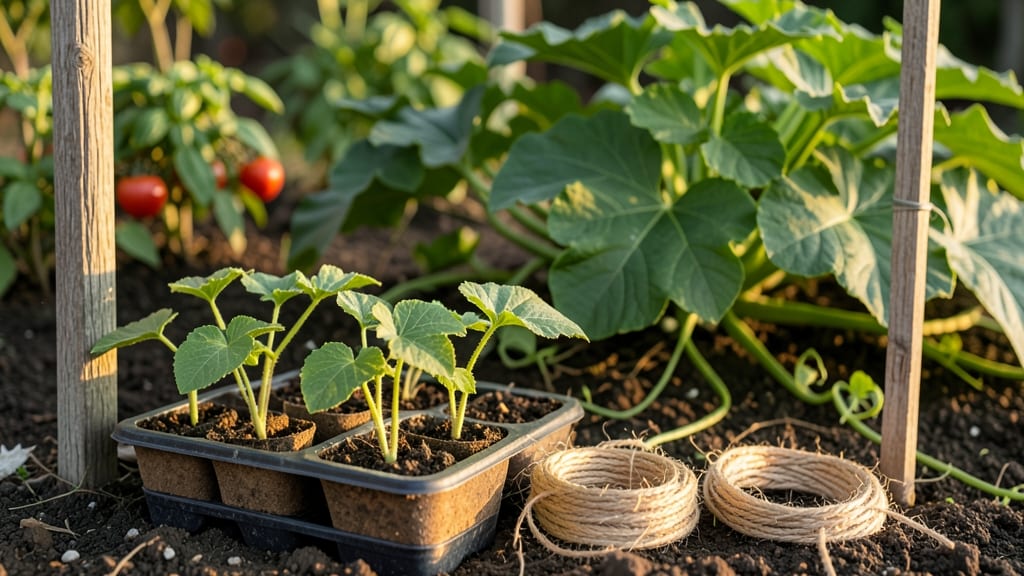
Growing a thriving watermelon garden starts with the right spacing—not just between plants, but between rows, too.
Picture this: you’ve planted your 🍉 seeds after the last frost, and everything seems perfect—until your vines tangle, fruits crack under their own weight, or yields shrink to a fraction of what they should be.
That’s the cost of ignoring spacing, a detail that separates a bountiful harvest from a frustrating flop.
In Zone 6, where spring turns to summer in a hurry, proper spacing means vines get the room to sprawl, roots dig deep, and fruits mature without competing for nutrients. Whether you’re working with in-ground beds or containers, the distances matter more than most gardeners realize.
Below, I’ll walk you through the exact row and plant distances for different varieties, how to tweak them for your soil and climate, and the simple tricks that turn crowded chaos into a high-yielding watermelon patch.
Optimal watermelon garden spacing by variety type
Getting the watermelon spacing right is the difference between 20-pound monsters and puny, cracked fruits. Different varieties need different room to thrive—bush types stay compact, while vining varieties sprawl like they own the place.
I’ve grown all three, and trust me, crowding kills yield. Let’s break down the science behind spacing so you can maximize your harvest.
Watermelons are heavy feeders, and their vines need space to photosynthesize efficiently.
When plants compete for sunlight and nutrients, they produce smaller fruits with thinner rinds—prone to cracking. Row spacing and plant spacing work together: too close, and you’ll fight powdery mildew; too far, and you waste garden real estate. Here’s how to strike the perfect balance for each type.
🍉
Bush watermelons like ‘Sugar Baby’ or ‘Black Diamond’ are my go-tos for small spaces—they stay tidy and produce reliable small fruits. Plant them 2–3 feet apart in rows 3–4 feet apart. Their vines only spread 6–10 feet, so they’re perfect for containers or raised beds. I’ve seen 20 plants thrive in a 4x8-foot bed with this spacing, yielding enough for a family of four.
For vining varieties like ‘Crimson Sweet’ or ‘Charleston Gray’, you’ll need to clear a path. These monsters spread 15–25 feet and need 6 feet between rows to avoid shading. Space plants 4–6 feet apart—this gives their massive leaves room to soak up sunlight.
If you’re trellising, you can halve the row spacing but still keep 4–5 feet between plants to prevent vine tangling.
Hybrid types (like ‘Crimson Sweet’ or ‘Yellow Doll’) strike a middle ground. They’re semi-bush, so they need 4–5 feet between rows and 3–4 feet between plants. This setup works well in medium-sized gardens where you want bigger fruits without sacrificing too much space. I’ve used this spacing in my backyard plot, and it’s given me consistent 15–20-pound melons with minimal fuss.
Why does spacing matter so much? Competition for resources is the enemy. When watermelons fight for water, nutrients, and sunlight, they divert energy from fruit development. This leads to smaller, misshapen melons or poor rind thickness—both of which crack easily.
Proper spacing also improves airflow, reducing powdery mildew and bacterial infections, two of the biggest threats to watermelon gardens.
Pro tip: If you’re growing multiple varieties, plant the bush types first along the edges of your garden. This keeps their vines contained while the vining types sprawl inward.
I’ve also found that staggering rows (like a checkerboard) helps maximize sunlight exposure for all plants. It’s a simple trick that can boost yield by 20% in tight spaces.
For container gardening, stick to bush varieties in 15–20 gallon pots. Space them 2 feet apart and place the containers 3–4 feet from each other.
This mimics the row spacing they’d get in-ground. Just ensure your pots have drainage holes—watermelons hate soggy roots and will rot if water pools.
🌱
One mistake I see often? Assuming “more plants = more melons.” Not true! Overcrowding leads to stunted growth, fewer fruits, and poorer quality. If your garden is small, prioritize fewer, well-spaced plants over a sea of struggling vines.
And if you’re in a hot climate, you can tighten spacing slightly (by 10–15%) because the heat speeds up vine growth—but never go below the minimum recommendations or you’ll regret it at harvest time.
How to adjust spacing for different soil and climate conditions
Your watermelon vines need room to breathe, but soil quality and climate zones can drastically change how much space they require. In poor soil, for example, vines struggle to spread naturally, so you’ll need to widen spacing to compensate.
Meanwhile, in hot climates like USDA Zone 9, watermelons grow faster and need more room to avoid disease. Even in small gardens, smart spacing can make all the difference.
If your soil drains poorly or is nutrient-deficient, watermelon vines will focus energy on root growth rather than fruit production. This means you should increase plant spacing by 20-30% to give roots room to explore.
For sandy soil, which drains too quickly, reduce spacing slightly to help retain moisture. Clay soil, on the other hand, requires wider rows to prevent waterlogging and root rot.
In hot climates, watermelons mature faster but also grow larger, so standard 3-4 feet spacing may not be enough. I’ve found that in Zone 10, increasing spacing to 4-5 feet between plants prevents overcrowding and reduces the risk of powdery mildew.
In cooler climates, like Zone 7, you can space plants closer together since growth is slower.
For limited garden space, consider trellising or vertical gardening. Watermelons can be trained to grow upward, saving horizontal space while still allowing vines to spread. Just ensure your trellis is sturdy enough—50-pound test is ideal—to support 10-20 pound fruits.
This method works best with smaller varieties, like 'Sugar Baby' or 'Tiny Tim'.
⚠️
If your soil is compacted or lacks organic matter, watermelon vines will compete aggressively for nutrients, leading to small, misshapen fruits or no fruit at all. Even with ideal spacing, poor soil can stunt growth. Test your soil first—aim for a pH of 6.0-6.8 and amend with compost or aged manure before planting. If you skip this step, your 3-foot spacing might as well be 1 foot!
Companion planting can also help optimize space. Pair watermelons with bush beans or corn to improve soil health and deter pests like cucumber beetles. Avoid planting near potatoes, though, as they compete for the same nutrients.
In small gardens, interplant fast-growing radishes between watermelon rows—they’ll be harvested before the vines take over.
Finally, adjust your row spacing based on your climate. In arid regions, plant rows 6-8 feet apart to allow for drip irrigation and reduce evaporation. In humid climates, keep rows 4-5 feet apart to improve airflow and prevent fungal diseases.
Always leave extra space if you’re using mulch, as it helps retain moisture and regulate soil temperature.
With these adjustments, your watermelon harvest will thrive—whether you’re dealing with rocky soil, intense heat, or a tiny balcony garden. Start with soil tests and climate research, then tweak spacing until you find your sweet spot. Happy growing! 🌱