
Pests
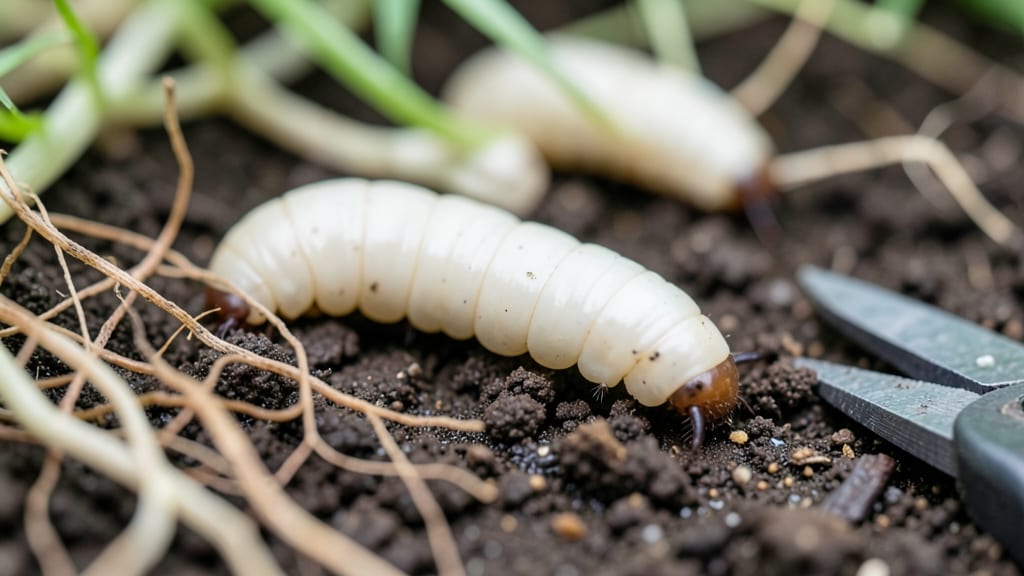
White garden grubs can turn your lush lawn into a patchy mess overnight—unless you catch them early. I’ve spent years battling these C-shaped pests, and I’ve learned the three-stage approach that actually works: scout for damage, disrupt their life cycle, and rebuild healthy soil so they never come back.
The key is acting fast before they skeletonize your grass.
You’ll start by identifying their favorite hiding spots—right under the surface, where they munch on roots after dark. A quick test: dig up a small patch of lawn in the evening.
If you find fat, white grubs with brown heads, you’ve got a problem. The good news? These pests thrive in compacted, over-fertilized soil, so fixing the soil fixes half the battle.
By the end of this process, your lawn will bounce back with thicker grass and fewer brown patches. The secret isn’t just killing grubs—it’s creating an environment where they can’t survive. You’ll use natural predators, organic amendments, and smart watering to crowd them out for good.
This method works for both lawns and garden beds, whether you’re dealing with a small patch or a full yard. The first stage starts tonight—grab a flashlight and let’s get to work.
Root Causes Behind Grub Infestations
White garden grubs—those squirming, C-shaped larvae—don’t just appear out of nowhere. Their presence is a direct result of environmental conditions, human habits, and natural cycles that create the perfect breeding ground.
Understanding these triggers is key to preventing future outbreaks. Let’s dig into the science behind why your lawn becomes a grub buffet.
Grubs thrive in soil that’s too damp or poorly aerated. Here’s why:
- Excess moisture: Grubs need oxygen, but too much water suffocates beneficial microbes and fungi while creating ideal humidity for their development. Overwatering (especially in clay-heavy soil) turns lawns into soggy breeding grounds.
- Compacted turf: Heavy foot traffic, machinery, or clay soil compresses the soil, reducing oxygen flow. Grubs love these low-oxygen zones because predators (like birds or beetles) struggle to dig through them.
- Poor drainage: If water pools after rain, grubs survive longer, and adult beetles are drawn to the damp, nutrient-rich environment to lay eggs.
Actionable fix: Test your soil’s drainage (dig a 6-inch hole—if it fills in <1 hour, you’ve got poor drainage). Aerate compacted lawns in fall and reduce watering to <1 inch per week.
Thatch—a layer of dead grass, roots, and debris—can be a double-edged sword. While a thin layer (¼ inch) is normal, thick thatch (over ½ inch) becomes a grub paradise. Here’s how:
- Moisture retention: Thatch traps water and organic matter, creating a microclimate that grubs adore. It also blocks beneficial nematodes (natural predators) from reaching the soil.
- Food source: Decaying organic matter in thick thatch provides grubs with an easy energy supply, accelerating their growth.
- Beetle egg-laying hotspot: Adult Japanese beetles and June bugs prefer to deposit eggs in warm, thatchy turf where larvae can burrow down safely.
Actionable fix: Dethatch in early spring or fall using a rake or vertical mower. Mow high (3–4 inches) to reduce thatch accumulation.
Grubs are the larvae of beetles like the Japanese beetle or European chafer, and their lifecycle is tightly linked to adult behavior. Here’s how they set the stage:
- Egg-laying timing: Female beetles time their egg drops for warm soil (60–80°F). In many regions, this happens in late June to August, with larvae hatching in 2–4 weeks.
- Preferred host plants: Adult beetles feed on roses, grapes, and linden trees, but they lay eggs in grass because it’s soft and nutrient-rich for larvae.
- Migration patterns: Beetles are attracted to well-fertilized, lush lawns—think of it as a neon sign saying, “Free buffet for your babies.”
Actionable fix: Monitor beetle activity in summer. Use traps away from your lawn (they can lure more beetles) and mow high to deter egg-laying.
Fertilizer isn’t the enemy, but too much nitrogen (especially in slow-release forms) can backfire by:
- Stimulating rapid grass growth: Lush, tender grass is grubs’ favorite snack. The more you feed the grass, the more appealing it becomes to beetles.
- Disrupting soil microbes: High nitrogen levels can suppress beneficial fungi (like Beauveria bassiana) that naturally control grub populations.
- Creating a sugar rush: Grubs feed on grass roots and organic matter—extra nitrogen makes roots sweeter, like a lawn-sized candy store.
Actionable fix: Switch to a balanced fertilizer (e.g., 16-4-8) and apply it in small, frequent doses rather than heavy single applications. Fall is the safest time to fertilize.
Pro tip: 💡 Grubs are most vulnerable in late summer/fall when they’re fat and slow after feeding. This is why fall treatments (like nematodes or milky spore) are most effective—timing beats brute force!
Natural Ways to Eradicate Lawn Invaders
Now that you understand why those pesky white grubs are turning your garden into their buffet, it’s time to take action! The good news? You don’t need harsh chemicals to reclaim your lawn.
Below are targeted, eco-friendly solutions tailored to the root causes—whether it’s overwatered soil, poor drainage, or an overabundance of organic matter. Each method is designed to be effective, safe for pets/kids, and budget-friendly.
If your lawn is a soggy magnet for grubs, the first step is cutting back on water and improving airflow. Grubs thrive in damp conditions, so drying out the soil disrupts their life cycle.
How to Fix It:
- 🔥 Reduce Watering Frequency – Water deeply 2-3 times per week (early morning) instead of daily light sprinkles. Aim for 1–1.5 inches of water per week (including rain).
- 🍳 Improve Soil Drainage – Aerate compacted soil in fall or early spring using a core aerator (rent one or hire a pro). This creates air pockets, discouraging grubs.
- 👨🍳 Choose Drought-Resistant Grass – If your lawn is prone to sogginess, switch to tall fescue or buffalo grass, which handle moisture better.
- ⏰ Mulch Strategically – Use wood chips or straw mulch (not thick layers) to retain moisture without creating a grub paradise.
💡 Pro Tip: Test your soil’s drainage by digging a 6-inch hole, filling it with water, and timing how long it takes to drain. If it’s slower than 4 hours, you’ve got work to do!
Grubs love clay-heavy or tightly packed soil because it traps moisture and organic debris. Breaking up the compacted layers forces them to the surface where birds, predators, or natural remedies can take over.
How to Fix It:
- 🔪 Core Aeration (Best Method) – Rent a core aerator (or hire a service) to pull out small soil plugs, loosening compaction. Do this in early fall or spring.
- 🥘 Top-Dress with Sand or Compost – Mix coarse sand or compost into the top 2 inches of soil to improve structure. Avoid fine sand—it can make drainage worse.
- 🌡️ Encourage Microbial Activity – Spread beneficial nematodes (Heterorhabditis bacteriophora) in evening waterings (they thrive in moisture). These microscopic worms paralyze grubs within 48 hours.
- 🎯 Plant Deep-Rooted Cover Crops – Oats, clover, or ryegrass break up soil as they grow. Mow them down before they seed to prevent spreading.
✨ Bonus: After aerating, overseed with grass seed to fill bare spots and outcompete grubs for food.
Grubs feast on decaying roots, thatch, and organic debris. If your lawn is a compost pile in disguise, they’ll keep multiplying. The fix? Reduce their food source while boosting natural predators.
How to Fix It:
- 🔥 Remove Thatch Buildup – Use a thatched rake to dethatch in early fall or spring. Aim for ½-inch thickness or less.
- 🍳 Limit Organic Mulch Near Lawn Edges – If you mulch garden beds, keep wood chips at least 6 inches away from the lawn to starve grubs migrating from mulch piles.
- 👨🍳 Introduce Predatory Insects – Release ground beetles, soldier beetles, or parasitic wasps (available online). They hunt grubs as their primary food source.
- 🥘 Use Milky Spore Bacteria – Sprinkle Bacillus popilliae (a natural bacteria) on your lawn in late summer. It infects grubs over time, reducing populations by up to 80% in 2–3 years.
💡 Pro Tip: Chicken manure or compost tea can temporarily attract grubs—apply sparingly and water it in immediately to dilute nutrients.
Once you’ve kicked them out, lock them out for good with these long-term strategies:
- 📊 Mow High – Keep grass at 3–4 inches tall to shade soil and deter egg-laying by Japanese beetles (the #1 grub parent). - 💪 Overseed Annually – A thick, healthy lawn outcompetes grubs.
Use cool-season grasses (like Kentucky bluegrass) for resilience. - 🥗 Avoid Synthetic Fertilizers – Excess nitrogen = grub buffet.
Use slow-release organic fertilizers (like alfalfa meal) instead. - 🍎 Monitor & Act Early – Check for tent-shaped holes or birds pecking at the lawn (a sign grubs are near the surface). Treat at the first sign before populations explode.
Final Thought: Grubs may be sneaky, but they’re no match for smart, natural tactics. Combine drainage fixes, predator support, and lawn care tweaks, and you’ll send them packing—for good! 🚀
Frequently asked questions
What do white garden grubs look like up close?
They’re fat, cream-colored larvae with a distinct brown head capsule and six stubby legs. When mature, they’re about 1–1.5 inches long and curl into a C-shape when disturbed. Their smooth, legless bodies make them easy to spot if you dig up a small patch of lawn at dusk.
How do I know if my lawn has a grub problem?
Look for tent-shaped patches of dying grass, birds digging up turf (they love grubs!), or squirrels flipping over soil. Dig up a 6-inch square—if you find 5+ grubs per square foot, it’s time to act. Early signs include wilting grass that pulls up easily.
Are there natural predators that eat white grubs?
Ground beetles, soldier beetles, and parasitic wasps hunt grubs naturally. You can also attract skunks, raccoons, and crows by leaving patches of bare soil (they dig for grubs). For a hands-on fix, apply beneficial nematodes (Heterorhabditis bacteriophora) in the evening—they paralyze grubs within 48 hours.
Can I use coffee grounds to get rid of grubs?
Coffee grounds won’t kill grubs directly, but they can help improve soil health over time. The real trick is using them as a mulch barrier—sprinkle a thick layer (½ inch) around garden edges to deter beetles from laying eggs. For faster results, combine them with neem oil or diatomaceous earth (both disrupt grub exoskeletons).
How long does it take to see results after treating grubs?
With nematodes or milky spore bacteria, you’ll see visible improvement in 2–4 weeks as grubs die off. Chemical treatments (like imidacloprid) work faster (1–2 weeks), but natural methods take seasonal cycles to fully eliminate populations. Consistency is key—reapply treatments in fall when grubs are most vulnerable.