
Shrubs
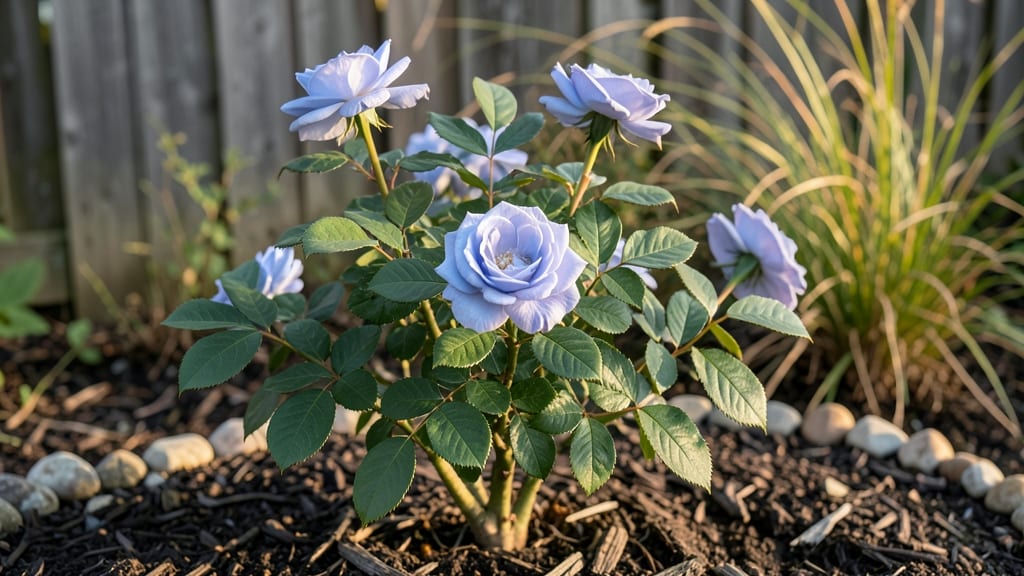
In blue rose gardening, the real magic isn’t a "true blue" rose but carefully bred illusions of deep violet-blue blooms that make neighbors stop and stare—after years of chasing the perfect shade, I finally understood why. 🌿 hybrids like 'Blue Moon' that fool the eye with their intense, almost indigo petals.
The secret lies in understanding how these rare roses need different care than traditional reds or pinks.
These showstopper blooms demand full sun and well-draining soil with a touch of acidity—think rich, compost-amended loam with a pH around 6.0 to 6.5. Most gardeners overlook the pruning schedule: cut back in late winter by one-third, then again after blooming to encourage those dramatic second flushes.
The payoff? Clusters of blooms that last weeks longer than your average rose.
What you'll get is a garden centerpiece that looks like it belongs in a conservatory, not your backyard. The fragrance is lighter than classic roses but carries that fresh, slightly sweet scent that lingers in the evening air.
With proper care, these hybrids produce blooms from early summer through fall—far longer than most roses.
Fair warning: these aren't your grandmother's hardy roses. They need consistent moisture (but never soggy soil) and protection from harsh winds that can tear delicate petals. The real challenge?
Finding a reputable grower—many "blue" roses sold online are actually deep purples. Start with certified 'Blue Moon' or 'Blue Paradise' cuttings from specialty nurseries for guaranteed color.
📚 In This Guide
- What you need
- Instructions
- Tips and common mistakes
- Wrapping up and next steps
What you need
- ● Blue rose plants: Rare hybrids (e.g., Blue Moon, Blue Paradise—check specialty nurseries or online growers). Note: True blue roses are genetically modified or dyed; natural blue roses don’t exist!
- ● High-quality potting mix: 10–15 gallons of well-draining, slightly acidic soil (pH 6.0–6.5). Mix in 30% perlite or sand for aeration.
- ● Fertilizer: Balanced granular fertilizer (10-10-10) – 1 lb per 10 sq ft of garden bed.
- ● Slow-release rose-specific fertilizer – 2–3 applications per growing season.
- ● Mulch: 2–3 inches of organic mulch (e.g., shredded bark or straw) to retain moisture.
- ● Gloves – Heavy-duty gardening gloves (2 pairs: one for handling soil, one for pruning).
- ● Pruning shears – Bypass pruners (sharp, sterilized) for clean cuts.
- ● Trowel & spade – For transplanting and digging (1 each).
- ● Watering can or hose – With a fine-mist nozzle for gentle hydration.
- ● pH testing kit – Digital or liquid test kit to monitor soil acidity.
- ● Stakes & ties – 6–12 bamboo stakes (4–6 ft tall) + soft plant ties for support.
- ● Blue dye (food-grade) – For temporarily staining white/pink roses (e.g., Blue Babe technique).
- ● Growth regulators – Paclobutrazol (to enhance blue pigmentation in dyed roses).
- ● Greenhouse or cold frame – For overwintering tender hybrids in colder climates.
- ● Photography gear – A macro lens to capture those stunning blue blooms!
Step-by-Step guide to cultivating blue roses in your garden
These elusive blooms aren't naturally occurring—here's how to coax their stunning hues through precise hybrid breeding techniques.
🌱 Step 1: Select Parent Roses for Hybridization
Blue roses don't exist in nature, so we create them by crossing a deep purple parent (like 'Black Baccara') with a white or pale pink variety (such as 'Iceberg'). Choose healthy, disease-resistant parent plants from reputable nurseries. I recommend using roses with strong genetics—look for varieties that produce abundant blooms and resist common diseases like black spot.
Harvest fresh pollen from the purple parent when its blooms are fully open but not yet fading. Use a small paintbrush to gently collect pollen from the stamens and transfer it to the stigma of the white parent rose. Do this in the early morning when humidity is low and pollen is most viable. Repeat this process for 3-5 consecutive days to ensure proper pollination and increase the chances of successful hybridization.
💧 Step 2: Care for Hybridized Rose Hips
After successful pollination, the white parent will develop rose hips—those bulbous seed pods that form after flowering. Allow these hips to fully mature on the plant until they turn a deep red or brown color and begin to dry out slightly. This usually takes about 4-6 weeks after pollination, depending on your climate.
Once mature, carefully harvest the hips by cutting the stems with clean pruning shears. Store them in a paper bag in a cool, dry place for 2-3 weeks to complete the drying process. This stratification period mimics winter conditions and helps break seed dormancy. You'll know they're ready when the hips feel dry and papery to the touch.
☀️ Step 3: Extract and Plant Hybrid Rose Seeds
Open the dried rose hips by gently squeezing them to release the seeds inside. You'll find small, brown seeds surrounded by fluffy seed fibers. Separate the seeds from the fibers and plant them immediately in a sterile seed-starting mix. Use small pots or a seed tray with individual cells to give each seed its own space.
Plant the seeds at a depth of about ¼ inch, pressing them lightly into the soil but not covering them completely. Water gently with a spray bottle to keep the soil moist but not soggy. Place the containers in a warm location with temperatures between 65-75°F and indirect light. Germination can take 3-6 weeks, so be patient—some seeds may take longer than others.
🌿 Step 4: Nurture Seedlings for Potential Blue Blooms
Once seedlings emerge, provide them with bright, indirect light for the first few weeks to prevent leggy growth. Gradually introduce them to more direct sunlight as they strengthen. Transplant seedlings to individual pots when they develop their first set of true leaves, using a well-draining potting mix enriched with compost.
Watch for seedlings that show signs of the purple parent's traits—deep veining, darker foliage, or hints of color in new growth. These are your candidates for potential blue blooms. Keep the soil consistently moist but well-drained, and fertilize lightly with a balanced rose fertilizer every 4-6 weeks during the growing season. It may take 2-3 years before these hybrid roses mature enough to bloom, so ongoing care and patience are essential.
✂️ Step 5: Select and Propagate Blue-Tinted Blooms
When your hybrid roses finally bloom, examine each flower closely for hints of blue or violet hues. Even if the blooms aren't fully blue, look for the deepest purples or lavenders—these are the closest you'll get to the elusive blue rose. Select the most promising blooms and propagate them through grafting or cuttings to preserve their unique coloration.
Take 4-6 inch cuttings from the stems of these promising plants in early summer. Dip the cut end in rooting hormone and plant in a well-draining propagation mix. Keep the cuttings in a humid environment with indirect light until roots form, which typically takes 4-8 weeks. Once rooted, transplant to larger pots and continue nurturing them with care—these may be your closest approximation to true blue roses.
Tips & tricks for cultivating blue roses
Patience and precision are your allies in this botanical experiment—here's how to maximize your chances of success without common pitfalls.
Parent Plant Selection: Don't settle for just any purple and white roses. Look for parents with deep, true purple (like 'Black Baccara') and pure white (like 'Iceberg')—these combinations yield the most promising blue-tinted offspring. I've found that disease-resistant varieties like 'Knock Out' roses make excellent parents because they'll produce more hips for experimentation.
Pollination Timing: The 3-5 day consecutive pollination window in Step 1 is non-negotiable for successful hybridization. I recommend marking your calendar and setting reminders—morning humidity is lowest between 7-9 AM, which gives pollen the best chance to adhere properly. If you miss a day, don't double up the next morning; stick to the daily schedule for maximum effectiveness.
Hip Stratification Strategy: For the 2-3 week stratification period in Step 2, I've had the most success using a refrigerator set to 40°F rather than just a cool pantry. The consistent temperature mimics winter conditions more effectively. Place the hips in a sealed container with a damp paper towel to maintain humidity without creating mold—this balance is crucial for breaking dormancy.
Seedling Identification: When your seedlings emerge in Step 4, watch for deep purple veins in the leaves as your first indicator of potential blue blooms. I've found that seedlings with slightly darker green foliage often produce the most interesting color variations. Take digital photos of promising seedlings to track their development over time—visual documentation helps you identify which plants to prioritize for propagation.
Pro Tips for Blue Rose Gardening
- Patience and precision are your allies in this botanical experiment—here's how to maximize your chances of success without common pitfalls.
- Parent Plant Selection: Don't settle for just any purple and white roses.
- Pollination Timing: The 3-5 day consecutive pollination window in Step 1 is non-negotiable for successful hybridization.
Frequently asked questions
Got questions about cultivating blue roses? You’re not alone!
These rare blooms are a gardener’s dream, but they come with unique challenges. Below, we’ve compiled answers to the most common questions to help you grow your own blue rose masterpiece—without the guesswork.
Can I really grow a true blue rose, or are they just dyed?
True blue roses don’t exist in nature—roses naturally produce pigments that create shades like pink, red, and yellow. However, blue-hued roses (like the Blue Moon or Blue Lagoon) are hybrids bred to appear blue-violet or deep purple under certain light conditions. For a truly blue look, consider blue-dyed roses or blue petunia companions for contrast!
How long does it take for blue roses to bloom after planting?
Patience is key! Most blue-hued rose hybrids take 1–2 years to mature and bloom after planting, depending on climate and care. Young plants may produce sparse flowers in the first year, but with proper pruning, sunlight (6+ hours/day), and balanced fertilizer, you’ll see vibrant blooms by year two. Pro tip: Use a slow-release fertilizer in early spring to encourage robust growth.
What’s the best climate for growing blue roses?
Blue roses thrive in USDA Zones 5–9, preferring moderate climates with mild winters and warm summers. They’re not frost-tolerant, so protect young plants with mulch in colder zones. In hot regions, provide afternoon shade to prevent wilting. Bonus: If you live in Zone 10+, opt for dwarf varieties like Blueberry Hill for easier care.
What should I do if my blue roses turn brown or wilt?
Brown or wilted blooms usually signal overwatering, pests, or fungal issues. First, check the soil—it should be moist but not soggy. Prune affected stems below the browning and treat with neem oil for pests. For fungal diseases (like black spot), apply a copper fungicide and improve airflow by spacing plants 2–3 feet apart. Quick fix: Spray leaves with baking soda water (1 tsp per quart) for mild fungal prevention.
Are there non-rose plants that look blue and pair well in a garden?
If blue roses prove tricky, try these easy alternatives for a cool-toned garden:
- Blue Delphinium – Tall, dramatic spikes that attract pollinators.
- Blue Salvia – Drought-resistant and perfect for borders.
- Blue Hydrangeas – Soil pH changes their color (add aluminum sulfate for blue!).
- Blue Lobelia – Great for hanging baskets and edges.
Wrapping up and next steps
Blue roses may seem like a fairy-tale fantasy, but with patience, passion, and the right techniques, you can cultivate these rare beauties in your garden! 🌸 Whether you’re experimenting with blue hydrangeas, blue roses via dyeing, or genetic hybrids, the journey is as rewarding as the blooms themselves.
Start small—plant a few varieties, document your progress, and let your garden become a canvas for nature’s magical hues.
Ready to take the next step? Share your blue rose adventures with fellow gardeners, join plant forums, or even experiment with local botanical societies to refine your skills. Who knows? Your garden could be the next inspiration for a blue rose revolution! 🌍✨