Fertilization
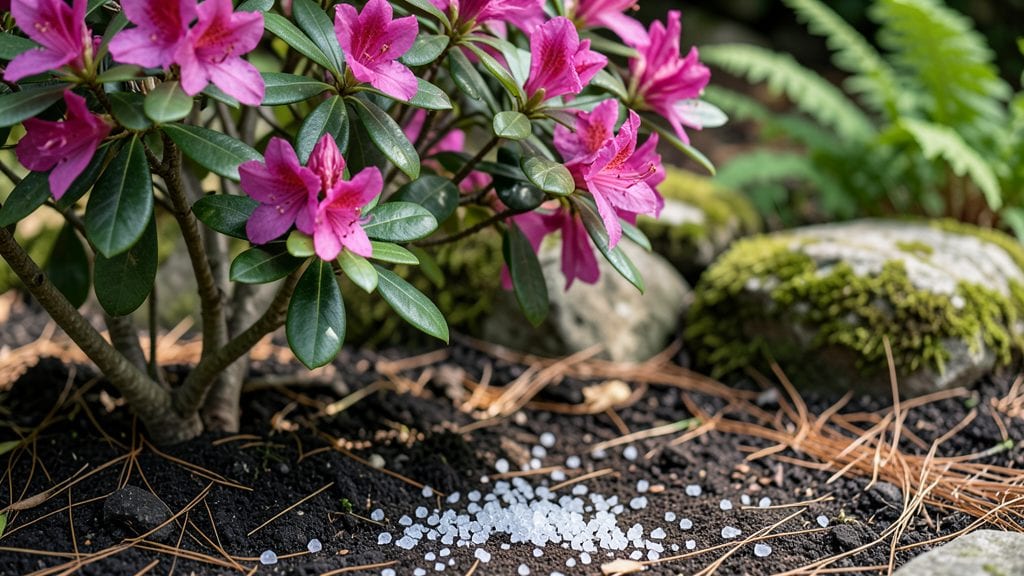
Using aluminum sulfate in gardening rapidly lowers soil pH, making it perfect for acid-loving plants like blueberries, azaleas, and hydrangeas. Apply 1-2 pounds per 100 square feet, following package instructions to prevent over-acidification and root damage. Always water thoroughly after application to activate the chemical and prevent salt buildup.
Aluminum sulfate works by releasing aluminum ions when dissolved in water, which then react with soil particles to displace calcium and magnesium—key elements that naturally raise pH. 🌱 This chemical adjustment happens quickly, often within days, but it’s temporary unless you monitor and reapply as needed.
Unlike organic acidifiers like sulfur, which take weeks to months to show effects, aluminum sulfate delivers fast results, which is why gardeners reach for it when their blueberries or azaleas show signs of stress from alkaline soil.
That said, this speed comes with risks: overuse can lead to aluminum toxicity in sensitive plants or even harm beneficial soil microbes.
Always test your soil’s pH before applying, and consider splitting applications into smaller doses if you’re working with heavy clay soils, which retain moisture and can concentrate the chemical. A little patience and testing go a long way in keeping your garden thriving without unintended consequences.
💡 In This Article
- How Aluminum Sulfate Affects Soil Chemistry
- Best Practices for Using Aluminum Sulfate Safely
How aluminum sulfate affects soil chemistry
When you sprinkle aluminum sulfate on soil, it dissolves almost instantly in water, breaking down into aluminum ions (Al³⁺) and sulfate ions (SO₄²⁻).
The aluminum ions are the real game-changers—they react with soil particles to displace calcium (Ca²⁺) and magnesium (Mg²⁺), two minerals that naturally buffer soil pH. This displacement creates a chain reaction that releases hydrogen ions (H⁺), which are what actually lower the pH. Think of it like swapping out alkaline minerals for acidic ones at a molecular level. 🔥
The speed of this reaction is what sets aluminum sulfate apart from organic acidifiers. While elemental sulfur or peat moss take weeks to months to acidify soil (as microbes break them down), aluminum sulfate works in days—sometimes even hours if conditions are right.
For example, in a sandy soil with good drainage, you might see a pH drop of 0.5 to 1.5 units within 7-10 days. In contrast, sulfur might take 3-6 months to achieve similar results.
This rapid action is why gardeners use it for emergency fixes, like when hydrangeas suddenly turn green instead of blue due to pH shifts.
However, this speed comes with trade-offs. The aluminum ions don’t just lower pH—they can accumulate in the soil, becoming toxic to plants at high concentrations.
Most acid-loving plants (like blueberries) tolerate some aluminum, but sensitive species (such as tomatoes or peppers) may show signs of stress, like yellowing leaves or stunted growth. The sulfate ions, while generally harmless, can also contribute to salt buildup if not rinsed through the soil with water.
That’s why thorough watering after application is non-negotiable.
Long-term use of aluminum sulfate can also disrupt soil microbial life. Beneficial fungi and bacteria thrive in balanced pH environments, and extreme acidity (below 5.0) can inhibit their activity. This is why many experts recommend using it as a short-term adjustment tool rather than a permanent solution.
For example, if your soil naturally sits at 6.5 but you need it at 5.5 for blueberries, a single application might suffice—just monitor and retest in 6 months.
Here’s how it compares to other acidifiers in practice:
- Aluminum sulfate: Fast-acting, 1-2 lbs per 100 sq ft, best for immediate pH drops (e.g., 6.0 → 5.0 in 10 days)
- Elemental sulfur: Slow-release, 2-4 lbs per 100 sq ft, safer for long-term adjustments (e.g., 6.5 → 6.0 in 3 months)
- Peat moss: Organic but weak, 1-2 inches mixed into soil, ideal for gradual, low-impact acidification (e.g., 6.8 → 6.3 in 6 months)
For gardeners balancing speed and safety, the key is precision. Always conduct a soil test before applying, and never exceed the recommended rate. A little goes a long way—overdoing it can turn your blueberry bushes into aluminum toxicity victims faster than you can say "pH crash." 💫