
Planting
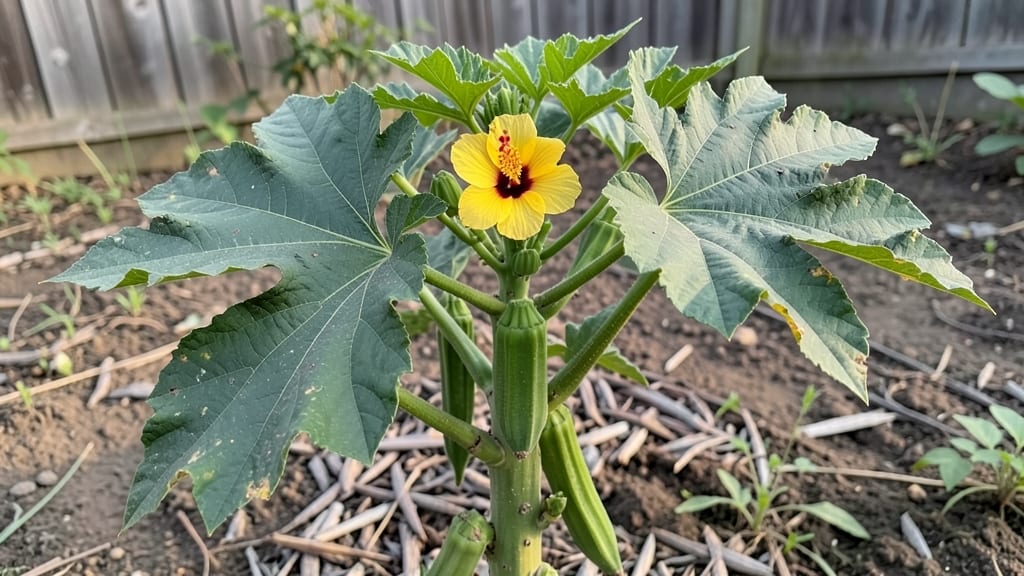
Garden an okra plant from seed, and you’ll enjoy a speedy harvest in just 60 days—far ahead of most vegetables.
I remember my first time planting okra; I expected the usual slow start, but those first fuzzy green pods appeared like clockwork, and by midsummer, I couldn’t keep up with the harvest. The secret isn’t some fancy technique—it’s timing, heat, and a little patience.
You’ll need well-draining soil warmed to at least 65°F, full sun (think 8+ hours daily), and consistent moisture—though okra’s thick stems handle drought better than most veggies. Start seeds indoors 3-4 weeks before your last frost, or sow directly after soil warms.
Space plants 18-24 inches apart to give them room to stretch their towering frames (some varieties hit 10 feet tall).
What you’ll get is a nearly foolproof crop that thrives in the dog days of summer when other plants wilt. The pods snap fresh for stir-fries or roast with a smoky flavor that’s hard to beat, and the plants keep producing until frost.
Even if you’ve struggled with other veggies, okra’s forgiving nature makes it a game-changer for beginners.
Works in zones 5-11, though it’s happiest in the South. For cooler climates, treat it as an annual and plant after Memorial Day. Here’s how to get those first seeds in the ground without a hitch—no green thumb required.
📚 In This Guide
- What you need
- Instructions
- Tips and common mistakes
- Wrapping up and next steps
What you need
- ● Okra seeds – Choose heirloom or hybrid varieties (e.g., 'Clemson Spineless' or 'Emerald'). Buy 10-20 seeds for a small garden or 50+ seeds for a larger harvest.
- ● Well-draining potting mix or garden soil – Okra thrives in loamy, slightly acidic soil (pH 6.0-6.8). Amend clay soil with compost or sand.
- ● Organic compost or fertilizer – Use a balanced 10-10-10 or 5-5-5 formula (1 cup per 5 sq ft) or compost tea for a natural boost.
- ● Watering can or hose with a gentle spray nozzle – Okra needs 1-2 inches of water per week, especially during dry spells.
- ● Garden trowel or transplanting spade – For digging holes (2-3 inches deep).
- ○ Gloves (optional but recommended) – Okra pods can be prickly!
- ○ Row cover or shade cloth (optional) – Protects young seedlings from pests or harsh sun in early growth stages.
- ○ Pruning shears (optional) – Helps trim leggy stems or remove damaged pods.
- ○ Trellis or stakes (optional) – Supports taller varieties (e.g., 'Burgundy' okra) to save space.
- ● Warm climate or long growing season – Okra hates frost! Plant after the last frost when soil temps reach at least 60°F (15°C).
- ● Full sun exposure (6-8 hours daily) – Okra is a sun-worshipper!
- ● Space (12-18 inches apart in rows 3 feet apart) – Gives plants room to thrive and avoid overcrowding.
Instructions for growing okra plants from seed to harvest
Here's how to get your okra growing quickly and efficiently for a fast harvest.
Prepare the Planting Site
Okra thrives in warm soil, so wait until the ground temperature reaches at least 70°F before planting. Choose a sunny spot that gets full sun for at least 6-8 hours daily. Okra plants need space, so space them 18-24 inches apart in rows that are 3 feet apart. This gives them room to grow tall and sturdy.
Before planting, loosen the soil to a depth of 12 inches with a garden fork or tiller. Okra prefers well-draining soil, so if your garden soil is heavy clay, mix in 2-3 inches of compost to improve drainage and fertility. Avoid fresh manure, as it can burn tender okra seedlings.
Plant Okra Seeds Directly in the Garden
Okra seeds germinate best when planted directly in the garden, as they don’t transplant well. Plant seeds ½ to 1 inch deep in the prepared soil. Since okra seeds can be large, place 2-3 seeds per hill to ensure at least one strong plant emerges. Space hills 18-24 inches apart to allow for proper airflow and reduce disease risk.
Keep the soil consistently moist but not soggy during germination, which typically takes 7-14 days depending on soil temperature. You’ll know germination is successful when the first true leaves appear—these are the second set of leaves after the initial seed leaves. Thin seedlings to the strongest one per hill once they reach 3-4 inches tall.
Provide Consistent Water and Fertilizer
Okra plants need 1-2 inches of water per week, especially during flowering and pod development. Water deeply at the base of the plant in the morning to encourage strong root growth and reduce fungal diseases. Avoid overhead watering, as wet foliage can lead to mildew. You’ll notice healthy plants when the leaves stay deep green and crisp, not wilting or yellowing.
Fertilize okra plants lightly with a balanced, water-soluble fertilizer (like 10-10-10) every 4-6 weeks during the growing season. Too much nitrogen can lead to excessive leaf growth at the expense of pod production. Instead, focus on a low-nitrogen, high-phosphorus fertilizer to encourage flowering and fruiting.
Monitor for Pests and Diseases
Okra is relatively pest-resistant, but watch for aphids, spider mites, and cabbage loopers, which can damage leaves and pods. If you spot pests, spray plants with neem oil or introduce beneficial insects like ladybugs. Remove any yellowing or diseased leaves immediately to prevent the spread of fungal issues like powdery mildew.
Okra plants also benefit from pruning. Pinch off the first few flowers to encourage stronger stem growth. Once the plant is established, you’ll see pods forming within 4-6 weeks after planting. Harvest pods when they’re 3-4 inches long for the best flavor and texture. This encourages the plant to produce more pods.
Harvest and Extend the Season
Harvest okra pods every 2-3 days to keep the plant producing. Use a sharp knife or pruners to cut pods just above the stem to avoid damaging the plant. Okra pods grow quickly, so frequent harvesting is key to a continuous supply. You’ll know it’s time to harvest when pods reach 3-4 inches—any longer, and they become tough and fibrous.
To extend the harvest season, provide light shade during extreme heat (above 90°F) to protect plants from wilting. Okra is a warm-season crop, so it won’t tolerate frost. If you’re in a cooler climate, start seeds indoors 4-6 weeks before the last frost and transplant seedlings after the soil warms up.
Tips & tricks for fast-growing okra plants
Here's what I've learned to help you get a fast, bountiful okra harvest without the usual gardening headaches.
Soil Temperature is Non-Negotiable: That 70°F minimum soil temperature isn't just a suggestion—it's critical for germination. I've planted too early in cooler soil and ended up with weak seedlings that never thrived. Use a soil thermometer to confirm before planting. If your spring is slow to warm, consider using black plastic mulch to raise soil temperature faster.
Germination Timing Secret: The 7-14 day germination window can feel like forever, but there's a trick to speed things up. Soak your okra seeds in warm water for 4-6 hours before planting. This can reduce germination time by 3-5 days while ensuring you get strong, vigorous seedlings. Just make sure to plant them immediately after soaking.
Watering Strategy for Speed: While the instructions call for 1-2 inches of water per week, I've found that giving ½ inch of water every 2-3 days during the first 4-6 weeks helps establish plants faster. This keeps the soil consistently moist without waterlogging, which is especially important during that critical germination period. A drip irrigation system works perfectly for this.
Pruning for Productivity: That pruning tip about pinching off the first few flowers is gold. I used to wonder why my plants produced so few pods, then realized I wasn't pruning early enough. Focus on removing the first 3-5 flowers when they first appear. This redirects the plant's energy toward stronger stem growth, which leads to more productive branches later. You'll see pods forming within 4-6 weeks after proper pruning.
Pro Tips for Garden Okra Plant
- Here's what I've learned to help you get a fast, bountiful okra harvest without the usual gardening headaches.
- Soil Temperature is Non-Negotiable: That 70°F minimum soil temperature isn't just a suggestion—it's critical for germination.
- Germination Timing Secret: The 7-14 day germination window can feel like forever, but there's a trick to speed things up.
Frequently asked questions
Got questions about growing garden okra plants? You’re not alone! Here are answers to the most common queries to help you cultivate a thriving harvest with ease.
When is the best time to plant okra?
Okra thrives in warm soil, so wait until after the last frost when temperatures stay consistently above 60°F (15°C). In most U.S. regions, this means late spring to early summer (April–June). For a fall harvest, plant 8–10 weeks before your first frost.
How long does it take for okra plants to produce pods?
With proper care, okra plants bolt quickly! You’ll see first pods in 50–60 days from planting, but peak production occurs 2–3 weeks later. Harvest pods 2–4 inches long for tender texture—let them grow longer, and they’ll get tough and slimy.
What pests or diseases should I watch for?
Okra is generally pest-resistant, but aphids, spider mites, and flea beetles may appear. Use neem oil or insecticidal soap for mild infestations. Watch for powdery mildew in humid climates—improve airflow and avoid overhead watering to prevent it.
Can I grow okra in containers?
Okra adapts well to large containers (at least 5-gallon pots) with drainage holes. Use a lightweight potting mix and place pots in full sun. Dwarf varieties like ‘Clemson Spineless' work best for small spaces.
What’s the best way to harvest okra?
Use clean pruners or sharp scissors to snip pods at the base. Harvest every 2–3 days to encourage more production. Wear gloves if you’re sensitive to okra’s fuzzy texture—it’s harmless but can irritate skin!
Pro Tip:
Need a quick fix? If your okra plants bolt (go to seed) too fast, try succession planting every 2 weeks for a steady harvest. And remember: Okra loves heat and neglect! Overwatering or over-fertilizing can reduce pod production.
Wrapping up and next steps
Growing garden okra is a rewarding experience—whether you’re after its tender pods, nutritious leaves, or the joy of watching it thrive in just 60 days! With the right soil, sunlight, and care, you’ll soon be harvesting fresh, crisp okra straight from your backyard. 🌱
Ready to take the next step? Start by selecting your favorite variety (like ‘Clemson Spineless’ or ‘Emerald’) and mark your calendar for planting—your future meals (and bragging rights) will thank you!