Pests
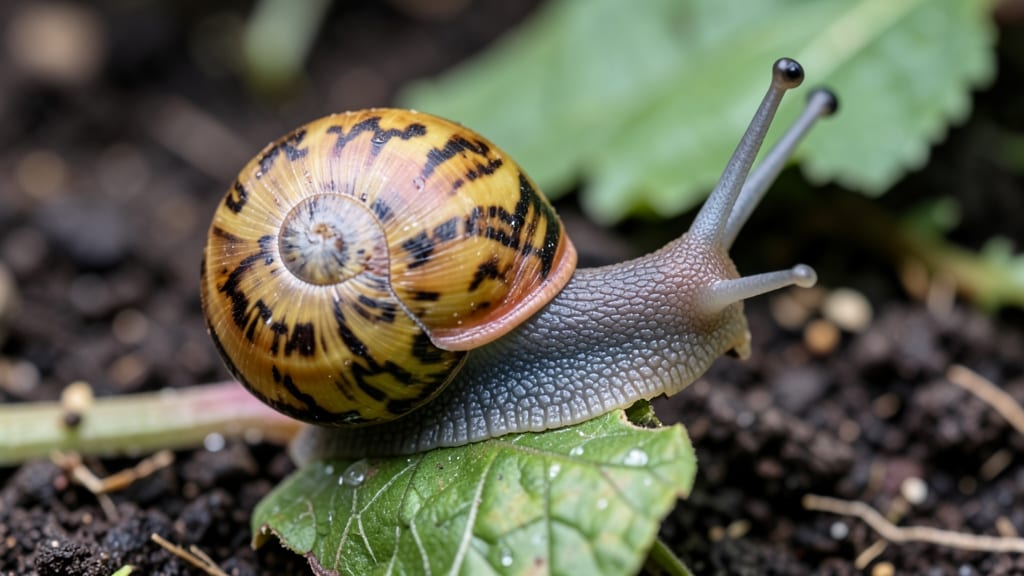
Understanding garden snail anatomy reveals how their spiral shells, muscular feet, and retractable heads with sensory tentacles and radulas make them such effective garden invaders. Their slimy mucus trails help them move silently through gardens while leaving behind a trail of destruction.
These garden pests have evolved a remarkable survival kit: their coiled shells act as protective armor while absorbing calcium from soil and plants, which strengthens their defense. 🌿 The radula—a rasp-like tongue—scrapes leaves like sandpaper, creating jagged edges that make plants more vulnerable to disease.
Meanwhile, those two eyestalks detect moisture and food sources from up to 12 inches away, letting them zero in on your prized greens before you even notice. The slime trail isn't just for smooth movement—it contains antimicrobial properties that keep bacteria at bay while they feast.
Their anatomy explains why they're so hard to control: when threatened, they retreat into their shells, leaving only their nearly invisible slime trails as evidence. This stealthy design makes them perfect for nocturnal raids on your garden—while you sleep, they're busy turning your hostas into Swiss cheese.
Knowing these features helps you spot them early or attract natural predators that can actually see what you can't.
💡 In This Article
- How Snail Shells and Feeding Structures Aid Garden Destruction
- Identifying Snail Body Parts to Target Natural Predators
How snail shells and feeding structures aid garden destruction
The spiral shell isn't just decorative—it's a fortress made of calcium carbonate, secreted layer by layer over months or years. This coiled structure protects the snail's soft body while absorbing calcium from soil and decaying plant matter, which strengthens the shell's structure.
A mature garden snail's shell can reach 1.5-2 inches in diameter, with up to 5-7 whorls that create a compact, armored retreat. When threatened, the snail retracts completely, sealing the opening with a mucus plug that hardens in minutes.
Inside that shell sits the radula, a conveyor-belt-like organ lined with thousands of tiny, chitinous teeth that scrape plant surfaces like a cheese grater. Each tooth has a 0.001-inch serrated edge that creates microscopic tears in leaves, making them more susceptible to fungal infections.
A snail can consume up to 50 square inches of leaf surface per night, leaving behind irregular holes that distinguish their work from insect damage. The radula's scraping action also releases plant cell sap, which the snail drinks through its mouth.
Those two eyestalks aren't just for show—they're packed with sensory receptors. The upper pair contains 1,000+ photoreceptors that detect light intensity and movement, while the lower pair has chemical sensors that identify moisture and organic compounds from 12 inches away.
This dual system lets them locate food sources even in complete darkness. The snail's foot, a muscular, flat sole, secretes 90% mucus and 10% water to create a slippery trail that reduces friction by 50% while also containing antimicrobial compounds to prevent bacterial growth.
The mucus trail serves another crucial function: it contains glycoproteins that act as a lubricant and adhesive, allowing the snail to climb vertical surfaces like fences or plant stems with surprising ease. This slimy coating also helps them detect vibrations from predators up to 3 feet away.
The combination of their armored shell, precision feeding tools, and stealthy movement makes them nearly invisible garden invaders until the damage is already done.
Here's what makes their destruction so efficient: their metabolism allows them to survive on just 1% of their body weight in food daily, meaning a 1-ounce snail needs only 0.01 ounces of plant material per day.
This frugality, combined with their nocturnal habits, lets them go undetected while systematically defoliating your garden. The real kicker? Their reproduction rate—a single snail can lay 50-100 eggs every 2 weeks during peak season, creating a self-sustaining army of leaf-eaters.
Understanding these features explains why traditional control methods often fail. Their shells make them resistant to many pesticides, while their stealthy movement and chemical detection systems let them avoid traps until it's too late.
The key to defense lies in targeting their weaknesses: disrupting their mucus trails with diatomaceous earth or attracting predators that can detect their chemical signatures before you can.