
Tools
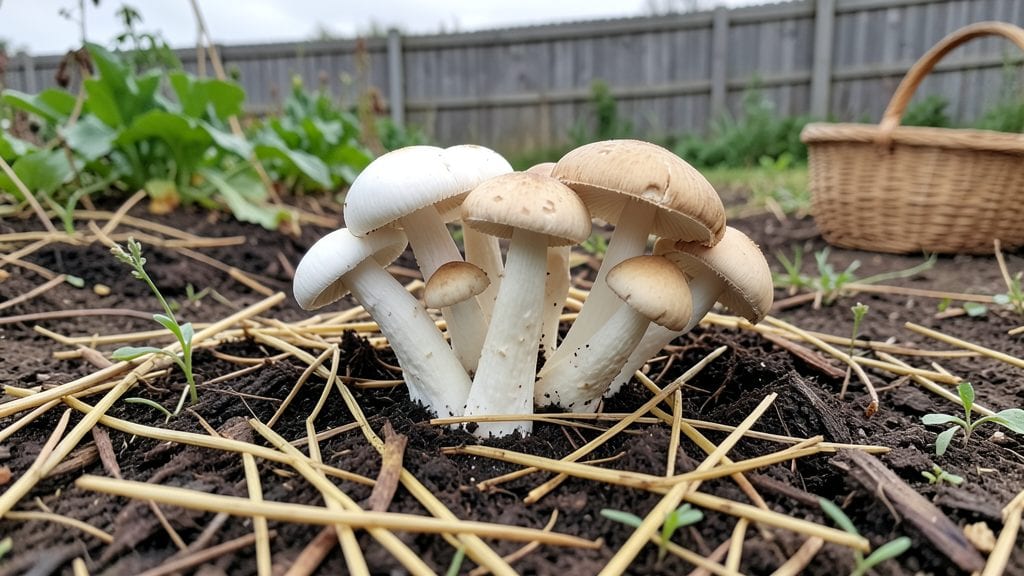
Identifying garden mushrooms can mean the difference between a delicious harvest and a dangerous mistake. ✨ I’ve spent years watching mushrooms pop up in my mulch beds and under oak trees, and I’ve learned the hard way that guessing isn’t safe—some look identical until you examine the gills or spores.
Most garden mushrooms grow where moisture lingers—under logs, in thick mulch, or after heavy rain. The key to safe identification lies in four details: cap shape (convex, flat, or bell-like?), gill color (white, pink, or brown?), spore print (use a paper plate to test), and stem texture.
Even experienced foragers double-check with a field guide or app before touching anything.
You’ll quickly spot common edibles like oyster mushrooms (fan-shaped, white gills) or morels (honeycomb caps), but deadly look-alikes like the destroying angel (pure white, no brown stains) demand caution.
When in doubt, snap clear photos from multiple angles and consult a mycologist—your life isn’t worth the risk of a misidentified meal.
If you’re new to mushroom hunting, start with easy-to-ID varieties in controlled environments (like straw kits) before venturing into the wild. Safety first: wear gloves, avoid touching unknown mushrooms, and never eat anything unless you’re absolutely certain. The garden’s secrets are fascinating, but some should stay undiscovered.
Hidden Traits That Trick Foragers
Mistaking garden mushrooms for edible varieties—or worse, toxic lookalikes—often boils down to subtle but critical factors. Understanding these hidden traits can mean the difference between a delicious harvest and a dangerous misstep. Let’s break down the key scientific and environmental reasons why even experienced foragers struggle to identify mushrooms correctly.
Many garden mushrooms evolve to resemble harmless or edible species as a survival strategy. This phenomenon, called Batesian mimicry, tricks predators (including humans) into avoiding them. For example:
- False Morels (Gyromitra spp.) often imitate true morels (Morchella spp.) with their wrinkled caps and hollow stems. However, false morels contain gyromitrin, a toxin that breaks down into monomethylhydrazine—a compound similar to rocket fuel and deadly in high doses.
- Deadly Galerina (Galerina marginata) mimics the common meadow mushroom (Agaricus campestris) but grows in wood chips or decaying logs, not grassy lawns. Its key giveaway? A partial veil (ring) that leaves a skirt-like band on the stem—a trait absent in many edible Agaricus species.
Actionable Tip: Always check the growing environment. Edible mushrooms like button mushrooms (Agaricus bisporus) thrive in well-drained soil with organic matter, while toxic doppelgängers often favor rotting wood or mulch. 🌡️ Pro Tip: Use a spore print kit—toxic mushrooms often produce brown or black spores, while edible varieties like chanterelles (Cantharellus) have yellow or orange prints.
Some mushrooms share nearly identical physical traits but differ drastically in biochemical composition. These "chemical twins" exploit our reliance on visual cues:
- Jack-O’-Lanterns (Omphalotus illudens) resemble chicken-of-the-woods (Laetiporus sulphureus) but grow in dense clusters on wood instead of shelves. While chicken-of-the-woods is edible (though not for everyone), jack-o’-lanterns cause severe gastrointestinal distress due to illudin S, a toxin that irritates the digestive tract.
- Destroying Angels (Amanita bisporigera) mimic the fly agaric (Amanita muscaria) with their iconic red caps and white warts. The critical difference? Destroying angels lack the sac-like volva at their base and contain amatoxins, which cause liver and kidney failure within days.
Scientific Deep Dive: Toxins like amatoxins bind to RNA polymerase II in human cells, halting protein synthesis and leading to organ failure. No antidote exists—prevention relies on accurate ID. 🔍 Pro Tip: Use a lucid field guide or app (like iNaturalist) to cross-reference microscopic features, such as spore shape or gill attachment.
Mushroom toxicity or edibility can shift based on season, weather, and soil conditions. For instance:
- Autumn Olive (Xerocomus badius) is generally safe, but its bitter taste intensifies in dry years, signaling higher concentrations of psilocybin-like compounds (though not hallucinogenic, they can cause nausea).
- Webcaps (Cortinarius spp.) often turn toxic when grown in metal-rich soils (e.g., near old mines), accumulating oreganic acids that damage kidneys.
Actionable Tip: Document local conditions—keep a foraging journal noting soil type, rainfall, and mushroom behavior. 📊 Pro Tip: Avoid mushrooms near roadsides or industrial areas, where heavy metals (like cadmium) can accumulate and become concentrated in fungi.
The biggest "cause" of misidentification? Skipping critical steps. Common pitfalls include:
- Relying on color alone: A bright red cap doesn’t guarantee safety—deadly webcaps (Cortinarius rubellus) are red but contain orellanine, a toxin with a delayed onset (symptoms appear 3–14 days after ingestion).
- Ignoring the stem base: Many deadly Amanita species have bulbous bases with a sac (volva), while edible puffballs (Lycoperdon spp.) lack these features.
- Assuming "no one got sick" means it’s safe: Some toxins (like those in false parasols (Chlorophyllum spp.)) cause delayed reactions, making them seem harmless until hours later.
Scientific Reality: 10% of mushroom poisonings are fatal, and 90% are preventable with proper ID techniques. 🚨 Pro Tip: Always perform the "smell test"—rotten eggs (sulfur smell) = toxic (e.g., deadly Galerina), while nutty or earthy scents often indicate safety (e.g., chanterelles).
Fixing Common Mushroom Misidentification Mistakes
Mistakenly identifying garden mushrooms can lead to dangerous consequences—or missed opportunities for a delicious harvest. Whether you’re a beginner or an experienced forager, these practical solutions will help you avoid confusion and confidently distinguish between edible and toxic varieties.
Below, we’ve mapped common causes of misidentification to actionable fixes, along with prevention tips to keep your garden (and your plate) safe.
Some edible mushrooms share striking resemblances with poisonous species, like the morel vs. false morel or chanterelle vs. jack-o’-lantern mushroom. The fix? Master these key visual and tactile clues:
- 👀 Examine the Gills (or Lack Thereof): - Edible chanterelles have forked, wavy gills that run down the stem. - False chanterelles (jack-o’-lanterns) have true gills that turn yellow when bruised—a red flag. - Pro tip: Rub a suspect mushroom between your fingers.
Toxic varieties often leave a bitter or acrid taste (spit it out—don’t ingest!).
- 🍄 Check the Stem and Base:
- Morels have a hollow stem with a pitted, honeycomb cap.
- False morels (gyromitras) grow in clusters and have a smooth, brain-like cap—deadly if eaten raw.
- Pro tip: Never eat morels unless fully cooked (some contain toxins neutralized by heat).
- 🌡️ Use a Field Guide or App:
- Carry a waterproof field guide (like Mushrooms of the Pacific Northwest) or use apps like iNaturalist or PictureThis to cross-reference your find.
- ✨ Prevention: Bookmark trusted sources (e.g., First Nature) and avoid relying solely on Instagram posts.
Aging mushrooms lose their defining features, making them harder to ID. If your specimen looks off (slimy, discolored, or mushy), follow these steps:
- 🔪 Cut a Cross-Section:
- Slice the mushroom open to check for internal rot, insect damage, or unusual colors.
- Edible mushrooms should have a firm, uniform texture. Toxic or spoiled ones may ooze liquid or smell putrid or chemical-like.
- 👨🍳 Perform the Vinegar Test (For Wild Mushrooms Only): - Place a small piece in a bowl with white vinegar.
If it turns red or pink within 15 minutes, it’s likely an amanita (many are deadly). - ⚠️ Warning: This test isn’t foolproof—always verify with other methods.
- 🗑️ When in Doubt, Toss It Out:
- If a mushroom fails any test or lacks clear identification markers, discard it immediately.
- 💡 Prevention: Harvest mushrooms early in their growth cycle when features are most distinct.
Mushrooms grown in containers, logs, or soil can develop hybrid traits or resemble wild varieties they’re not. Here’s how to adapt:
| Cause | Fix | Prevention |
|---|---|---|
| Oyster mushrooms grown in sawdust blocks may look like wild pleurotus but lack the same flavor. | Taste a tiny, cooked sample (if you’re certain it’s from a trusted source). Store-bought oysters are safe but may not match wild varieties. | Label your logs/blocks with growth dates and species. |
| Shiitake mushrooms grown on hardwood logs can develop black spots (harmless but confusing). | Check the gill attachment—shiitake gills run down the stem, while look-alikes like black-staining polypores don’t. | Harvest shiitake when caps are still curled (before blackening occurs). |
| Lion’s mane may grow in cauliflower-like clusters that resemble coral fungi (some edible, some not). | Lion’s mane has soft, spine-like projections and a seafood-like aroma when fresh. | Grow lion’s mane in sterilized sawdust or straw to avoid contamination. |
Even with precautions, some mushrooms defy easy ID. Here’s how to verify before eating:
- 🔍 Send a Sample to a Mycologist:
- Mail a dried specimen (not fresh!) to a local university lab or service like Mushroom Expert. Costs ~$20–$50.
- ✨ Pro tip: Include a photo, habitat notes, and location for faster results.
- 🍽️ Start with a Tiny, Cooked Bite:
- If you’re 100% sure of the species (e.g., button mushrooms), try a pea-sized portion cooked thoroughly.
- ⚠️ Warning: This only works for common, well-documented edibles—never test wild mushrooms this way.
- 📅 Join a Foraging Group:
- Local mycological societies often host ID workshops or guided forays. Examples:
Reduce misidentification risks by creating an environment where mushrooms grow predictably:
- 🌿 Grow Known Varieties: Stick to cultivated mushrooms (oyster, shiitake, lion’s mane) in controlled settings like sterilized straw or logs.
- 🚫 Avoid Wild Foraging Near Roads: Pesticides and pollution can alter mushroom traits, making ID harder.
- 📅 Harvest Consistently: Overgrown mushrooms lose defining features—pick them young.
- 📸 Document Your Finds: Keep a photo journal of your garden mushrooms with notes on size, color, and habitat.
With these strategies, you’ll minimize mistakes and build confidence in your mushroom-identifying skills. Remember: When in doubt, leave it out! Your garden—and your stomach—will thank you.
Frequently asked questions about garden fungi
How can I tell if a mushroom growing in my yard is safe to eat?
Never eat a wild mushroom unless you're 100% certain of its identity. Start by checking four key features: cap shape (convex, flat, or bell-like?), gill color (white, pink, or brown?), spore print (use a white plate to test), and stem texture. Compare these to trusted field guides or apps like iNaturalist. If unsure, consult a mycologist—your life isn't worth the risk.
What are the most common poisonous mushrooms found in gardens?
Watch for these deadly doppelgängers: destroying angels (pure white with a sac-like base), false morels (wrinkled caps but deadly raw), and jack-o'-lanterns (orange clusters that glow in the dark). All three can be fatal. Always assume unknown mushrooms are toxic until proven safe through expert verification.
Can I grow edible mushrooms in my garden without risks?
Yes! Start with cultivated varieties like oyster mushrooms (grow on straw) or shiitake (hardwood logs). These are non-toxic when properly grown. Label your logs and avoid mixing species. For wild mushrooms, stick to well-documented edibles like chanterelles—never experiment with unknown finds.
What should I do if I accidentally eat a poisonous mushroom?
Call poison control immediately (1-800-222-1222 in the U.S.) and seek emergency care. Save the mushroom (don't wash it) for identification. Never induce vomiting unless instructed—some toxins work faster than stomach pumping. Time is critical with deadly species like amanitas.
How do I take a proper spore print for identification?
Place the mushroom cap (gills down) on a white or black paper plate, cover with a bowl, and leave for 6-12 hours. The spores will leave a colored print: white (often safe), brown/black (usually toxic), or yellow/orange (likely edible like chanterelles). Use this alongside other features for accurate ID.