
Pests and Diseases
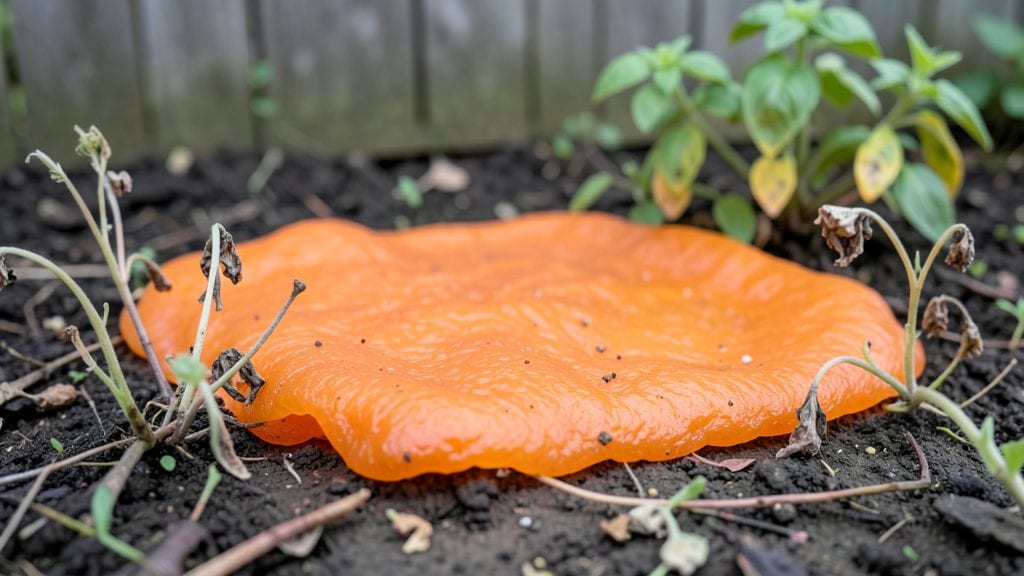
That bright orange goo creeping across your garden paths isn’t a plant—it’s orange slime mold, and while it looks alarming, it’s harmless to your garden. I’ve seen it turn my damp mulch into a neon nightmare, but there’s no need to panic or reach for harsh chemicals.
This weird but fascinating organism thrives in moist, shady spots, feeding on decaying leaves and wood.
The good news? It’s easy to clean up without harming your garden. A stiff rake or broom scrapes it right off, and reducing moisture in that area keeps it from coming back. I’ve found that improving airflow and avoiding thick mulch layers in shady spots cuts down on future outbreaks.
It’s like nature’s weird cleanup crew—just not the kind you want staring at you from your garden beds.
Once you remove it, your garden will look fresh again in no time. The slime mold might return if conditions stay damp, but with a few simple adjustments, you can keep it from becoming a regular visitor.
Think of it as a reminder to check your garden’s moisture levels—especially after heavy rains or in shaded areas where water lingers.
No need for store-bought sprays or toxic solutions—this is one garden problem you can tackle with basic tools and a little patience. Your plants will thank you, and you’ll keep your garden looking its best without any unwanted orange surprises.
Root Causes of Slime Mold Outbreaks
Slime mold outbreaks—especially the vibrant orange variety—are more common than you might think, and they’re rarely a sign of poor gardening. Instead, they thrive in specific conditions that often go unnoticed until that telltale gelatinous glow appears.
Understanding the science behind these causes will help you prevent future infestations and address them effectively. Let’s break down the key triggers:
Orange slime mold (Fuligo septica or similar species) is a decomposer, meaning it feeds on decaying organic matter—but it requires high humidity to survive. Here’s why moisture is the #1 culprit:
- Overnight Dew or Rain: Slime mold spores germinate when moisture levels spike, especially after prolonged dampness. Gardens with poor drainage or shaded areas (where dew lingers) are prime targets. - Irrigation Practices: Overwatering—especially late in the day—creates the perfect breeding ground.
The mold’s fruiting bodies (those bright orange spore cases) emerge when the soil stays damp for 24+ hours. - Microclimates: Greenhouses, mulched beds, and leaf litter piles trap moisture, creating ideal conditions. Even a single damp spot can trigger an outbreak.
Actionable Fix: Reduce evening watering, improve soil drainage, and avoid thick mulch layers in problem areas.
Slime mold doesn’t attack living plants—it feasts on dead or dying organic material.
Common food sources include: - Leaf Litter: Piles of fallen leaves, especially under shrubs or trees, provide a smorgasbord. - Compost or Mulch: Freshly added compost or wood chips can harbor spores if they’re not fully decomposed. - Dead Plant Debris: Wilted flowers, rotting roots, or even old vegetable scraps left on the soil surface invite infestations.
Pro Tip: 💡 Rake up leaf litter regularly, turn compost piles frequently, and remove plant debris promptly. If you’re using mulch, opt for coarse materials (like pine straw) that allow airflow.
Slime mold is a cool-weather opportunist.
It thrives in: - Spring and Fall: Temperatures between 50–75°F (10–24°C) with high humidity are ideal for spore germination. - Nighttime Chill: A warm day followed by a cool, damp night can trigger outbreaks overnight—hence the "magic" appearance of orange patches in the morning.
Key Insight: If your garden stays consistently hot or dry, slime mold is less likely. But in temperate climates, it’s a seasonal visitor.
Stagnant air = trapped moisture = slime mold paradise.
Gardens with: - Dense Planting: Crowded perennials or shrubs create microclimates where air doesn’t circulate. - Shady Spots: Low light slows evaporation, keeping surfaces damp longer. - Greenhouse or Tunnel Effects: Plastic covers or thick canopies trap humidity.
Solution: Prune plants to improve airflow, space out seedlings, and avoid overcrowding. Even a few inches of separation can make a difference.
While slime mold isn’t picky about pH, nitrogen-rich soils (from over-fertilization or compost) can accelerate its growth. The mold breaks down organic matter faster in nutrient-dense environments, leading to visible outbreaks.
Fix: Balance your soil with slow-release fertilizers and avoid fresh manure or high-nitrogen amendments in problem areas.
Slime mold spores are ubiquitous in gardens. They lie dormant until conditions align:
- Disturbance: Tilling, digging, or even walking on damp soil can wake them up.
- Recent Soil Changes: Newly amended beds or freshly tilled areas are hotspots for germination.
Prevention: Avoid unnecessary soil disturbance in damp conditions, and let organic matter decompose fully before incorporating it into the garden.
Despite its eerie appearance, orange slime mold is not a pathogen—it doesn’t harm plants. However, its presence signals poor garden hygiene or environmental imbalances. Addressing the root causes (literally and figuratively) will keep your garden both healthy and slime-free. 🌱✨
How to Fix Orange Slime Mold
Got that unsettling orange slime creeping across your garden? Don’t panic—this gnarly but harmless guest can be evicted with the right moves!
Below, we’ll tackle the root causes of your slime mold problem and match them with practical fixes, plus some pro tips to keep it from crashing your garden party again. Let’s get your soil and plants back to their pristine glory!
Slime mold thrives in damp, shady spots where airflow is zilch. If your garden’s a sauna after rain or you’ve got thick mulch trapping moisture, this orange blob is basically throwing a party in your compost.
🍳 Fix It: Dry It Out & Improve Airflow
- 👨🍳 Step 1: Let It Bake in the Sun Slime mold hates direct sunlight. On a dry, sunny day, gently rake or brush the affected areas to expose them to UV rays. Within 24–48 hours, the mold will shrivel up and disappear like a bad dream.
- 🥘 Step 2: Trim Overgrown Plants Thick foliage traps humidity. Prune back dense plants, especially in shady corners, to let air circulate. Think of it as giving your garden a breath of fresh air!
- ⏰ Step 3: Adjust Watering Habits Water early in the day so soil has time to dry. Avoid overhead sprinkling—stick to drip irrigation or soaker hoses to keep leaves dry.
💡 Prevention Tip: Add a 2–3 inch layer of coarse sand or gravel under mulch in high-risk areas to improve drainage. Slime mold? Not invited.
Leaves, old mulch, and decaying plant matter create the perfect slime mold buffet. If your garden’s a composting hotspot, this orange invader will move in faster than a squirrel to a bird feeder.
🔪 Fix It: Clean Up & Disrupt the Menu
- 👨🍳 Step 1: Remove Organic Debris Rake up fallen leaves, dead plants, and thick mulch from the affected areas. Bag it up and compost it separately (or toss it—slime mold can survive in compost piles!).
- 🥘 Step 2: Refresh Mulch Replace old mulch with a thin layer (1 inch max) of fresh, dry mulch. Avoid wood chips if your garden stays damp—they hold moisture like a sponge.
- ✨ Step 3: Till the Soil (Gently!) If slime mold keeps returning, lightly till the top 1–2 inches of soil to break up spores. Just don’t go full “tractor mode”—you’ll disturb roots!
💡 Prevention Tip: Use straw or pine needles as mulch—they break down faster and don’t trap moisture like wood chips. Bonus: They look great in a rustic garden!
If water pools in pots or low spots, slime mold will turn your garden into its personal spa. Containers are especially vulnerable if they don’t have drainage holes.
🎯 Fix It: Drainage Overhaul
- 👨🍳 Step 1: Check Drainage Holes For potted plants, ensure drainage holes are clear. If not, poke a few with a screwdriver. Add a layer of gravel or broken pottery at the bottom to prevent clogging.
- 🥘 Step 2: Elevate Containers Place pots on feet or saucers to keep them off the ground. This prevents water from sitting underneath and seeping back in.
- 🔥 Step 3: Amend Heavy Soil If your garden beds have compacted soil, mix in compost or perlite to improve drainage. Slime mold despises well-aerated soil!
💡 Prevention Tip: After watering, tip containers sideways for 10 minutes to let excess water drain completely. No soggy soil = no slime mold party.
While slime mold isn’t harmful, if you’re really committed to kicking it out, try these low-effort tricks: - 🍎 Sprinkle Diatomaceous Earth (DE): Lightly dust affected areas with food-grade DE. It dehydrates the slime mold without harming plants.
Reapply after rain. - 🌿 Use Wood Ash: Sprinkle a thin layer of wood ash (from untreated wood) around plants. The alkaline properties discourage slime mold growth. - 🌡️ Boost Soil Temperature: Slime mold thrives in cool, damp conditions.
If possible, mulch with black plastic in early spring to warm the soil faster.
Final Thought: Orange slime mold is more of a nuisance than a menace, but with these fixes, you’ll send it packing in no time. The key? Less moisture, more airflow, and regular cleanup. Your garden will thank you—and so will your sanity! 🌱✨
Frequently asked questions
Is orange slime mold harmful to my plants?
Not at all! This bright orange growth is completely harmless to your plants—it feeds on decaying organic matter like leaves and wood chips. While it might look alarming, it won’t damage roots or foliage. Think of it as nature’s cleanup crew, though you’ll likely want to remove it for aesthetic reasons.
Why does orange slime mold appear overnight?
The spores germinate quickly when conditions are perfect: warm days followed by cool, damp nights. If your garden stays moist for 24+ hours (from rain, dew, or overwatering), the mold’s fruiting bodies will emerge overnight—hence the sudden orange surprise in the morning!
Can I use vinegar or bleach to remove it?
Skip the harsh chemicals! Vinegar won’t harm the mold (it’s organic), and bleach can damage plants and soil. Instead, use a stiff rake or broom to scrape it off, then improve airflow and drainage in that area. A quick sunbath—exposing the area to direct sunlight—will dry it out within 24 hours.
Will it come back if I don’t treat the area?
Probably! Slime mold spores are everywhere in gardens. If moisture and organic debris remain, it’ll return faster than a bad weed. Focus on reducing humidity (prune plants, improve drainage) and removing leaf litter to keep it from staging a comeback. Prevention is easier than cleanup!
Can I compost the slime mold after removing it?
No—composting it will just spread the spores! Toss it in the trash or bury it deep in your garden where it won’t resurface. The key is to remove all traces and disrupt its food source (decaying matter) to break the cycle.