
Tools
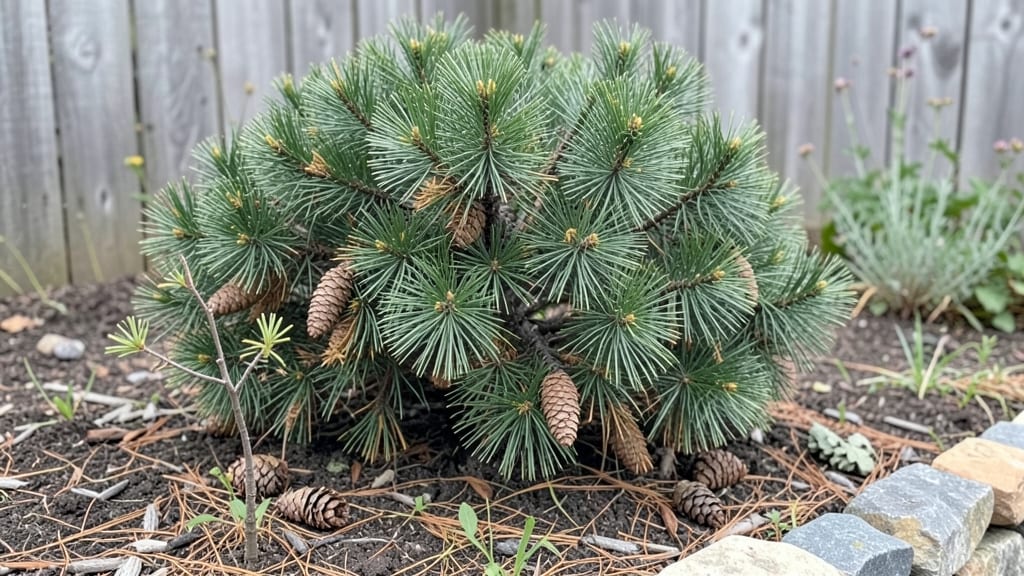
A pine garden bed transforms your yard into a fragrant, evergreen sanctuary that thrives year-round. 🌲 I designed mine after realizing how much I loved the fresh scent and soft texture of pine needles—it became my go-to spot for quiet mornings.
The secret lies in blending pine-scented plants like rosemary and lavender with pine bark mulch for that signature forest floor look.
You’ll need just a few key elements: a sunny or partially shaded spot, pine bark mulch (or pine needles), and a mix of evergreen shrubs like boxwood or juniper. Add a few pine-scented plants for fragrance, and you’ve got a low-maintenance bed that stays lush even in winter.
The best part? It grows more beautiful with each passing season.
Picture this: a textured, fragrant garden bed that blocks unwanted views while filling your yard with a calming pine aroma. The mulch suppresses weeds, the evergreens provide privacy, and the scent lingers even on still days. Once established, this bed requires minimal upkeep—just occasional trimming and fresh mulch.
Perfect for small yards, cottage-style gardens, or even as a border along walkways. The theme works in any climate where pines thrive, and you can scale it from a single bed to a full privacy screen. Let’s bring that forest feel to your garden!
📚 In This Guide
- What you need
- Instructions
- Tips and common mistakes
- Wrapping up and next steps
What you need
- ● Pine Trees: Choose fast-growing, evergreen varieties like Pinus sylvestris (Scots pine) or Pinus strobus (Eastern white pine). Plan for 5–7 trees per 10 feet of garden bed width (spaced 3–5 feet apart). Seedlings (3–5 ft tall) grow faster than mature trees.
- ● Soil Amendments: Peat moss or coconut coir (2–3 cubic yards for a 10x10 ft bed)
- ● Compost (1–2 bags)
- ● Slow-release fertilizer (e.g., 10-10-10, 1 lb per tree)
- ● Mulch: Pine bark mulch (2–3 cubic yards) to retain moisture and suppress weeds.
- ● Tools: Shovel or spade
- ● Garden trowel
- ● Wheelbarrow (for hauling soil)
- ● Pruners (for trimming)
- ● Measuring tape
- ● Gloves (to protect your hands!)
- ● Erosion control fabric (if planting on a slope)
- ● Drip irrigation system (for consistent watering)
- ● Stakes and twine (to support young trees temporarily)
- ● Decorative rocks or edging (for a polished look)
- ● Soil pH tester (pines prefer acidic soil, pH 4.5–6.0)
Step-by-step guide to designing a pine garden bed for year-round privacy
Here’s how to create a natural, evergreen screen that thrives with minimal maintenance.
🌱 Step 1: Select the Right Pine Varieties for Your Climate
Not all pines work for privacy screens—choose fast-growing, dense varieties suited to your hardiness zone. I recommend Eastern White Pine for cold climates (Zones 3-8) or Ponderosa Pine for drier regions (Zones 2-7). Both grow 3-5 feet per year and develop thick, wind-resistant canopies.
Check the mature height of your chosen species: Eastern White Pine reaches 40-60 feet, while Ponderosa Pine maxes out at 80-100 feet. For a 6-foot-tall screen, space saplings 8-10 feet apart to allow airflow and reduce disease risk. Avoid planting too close—they’ll compete for nutrients and grow unevenly.
🪴 Step 2: Prepare the Site for Optimal Growth
Pines thrive in well-draining soil with a slightly acidic pH (5.0-6.5). Test your soil first—amend heavy clay with 3-4 inches of compost or sand to improve drainage. If your soil is alkaline, mix in 1-2 pounds of sulfur per 100 square feet and retest in 2-3 months.
Clear weeds and grass from the planting area using a broadfork to loosen soil 12-18 inches deep. Pines hate wet feet—ensure the site has natural slope or install a French drain if water pools after rain. Mark planting spots with stakes 8-10 feet apart for even spacing.
☀️ Step 3: Plant Saplings at the Right Depth and Spacing
Dig holes twice as wide as the root ball but no deeper—planting too low suffocates roots. Gently remove saplings from containers and tease apart tangled roots. Place each in its hole so the root flare (where roots meet the trunk) sits 1-2 inches above soil level.
Backfill with native soil (not amended mix) and tamp lightly to eliminate air pockets. Water deeply until moisture reaches 12 inches down. Mulch with 3-4 inches of pine needles or wood chips to retain moisture and suppress weeds. Avoid organic mulch touching the trunk—keep it 6 inches away to prevent rot.
💧 Step 4: Water and Fertilize for Rapid Establishment
Newly planted pines need consistent moisture for the first 2 years. Water once weekly during dry spells, delivering 10-15 gallons per tree to saturate the root zone. You’ll know it’s enough when water runs out the bottom of the hole after 30 minutes.
Skip fertilizer the first year—pines are slow to establish and can scorch with too many nutrients. In year two, apply a slow-release, acid-loving plant fertilizer (like 10-10-10) in early spring. Spread granules 6 inches from the drip line and water in thoroughly. Avoid high-nitrogen blends—they promote weak, floppy growth prone to wind damage.
✂️ Step 5: Prune for Structure and Health
Prune only to remove dead, diseased, or crossing branches—pines don’t tolerate heavy shaping. Use sterilized bypass pruners to cut ¼ inch above a healthy bud on branches ½ inch thick or smaller. The best time is late winter or early spring before new growth begins.
Watch for pine beetle infestations (tiny holes in bark, sawdust-like frass). If you spot them, treat immediately with neem oil or kaolin clay. Mature pines rarely need pruning, but young trees benefit from removing the lowest 3-4 branches to encourage upward growth and reduce snow/ice damage.
Tips & tricks for perfect pine garden beds
A few strategic moves will help your evergreen privacy screen thrive for decades—here's what nobody tells you about planting pines.
Variety Matters: While Eastern White Pine and Ponderosa Pine are excellent choices, consider adding Scotch Pine if you want a more formal, columnar shape. These grow 2-3 feet per year and reach 30-40 feet tall, making them perfect for tighter spaces. Just remember their mature height when spacing—maintain that 8-10 feet apart to prevent competition.
Soil Testing is Non-Negotiable: Don't skip the pH test! Pines are acid-loving plants, and soil pH below 5.0 can actually damage roots. If your test shows pH above 6.5, you'll need to amend with elemental sulfur—it takes 2-3 months to adjust, so plan ahead. I always test twice: once before amending and again after the waiting period to confirm proper acidity.
Planting Depth Secret: The root flare (where roots meet trunk) should sit 1-2 inches above soil level—this is crucial for preventing rot. Many beginners bury it too deep, which suffocates the tree. After planting, create a small berm of soil around the base to help direct water away from the trunk, reducing disease risk.
Watering Wisdom: That 30-minute watering check isn't just about timing—it's about technique. Use a garden hose with a slow flow or a watering can to distribute water evenly. The goal is to saturate the soil 12 inches down, not just surface watering. I like to use a soil probe to verify moisture depth after watering, especially during the critical first two years.
Pro Tips for Pine Garden Bed
- A few strategic moves will help your evergreen privacy screen thrive for decades—here's what nobody tells you about planting pines.
- Variety Matters: While Eastern White Pine and Ponderosa Pine are excellent choices, consider adding Scotch Pine if you want a more formal, columnar shape.
- Soil Testing is Non-Negotiable: Don't skip the pH test!
Frequently asked questions
Got questions about creating a stunning pine garden bed? You’re not alone!
Here are some of the most common queries—and their answers—to help you plan with confidence.
What’s the best pine species for a privacy screen?
For year-round coverage, opt for Pinus sylvestris (Scots pine) or Pinus nigra (Austrian pine)—both thrive in most climates and grow quickly. If you prefer low-maintenance, Pinus mugo (mugo pine) is a compact, drought-resistant choice. Avoid fast-growing pines like Pinus ponderosa, which can shed needles aggressively.
How long does it take for a pine garden bed to provide full privacy?
Expect 3–5 years for dense coverage, depending on spacing and species. Plant saplings 4–6 feet apart for faster results. Pro tip: Shear young pines lightly in early spring to encourage bushier growth. Patience pays off—once established, these evergreens block views and noise effortlessly!
Can I mix pine trees with other plants in the bed?
Pines tolerate low-light conditions, so pair them with shade-loving perennials like heuchera, ferns, or hostas at the base. Avoid competitive plants (e.g., rhododendrons) that may struggle for nutrients. For a layered look, add evergreen shrubs like boxwood or juniper between trees.
How do I prune a pine garden bed to keep it neat?
Prune once a year in late winter or early spring to shape the bed. Use sharp, clean shears to trim only the new growth—never cut into old wood. For formal shapes, prune lightly every 6–8 weeks during the growing season. Warning: Over-pruning weakens pines; stick to no more than ⅓ of the foliage per year.
Are pine garden beds pest-prone? How do I prevent issues?
Pines can attract sawflies, spider mites, or bark beetles, but prevention is simple:
- Inspect trees monthly for chewed needles or sawdust-like frass.
- Water deeply but infrequently to avoid stressing roots.
- Apply neem oil (diluted) if you spot pests early.
- Avoid over-fertilizing—pines prefer acidic, well-draining soil.
Pro Tip:
For a low-maintenance hedge, consider ‘Fastigiata’ pines—their columnar shape grows in tight rows, reducing pruning needs. Plant them 3 feet apart for a living fence that’s half the work!
Wrapping up and next steps
Creating a pine garden bed is a fantastic way to add natural beauty, privacy, and year-round greenery to your outdoor space! With the right materials and a little effort, you’ll enjoy a low-maintenance, evergreen haven that thrives in any season.
Whether you’re a beginner or a seasoned gardener, this project is well within reach—so grab your tools and get planting! 🌲✨
Ready to take the next step? Start small—even a single pine tree or a mixed bed can make a big impact. For extra inspiration, sketch a design or browse local nurseries for the perfect pine varieties. Your future garden oasis awaits!