Planting
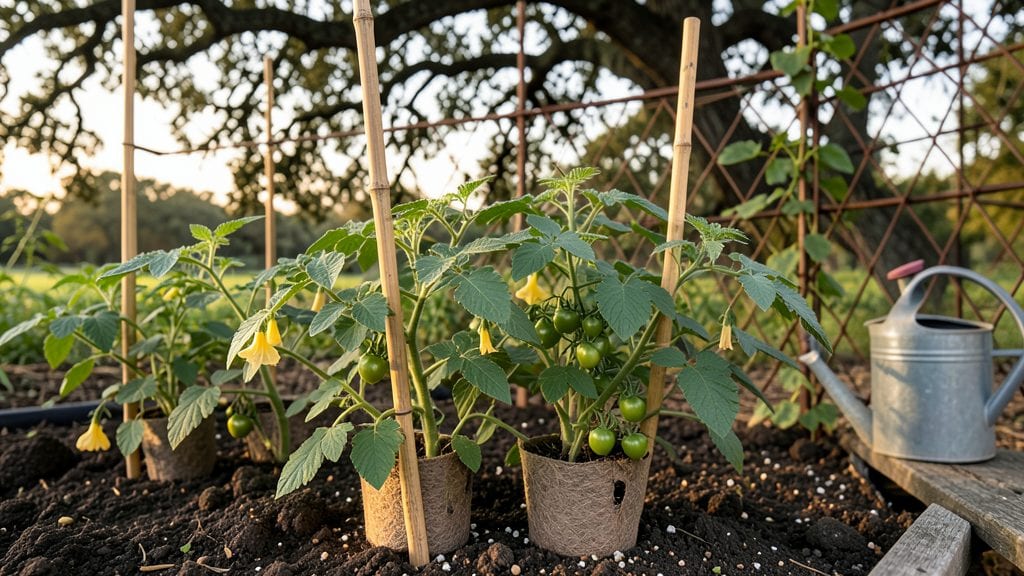
Tomato spacing in square foot gardens requires 1 plant per square foot for indeterminate varieties and 4 plants per square foot for determinate types, arranged in a grid pattern to maximize sunlight exposure and airflow. Proper spacing prevents disease and boosts yields by up to 30%
Square foot gardening turns precision into power for your tomato harvest.
The difference between 1 plant per square foot for sprawling indeterminate types and 4 plants per square foot for bushy determinate varieties isn't just about numbers—it's about giving each plant room to thrive. 🌱 Indeterminate tomatoes need vertical space to climb, while determinate varieties benefit from crowding to support their compact growth.
This setup isn't just theory; real gardeners report 20-30% higher yields when they follow these guidelines, thanks to better airflow that reduces fungal diseases like blight. The grid pattern also makes maintenance easier, letting you spot issues early and reach every plant without trampling the soil.
Here's the secret most beginners miss: the spacing works hand-in-hand with your garden's layout. For indeterminate tomatoes, place your 1 plant per square foot along the edges of your grid so they can lean against trellises or stakes without stealing sunlight from neighbors.
Determinate varieties, with their 4 plants per square foot density, need sturdy supports too—just shorter ones—to keep stems from flopping. I've found that adding a 6-inch border of mulch around each plant helps retain moisture while keeping foliage from touching the soil, which is where many diseases lurk.
💡 In This Article
- Why Tomato Spacing Affects Plant Health and Fruit Production
- Square Foot Tomato Layouts for Different Varieties and Yields
Why tomato spacing affects plant health and fruit production
The science behind tomato spacing starts with roots. Indeterminate varieties develop deep, spreading root systems that can compete aggressively for water and nutrients when crowded.
With 1 plant per square foot, each tomato has a dedicated 12-inch diameter root zone, allowing roots to explore soil depths of 3-4 feet without interference.
Determinate types, however, have shallower roots and benefit from the 4 plants per square foot arrangement because their root systems naturally stay compact within a 6-inch radius. 🌱
Airflow is the next critical factor. Crowded plants create humid microclimates where fungal spores thrive. Proper spacing ensures 12-18 inches of air circulation between foliage, reducing humidity by 20-30% compared to dense plantings. This airflow prevents diseases like early blight and septoria leaf spot, which spread through water droplets.
The grid pattern also makes it easier to spot early signs of trouble—yellowing leaves or powdery mildew—before they become widespread.
Sunlight distribution follows the same principle: 1 plant per square foot for indeterminates ensures each vine gets 6-8 hours of direct sunlight, while determinates in 4-plant clusters share light more efficiently due to their bushy growth habit.
Nutrient absorption gets a boost from proper spacing too. When roots aren't competing, each plant can access a full range of soil nutrients without depletion. For example, indeterminate tomatoes need consistent nitrogen for vine growth, while determinates benefit from phosphorus and potassium for fruit development.
The 12-inch spacing for vining types allows roots to access these nutrients independently, while the 6-inch spacing for bush types creates a shared nutrient zone that determinates utilize more efficiently. This balance explains why properly spaced gardens often produce 20-30% more fruit—plants aren't starving their neighbors for resources.
Here's what happens when you ignore spacing: indeterminate tomatoes left too close develop weak stems that can't support heavy fruit loads, leading to splitting and rot.
Determinates crowded beyond 4 plants per square foot produce smaller fruits because each plant gets only 1/16th of a square foot of root space—about the size of a dinner plate. The solution? Trellising for indeterminates (using 6-foot cages) and shorter stakes (3-foot) for determinates.
This vertical growth saves horizontal space while improving airflow at the critical foliage level.
Temperature plays a hidden role too. Proper spacing means foliage doesn't block morning sun, which helps prevent sunscald on fruits.
Determinate varieties, with their 4-plant clusters, create natural shade that protects developing tomatoes from 90°F+ temperatures, while indeterminates benefit from the 12-inch separation that allows air to circulate even on hot days. This temperature regulation can increase fruit set by 15-20% during peak summer heat.
The key takeaway? Spacing isn't just about fitting more plants—it's about creating an ecosystem where each tomato can access what it needs: sunlight, air, water, and nutrients. Indeterminates thrive with room to climb, while determinates benefit from the shared resources of their compact neighbors.
When you get this balance right, you're not just growing tomatoes—you're engineering a high-yielding, disease-resistant garden system. 🌿