
Plants
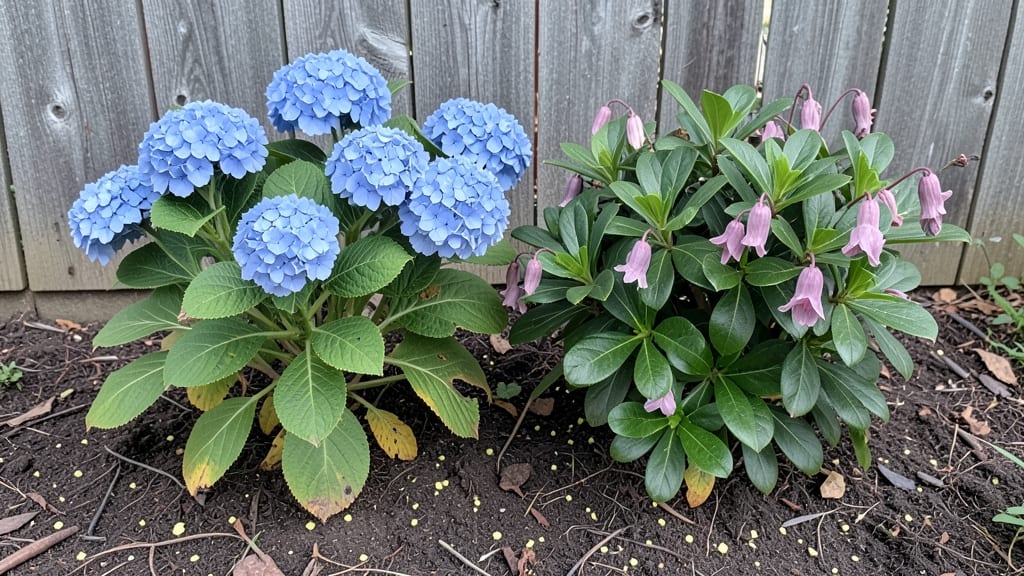
Lime works by neutralizing acidic soil, creating a more alkaline environment where certain plants can access essential nutrients like calcium and magnesium. 🌱 For example, hydrangeas need slightly alkaline soil to produce their signature blue flowers, while brassicas thrive when the pH is raised to prevent bitter flavors.
I've found that testing soil pH annually—especially in regions with naturally acidic soil—can save struggling plants before symptoms like yellowing leaves appear.
Most gardeners apply lime in early spring or fall, spreading it evenly over the soil surface and lightly raking it in. Organic options like crushed oyster shells work slowly, while pelletized lime provides faster results.
The key is patience—soil pH changes gradually, so retesting after 2-3 months helps determine if additional applications are needed.
💡 In This Article
- How Lime Adjusts Soil pH for Acid-Loving Plants
- Top Lime-Loving Plants and Their Care Needs
How lime adjusts soil pH for acid-loving plants
Lime—typically made from calcium carbonate—works by chemically neutralizing acidic soil through a process called hydrolysis. When lime dissolves in water, it releases calcium and carbonate ions that react with hydrogen ions (H+) in the soil, reducing acidity.
This reaction raises the pH level, making nutrients like calcium, magnesium, and phosphorus more available to plants. For example, blueberries need a pH of 4.5-5.5 for optimal growth, but hydrangeas require 5.5-6.2 to produce their signature blue flowers.
The difference lies in how each plant absorbs nutrients at specific pH levels. 🌿
The science gets interesting when you consider buffer capacity, which measures how much lime your soil can absorb before the pH changes significantly. Sandy soils have low buffer capacity and respond quickly to lime, while clay soils resist pH shifts due to their high buffer capacity.
Testing your soil’s pH with a simple kit (costing around $10-$20) reveals whether it’s acidic (pH 5.0-6.0) or alkaline (pH 7.0+).
Most garden plants thrive in a neutral range of 6.0-7.0, but acid-lovers like azaleas and rhododendrons need the opposite—just enough lime to tweak the balance without overcorrecting.
Here’s what happens when lime adjusts the pH: At lower pH levels (below 6.0), iron and manganese become overly soluble, leading to iron chlorosis (yellowing leaves with green veins). Lime raises the pH just enough to stabilize these nutrients, preventing toxicity.
For instance, brassicas like cabbage and broccoli prefer slightly alkaline soil (6.5-7.0) to avoid bitter flavors caused by excess acidity. The key is precision—too much lime can lock out essential nutrients like iron and zinc, harming plants that need them.
Consider the case of hydrangeas: Their flower color shifts based on soil pH. In acidic soil (pH 5.5), they produce pink blooms, but in alkaline soil (pH 6.2+), they turn blue.
This happens because aluminum becomes more available at lower pH, affecting pigment production. Adding lime isn’t just about raising pH—it’s about creating the perfect chemical environment for these plants to thrive. 💫
For gardeners, the best time to apply lime is in early spring or fall, when soil is moist but not waterlogged. Organic lime (like crushed oyster shells) releases slowly over months, while pelletized lime works faster.
A general rule is to apply 25-50 pounds per 1,000 square feet, depending on your soil’s current pH and texture. Retesting after 2-3 months ensures you’ve hit the sweet spot without overdoing it.
What most people don’t realize is that lime doesn’t just raise pH—it also improves soil structure by adding calcium, which strengthens cell walls in plants. This is why brassicas and other lime-loving crops grow more robustly.
For example, asparagus thrives in slightly alkaline soil (6.5-7.5) and produces sweeter spears when calcium levels are optimal. The takeaway? Lime isn’t just a pH adjuster—it’s a nutrient booster that sets the stage for healthier, more vibrant plants. ✨