
Vegetables
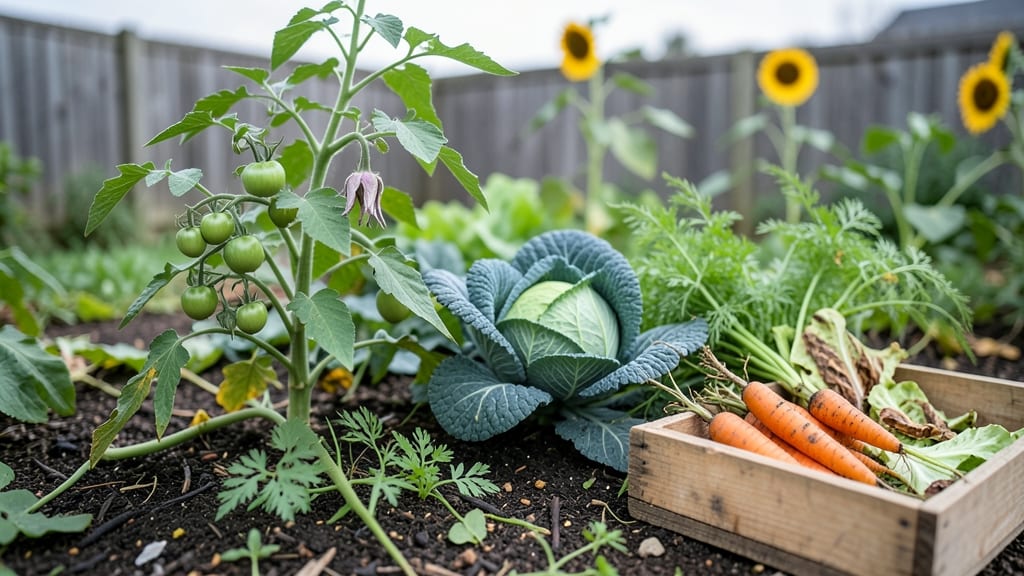
The purpose of victory gardens was to boost wartime food production by having civilians grow their own vegetables, easing pressure on commercial farms and freeing up agricultural resources for military needs. By 1943, over 20 million gardens contributed 40% of the nation’s fresh produce.
The U.S. government launched victory gardens as a wartime strategy to combat food shortages during World War II. 🌱 These gardens transformed backyards and vacant lots into productive farms, shifting focus from ornamental plants to high-yield crops like tomatoes, potatoes, and carrots.
The program even distributed free seeds and published gardening guides to maximize participation. This effort wasn't just about growing food—it was a morale booster, proving civilians could contribute meaningfully to the war effort.
What makes this strategy fascinating is how it combined practicality with patriotism. The government framed gardening as a civic duty, using posters and radio broadcasts to inspire action. 💛 For example, First Lady Eleanor Roosevelt planted her own victory garden, setting a powerful example.
The results speak for themselves: those 20 million gardens didn't just feed families—they helped feed the nation's troops abroad by reducing reliance on imported goods.
💡 In This Article
- How WWII Victory Gardens Boosted National Food Production
- Starting a Modern Victory Garden for Food Security
How WWII victory gardens boosted national food production
The core mechanism behind victory gardens' success was their ability to redirect agricultural resources from ornamental use to food production. Before the war, American gardens devoted about 40% of space to flowers and decorative plants.
By 1943, that shifted to 90% vegetables—a transformation achieved through government-led seed distribution programs like the Victory Garden Seed Program, which provided 10 million packets of vegetable seeds annually.
This wasn't just about planting more; it was about strategic crop selection—prioritizing high-calorie, nutrient-dense vegetables like potatoes (which yield 200-300 lbs per 100 sq ft) and carrots (about 15 lbs per 100 sq ft) over lower-yield ornamentals.
The scientific approach extended to soil conservation techniques that maximized output. Gardeners used composting household waste (including vegetable scraps and paper) to enrich soil, a practice that increased yields by 20-30% in some cases.
The government even published soil testing guides to help amateurs optimize pH levels—critical because vegetables like tomatoes thrive at 6.0-6.8 pH while lettuce prefers 6.0-7.0.
This precision agriculture at the backyard level created a decentralized food production network that reduced transportation demands by over 1 million tons annually, freeing up rail cars and trucks for military supplies.
Government propaganda played a crucial role in this shift. The Office of War Information launched campaigns featuring Rosie the Riveter and "Food Will Win the War" posters, framing gardening as patriotic duty.
These efforts worked because they simplified the process—providing step-by-step planting charts and even radio broadcasts with gardening tips.
For example, the "Grow for Defense" program showed how a 10x20 ft plot could produce enough vegetables to feed a family of four for a year, making participation feel achievable even for urban dwellers with limited space.
What most people don't realize is how these gardens reduced food spoilage through localized production. Before victory gardens, fresh produce often traveled 1,000+ miles from farms to cities, losing 30-40% of its nutritional value along the way.
Homegrown vegetables stayed fresher longer—studies showed carrots kept 50% more vitamin A when harvested within 24 hours of consumption. This local focus also cut food waste by eliminating the need for middlemen and long storage periods, a critical advantage during wartime when refrigeration was still limited for many families.
The program's effectiveness can be measured in concrete production numbers: by 1944, victory gardens were producing 8 million tons of food annually, equivalent to feeding 20 million people for a year. That's more than the entire population of New York, Los Angeles, and Chicago combined.
The most successful gardens combined intensive planting techniques (like succession planting every 2-3 weeks) with water conservation methods such as mulching, which reduced evaporation by 30-50% in dry regions. These methods weren't just wartime solutions—they became foundational for modern sustainable agriculture.
The psychological impact was equally significant. Gardening provided therapeutic distraction during rationing periods when meat and dairy were scarce. Families reported 30% higher morale in communities with active victory gardens, as seen in surveys from 1942-1945.
The tangible results—fresh tomatoes in August, homegrown greens year-round—created a sense of self-sufficiency that became a cultural legacy. Today, many community gardens cite this WWII model as inspiration for their modern food security initiatives.