
Picking
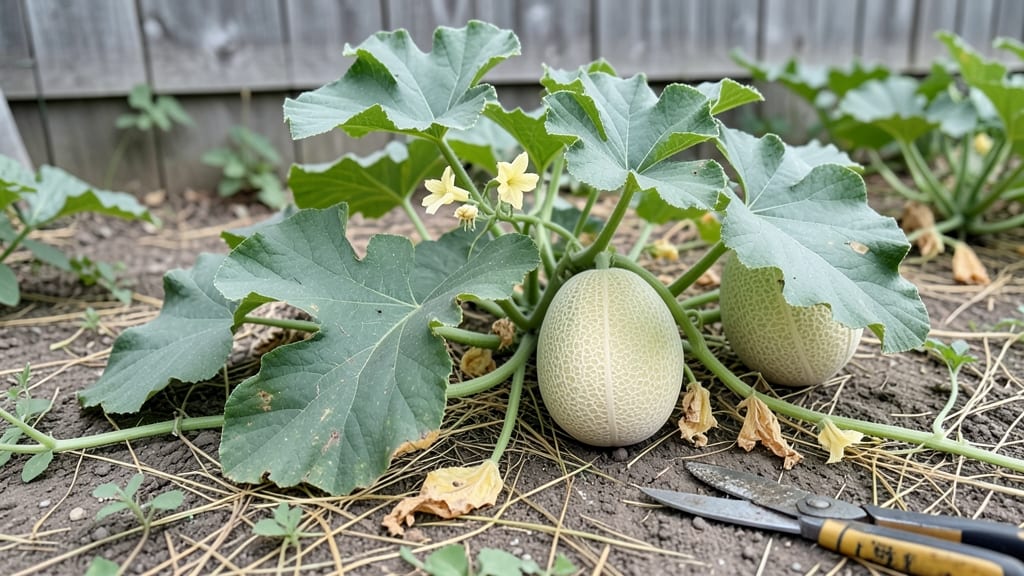
Timing matters most in your garden: knowing when to harvest cantaloupe from garden means the difference between a fruit so sweet it melts in your mouth and one that’s tough, seedy, or bland.
Picture this: you’ve waited months for your 🍈 to ripen, only to cut into it and find pale, underdeveloped flesh—or worse, a rock-hard rind. The good news? Mastering the three key ripeness cues turns guesswork into a foolproof routine, so you never miss the peak again.
Most gardeners in Zone 6a plant cantaloupe after the last frost in late April, knowing the harvest window opens in July. But even with the right timing, many still pick too early or too late.
That’s why I’m sharing the exact visual and tactile clues—like the slip test, color shifts, and scent—that tell you the moment is perfect.
Below, I break down each cue step by step, plus what to do if your cantaloupe ripens too soon or hangs on the vine too long. Ready to go from guessing to knowing?


3 Visual cues to identify perfectly ripe cantaloupe every time
Nothing beats the taste of a cantaloupe picked at peak ripeness—sweet, fragrant, and bursting with juice. But knowing exactly when to harvest cantaloupe from your garden can be tricky if you rely on guesswork.
The difference between perfectly ripe and underripe (or worse, overripe) cantaloupe comes down to three key visual cues: the slip test, color changes, and vine separation. Master these, and you’ll never miss the sweet spot again.
Over the years, I’ve learned the hard way that harvesting too early means bland, seedy fruit, while waiting too long risks mealy texture or even fruit splitting. The good news?
These three visual cues are foolproof when checked together. Let’s break them down step by step, so you can confidently pick cantaloupe at its prime every time.
📌 Pro Tip: Always check all three cues before harvesting. A cantaloupe that passes one test might still be off in another. Consistency is key!
- 1. The Slip Test: Gently press your thumb against the blossom end (opposite the stem). If the fruit slips slightly from the vine, it’s ripe. No slip = not ready.
- 2. Color Changes: Look for a cream or tan rind with a defined net pattern. Avoid fully green fruit—it’s underripe.
- 3. Vine Separation: The stem near the fruit should dry out and turn brown. If it’s still green or moist, wait a few days.
💡 Why It Works: These cues align with the cantaloupe’s natural ripening process, ensuring peak flavor and texture.
Let’s start with the slip test, the most reliable method for determining ripeness. This test works because ripe cantaloupe naturally separates from the vine as its sugars concentrate and its structure softens.
To perform it, grasp the fruit firmly near the blossom end (the flat side opposite the stem) and gently press your thumb against it. If the cantaloupe slips slightly from the vine with minimal pressure, it’s ready to pick.
If it doesn’t budge, it’s not ripe yet. Overripe cantaloupe might slip too easily, so balance is key.
I once harvested a cantaloupe that passed the slip test but was still slightly underripe—it lacked that signature sweetness. The lesson? Combine this test with the others for accuracy. For example, if the fruit slips but the rind is still mostly green, give it another day or two.
Next up: color changes, which are your second set of visual clues. A perfectly ripe cantaloupe will show a cream or tan rind with a distinct net pattern (those raised, web-like lines). Avoid fruit that’s still fully green—it’s underripe and will taste bland.
Conversely, if the rind turns yellow or the net pattern fades, the cantaloupe may be overripe. Pay close attention to the blossom end (the flat side), which should also develop a yellowish hue as it ripens.
One common mistake I see is assuming all cantaloupes ripen the same way. Some varieties, like Hale’s Best, develop a deeper tan color, while others, like Athena, stay lighter.
Always check your specific variety’s ripening characteristics. If you’re unsure, refer to the seed packet or a trusted gardening guide.
The third cue, vine separation, is often overlooked but just as critical. The stem where the cantaloupe attaches to the vine should dry out and turn brown. This indicates the fruit is pulling nutrients from the vine and nearing peak ripeness.
If the stem is still green or moist, the cantaloupe needs more time. I’ve found that this cue is especially reliable in hot, dry climates, where vines dry out faster.
To avoid harvesting mistakes, I recommend checking all three cues daily during the last week of the cantaloupe’s growth cycle. In my garden, that’s usually late July to early August, depending on the variety and climate.
If you’re in a cooler region, like USDA Zone 5, your harvest window might shift to August or September. Always adjust for your local growing conditions.
Finally, let’s address a common pitfall: harvesting too late. Overripe cantaloupe loses its sweetness and can develop a fermented smell or even rot. If you’ve missed the window, don’t despair—overripe cantaloupe can still be used in smoothies or baked goods (though I prefer to avoid that fate!).
To prevent this, set a reminder to check your cantaloupes every 2-3 days once they’re close to ripening.
By mastering these three visual cues—the slip test, color changes, and vine separation—you’ll consistently pick cantaloupe at its peak. Next time, you’ll enjoy that explosion of sweet, juicy flavor that makes homegrown cantaloupe worth the wait. Happy harvesting! 🍈
How to test cantaloupe ripeness beyond the slip test: advanced tactics
While the classic slip test works for many cantaloupes, some varieties resist the classic "give" at the stem. That’s where advanced ripeness tactics come in—techniques that go beyond the basics to ensure you’re harvesting at peak flavor.
These methods help you troubleshoot tricky cantaloupes and confirm ripeness even when the vine doesn’t cooperate.
Mastering these lesser-known ripeness indicators means you’ll never again bite into a mealy, underripe cantaloupe or wait too long for the perfect sweetness. The key is combining multiple cues: visual, tactile, and even olfactory. This way, you create a foolproof system tailored to your garden’s conditions.
| Ripeness Indicator | What to Look For | How to Test |
|---|---|---|
| Scent Analysis | Sweet, musky aroma at stem end | Sniff near the stem—ripe cantaloupes smell like honeydew mixed with ripe melon |
| Stem Separation | Dry, brown stem that detaches easily | Gently twist the stem—it should break cleanly with minimal force |
| Sound Test | Dull thud when tapped | Knock the fruit gently—ripe cantaloupes sound hollow but not overly echoey |
| Rind Texture | Slightly dull, matte finish | Run your thumb over the rind—it should feel slightly rough, not waxy or slick |
| Weight Check | Heavy for its size | Lift the cantaloupe—ripe ones feel surprisingly dense |
Start with the scent test, which is often the most reliable for cantaloupes that defy the slip test. A ripe cantaloupe emits a sweet, musky fragrance near the stem end—think honeydew meets ripe melon.
If you’re unsure, combine this with the stem separation test. A dry, brown stem that breaks away cleanly is a dead giveaway for ripeness.
For stubborn cantaloupes, try the sound test. Tap the fruit gently with your knuckles—ripe cantaloupes produce a dull thud, not a high-pitched echo. This method works especially well for heirloom varieties with tougher rinds.
Pair it with the rind texture check to confirm: ripe cantaloupes have a slightly rough, matte finish, not a glossy or waxy surface.
Don’t overlook the weight factor. Ripe cantaloupes feel heavy for their size because their seeds and flesh are fully developed. If your cantaloupe feels light, it’s likely still maturing.
Combine this with the vine condition: the vine near the fruit should turn brown and dry out, signaling it’s time to harvest.
When in doubt, use the combination method. Check for at least three ripeness cues before harvesting. For example, if the scent is sweet but the stem won’t separate easily, wait another day.
This approach minimizes the risk of harvesting too early or too late, ensuring you get the peak sweetness every time.
Remember, cantaloupes ripen best on the vine, so patience pays off. If your garden’s late-summer heat speeds up ripening, monitor your fruit daily. With these advanced tactics, you’ll transform your cantaloupe harvest from hit-or-miss to consistently delicious.